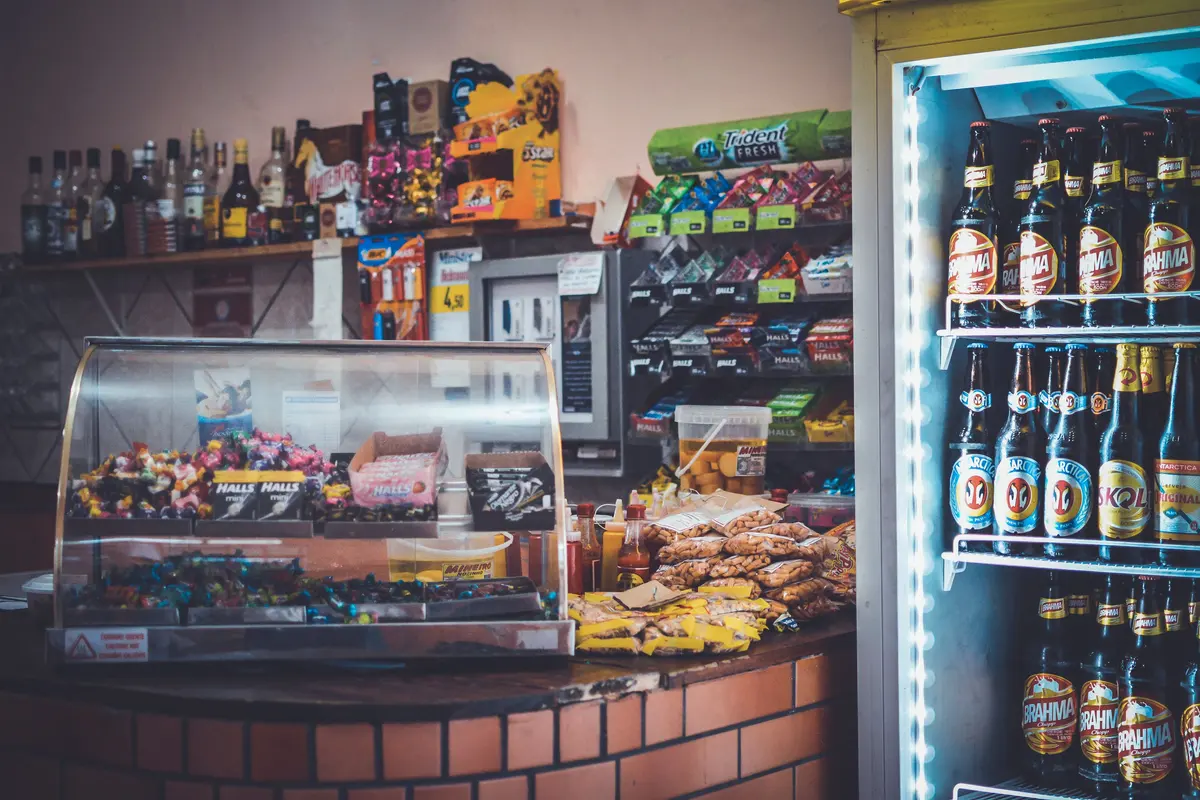
Inventory and business personal property, liquor liability behind a license that carries an appraised market value of its own, refrigeration and spoilage, crime, and workers compensation from a single part-time employee.
Nate is a Chartered Property Casualty Underwriter and the founder of Wexford Insurance, LLC. He places convenience store programs across 48 states — inventory and business personal property, the liquor liability the GL form excludes, crime and cash-handling, and the workers compensation that store staffing triggers. Reach him via the Gas Station Guard Insurance quote form or call 317-942-0549.
Last updated · Reviewed by Nate Jones, CPCU
In Arizona a liquor license has a price, and the state works it out from what other people paid. Before a new Series 9 issues, the applicant must pay its fair market value as determined by the Department — defined as the mean value of licenses of the same type sold on the open market in that same county over the previous twelve months. Where fewer than three such sales exist to average, the figure comes from three appraisals.
That makes the license something most operators never think of as insurable: an intangible asset with a documented, county-specific valuation sitting on the business. It was not free, it can be appraised, and it cannot be reordered from a supplier the way a cooler or a canopy can.
Carriers do not underwrite convenience stores as generic retail. The class carries robbery and burglary frequency above strip retail, premises claims that behave more like restaurant claims, refrigeration failures landing on stocked perishables, and the regulatory exposure of age-restricted sales. Arizona adds long distances between towns, monsoon-season storm damage, and a border and interstate network that puts a great deal of transient traffic through certain stores.
This page covers the Arizona store: what moves premium here, what it means to hold a license with an appraised value, the coverage lines in a typical program, a compensation requirement that starts at one part-time employee, the claims we see, and the underwriting realities that decide appetite. Fuel-dispensing sites layer the petroleum lines on top.
48
States licensed (all except Hawaii and Alaska)
20+
Specialty markets in our c-store panel
1–2 hr
Quote turnaround during business hours
C-store
Class-focused agency, not generic retail
What Arizona convenience store insurance costs
We do not publish premium ranges, because a c-store premium is built from the operation rather than a state average. These are the drivers that move the number on an Arizona store.
Whether the license value is on the schedule: A Series 9 acquired at appraised fair market value is a real number on the balance sheet, and most schedules we inherit do not mention it anywhere.
Monsoon-season storm exposure: Microbursts, blowing dust and flash flooding produce a distinct damage pattern — canopy and sign failure, water entry from wind-driven rain, and lot scour.
Distance from responding services: Between the Phoenix and Tucson metros the state is very empty, and response time changes how far a fire or a robbery develops.
Transient versus resident trade: Interstate and border corridor stores see customer profiles and crime patterns that a neighborhood site in Mesa does not.
Prepared food operations: A hot case or deli brings product liability and cooking equipment onto the program and widens the injury pattern on the payroll.
Contracted labor arrangements: Arizona has a specific waiver mechanism for sole proprietors, and whether it was executed properly decides who owns an injury.
Protective safeguards: Time-delay safes, camera coverage and lit forecourts feed the crime rating, and matter more where the nearest response is a long way off.
The license has a price, and the state calculates it
A Series 9 is Arizona’s liquor store license. It authorizes the sale of all spirituous liquor — beer, wine and distilled spirits — in original packages for consumption off the premises, and it is a quota license. New ones become available on a schedule tied to county population growth, and they are distributed by lottery.
What makes it unusual is what happens next. Before a new quota license is issued to a successful applicant, that applicant must pay the fair market value of the license as determined by the Department. The statute defines fair market value as the mean value of licenses of the same type sold on the open market in the same county during the prior twelve months. Where there have not been three or more such sales to average, the value is set by three appraisals instead.
So the license is priced by reference to an actual secondary market, county by county, and refreshed annually by whatever changed hands. Two identical convenience stores in different Arizona counties can hold the same class of license carrying materially different value, and neither figure is something the operator chose.
For an insurance program that has three practical consequences worth stating plainly. The license belongs on the schedule of values as an intangible asset rather than being invisible. Its appraised figure gives a defensible number for that entry, which is more than most intangibles offer. And because a replacement is obtained through a lottery and a payment rather than a purchase order, business income after a loss that jeopardizes the license should be reasoned against a timeline nobody controls.
Coverage lines for an Arizona convenience store
Property and business personal property: Building if owned, plus inventory, coolers, shelving, POS hardware, signage and canopy — and, where one is held, the license value as a scheduled intangible rather than an omission.
General liability: Third-party injury and property damage on the sales floor, at the entrance and across a lot that takes monsoon runoff and blown debris several times a season.
Liquor liability: The general liability form excludes alcohol-related bodily injury and property damage. A Series 9 store sells the full range in sealed packages, so the limit should follow actual volume and hours rather than the license class.
Crime and employee dishonesty: Money and securities, robbery, burglary and employee theft. Spirits inventory carries high value per unit and moves easily, which is where a limit reasoned from the drawer falls short.
Spoilage and equipment breakdown: Separate agreements for the failed unit and the stock lost behind it — a pairing worth carrying wherever a store keeps a meaningful chilled and frozen assortment.
Cyber liability: Card compromise at the register and the pump, ransomware, and the interruption that follows an outage.
Workers compensation: Statutory coverage from one employee, full-time or part-time, with sole proprietor waivers checked for both required signatures rather than assumed valid.
Workers compensation for Arizona store employees
Arizona law requires all public and private employers to provide workers compensation coverage for their employees if they employ one or more persons, full-time or part-time. There is no headcount to reach and no size of operation that sits outside it — a single weekend clerk brings the store inside the requirement.
The mechanism that catches people out is the sole proprietor waiver, because it takes two signatures rather than one. A sole proprietor may waive their own rights to coverage and benefits only where both the sole proprietor and the insurance carrier of the employer for whom they are performing services sign and date a waiver stating that the sole proprietor is working as an independent contractor and is not entitled to benefits from that employer. A business using the services of a sole proprietor who has waived in that way is not liable for coverage or premiums for them.
The limit of that arrangement is worth being blunt about. If the sole proprietor has any employees of their own, they must carry coverage on those employees regardless of what they waived for themselves. For a store engaging a cleaner or a maintenance contractor who brings a helper, the waiver on file covers one person and says nothing at all about the second.
Arizona convenience store claims we see
A total loss at a store holding a licensed alcohol business
Rebuilding the premises is one problem. A license obtained through a lottery and a fair market payment is a separate one, on a timeline the operator does not set, and business income should be reasoned against that rather than against the construction schedule.
Monsoon microburst damage to canopy and signage
Straight-line winds arrive with little warning and target the tallest, least aerodynamic structures on the site. The canopy and the price sign go before the roof does.
Water entry from wind-driven rain
Not a flood claim and often not a roof claim either — water pushed horizontally into a building that sheds vertical rain perfectly well.
Robbery at an isolated corridor store
Long distances mean long response times, which lengthens the incident and its aftermath. The clerk injury and the closure typically exceed what was taken.
Injury to a contractor whose waiver had one signature
The waiver requires the sole proprietor and the hiring employer’s carrier to sign and date. A document with only the contractor’s signature does not do the job it was filed to do.
Compressor failure in sustained summer heat
Equipment breakdown answers for the unit and spoilage for the stock, and the second number is usually the larger one.
The Arizona c-store risk profile
Arizona concentrates most of its population into two metropolitan areas and leaves a great deal of highway between them. A Phoenix or Tucson store is underwritten on customer volume, hours and crime frequency; a store on a long stretch of interstate or near the border is underwritten on isolation, transient trade and how long help takes to arrive. The same operator can hold both and be describing two different businesses.
The seasonal property pattern is specific enough to be worth naming. Monsoon storms bring microbursts, blowing dust and flash flooding rather than sustained wind, so the damage lands on canopies, signage and lot surfaces more often than on roofs, and water frequently enters buildings sideways. It is a different claim profile from a hurricane or a hail market and should not be described as either.
The license is the Arizona-specific layer and it is a balance-sheet fact more than an operational one. It was acquired at a price the state calculated, it can be appraised, and it sits in the business as value that most insurance schedules never mention. That is worth correcting on a submission, because an intangible with a defensible valuation is unusually easy to insure properly once someone notices it exists.
Why Arizona c-store owners work with Gas Station Guard Insurance
We place convenience store programs across 48 states and write southwestern petroleum and c-store risks routinely, so an Arizona submission carries the license position and its valuation, monsoon-season protection detail on canopy and signage, distance from responding services, and the contractor arrangements that Arizona’s waiver mechanism turns into a real question.
As an independent agency we place to carriers with appetite for the class rather than to a single company. Where an Arizona store sits behind a forecourt, the petroleum and retail lines are written as one program rather than two policies with a seam between them.
Arizona convenience store insurance FAQs
Does my Arizona liquor license have an insurable value?
It has a calculated one, which is better than most intangibles offer. Before a new Series 9 issues, the applicant pays its fair market value as determined by the Department — the mean value of licenses of the same type sold on the open market in that county over the prior twelve months, or, where there are fewer than three such sales, a figure set by three appraisals.
Why does the value differ between counties?
Because the calculation is county-specific by design. Fair market value is drawn from sales of the same license type in the same county, so two identical stores in different parts of Arizona can hold licenses carrying materially different value, and neither operator chose the figure.
What does a Series 9 actually permit?
It is the liquor store license, authorizing the sale of all spirituous liquor — beer, wine and distilled spirits — in original packages for consumption off the premises. New quota licenses become available on a schedule tied to county population growth and are distributed by lottery.
How should that affect our business income limit?
By lengthening the timeline you plan for. Premises can be rebuilt on a construction schedule. A license replaced through a lottery and a fair market payment moves on a timeline nobody at the store controls, so a loss that puts the alcohol business at risk deserves a longer period of restoration than the building work alone would suggest.
Do we need workers compensation for one part-time clerk?
Yes. Arizona requires all public and private employers to provide coverage if they employ one or more persons, full-time or part-time. There is no threshold below which a store sits outside the requirement.
Our contractor signed a waiver. Are we covered?
Check that it carries both signatures. A sole proprietor may waive their rights only where the sole proprietor and the insurance carrier of the employer they are performing services for both sign and date the waiver, stating that the proprietor works as an independent contractor. A one-signature document does not achieve what it was filed to achieve.
What if that contractor brings their own helper?
Then the waiver is beside the point for the helper. A sole proprietor who has employees of their own must maintain coverage on those employees regardless of any waiver they signed for themselves, and a store relying on the waiver alone has not asked the second question.
Does a standalone Arizona c-store need pollution coverage?
Not usually, where there is no fuel dispensing and no storage tank on site. Pollution and storage tank liability are petroleum lines. A standalone store carries the retail stack described here without them, which is part of why standalone and fuel-attached stores go to different carrier panels.