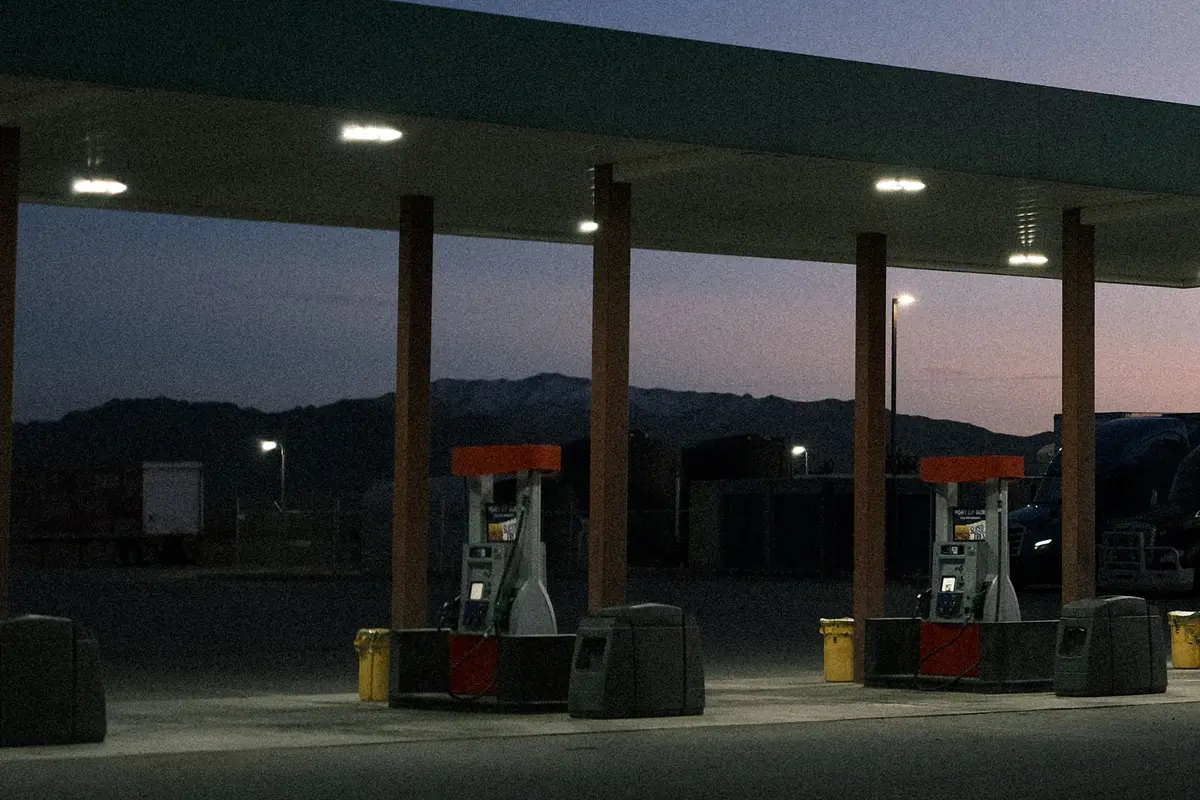
High-volume diesel dispensing, larger storage tanks, scales, mechanic and tire bays, shower facilities, restaurants, and the driver-injury exposure that distinguishes travel-center underwriting from a standard gas station. We place the full program across carriers that write the trucking-customer petroleum class.
Nate is a Chartered Property Casualty Underwriter and the founder of Wexford Insurance, LLC. He places truck stop and travel center programs across 48 states — high-volume diesel dispensing and the storage tank exposure that follows, garagekeepers and garage liability on mechanic and tire bays, shower and parking-lot premises liability, and the restaurant and QSR-franchise coverage layered alongside the petroleum lines. Reach him via the Gas Station Guard Insurance quote form or call 317-942-0549.
Last updated · Reviewed by Nate Jones, CPCU
A truck stop — properly called a travel center in the industry — is a scaled-up petroleum operation that adds five or six distinct businesses on top of the gas-station fuel exposure. High-volume diesel dispensing on a separate truck island. Larger underground storage tanks holding hundreds of thousands of gallons of motor fuel. CAT scales for legal-weight verification. Mechanic and tire service bays for over-the-road repair. Shower and restroom facilities for professional drivers. A restaurant or QSR brand. A larger c-store inside the building. Driver lounges, TV rooms, and laundry. Substantial paved parking for tractor-trailer overnight stays. Each of those facilities brings a coverage line a typical gas station does not need.
The customer base shifts the underwriting picture, too. A travel center’s primary customer is the professional truck driver — a person whose income depends on physical capacity to drive, and whose injury claims look more like commercial-customer claims than retail-customer claims. A slip-and-fall in the shower at 4 a.m. by a driver who loses two weeks of earning capacity sues at a very different scale than a retail customer with a similar injury. The general liability underwriter weighs your premises maintenance, lighting, security coverage, and overnight staffing accordingly.
The carrier panel for truck stops is narrower than for gas stations. The specialty markets that write travel centers want operators who understand the class — documented loss-control programs, current UST configurations, staffed overnight hours, and a maintenance record on the facility. Branded travel-center operations carry the brand-image standards in addition to the underwriting. Independent travel centers carry more flexibility on facility spec but face stricter scrutiny on operating history. Whichever side you sit on, the program is assembled in pieces across carriers — no single market writes the full travel center stack on one form.
This page walks through what makes truck stop insurance distinct from a standard gas station program, the state and regulatory framework you operate inside, the coverage lines in the typical travel-center program, the cost drivers that move premium at each operation scale, the claims categories carriers actually see, and the underwriting realities that decide which carriers will take your submission.
48
States licensed (all except Hawaii and Alaska)
20+
Specialty markets in our petroleum panel
1–2 hr
Quote turnaround during business hours
Travel center
Class-focused agency, not generic commercial
What makes truck stop insurance different
A travel center carries the petroleum exposure of a gas station, the foodservice exposure of a restaurant, the garagekeepers exposure of an auto repair shop, the hospitality exposure of a motel, and a parking-lot premises exposure that no other commercial class has at the same scale. Each of those exposures is its own underwriting story.
Diesel volume drives the pollution and tank lines
Diesel volumes at a busy travel center can run tens of thousands of gallons a day across the truck island. Tanks supporting that volume are larger than a gas station’s — typical UST configurations at travel centers run double or triple the capacity of a standard gas station. Larger tanks, higher volumes, and more frequent deliveries mean higher pollution and storage tank liability exposure. Carriers price the petroleum lines primarily against fuel volume, and travel center diesel volumes push premium up materially. Your tanks, your fuel, your dispensers, and your release detection method are all weighed at submission.
Truck-driver injury severity reads commercial, not retail
Professional drivers losing earning capacity from a premises injury are not retail customers in the eyes of the GL carrier. The severity profile of a slip-and-fall in the shower, a fall climbing into the cab from a slick parking lot, or an assault in the back lot is materially higher than the equivalent injury at a roadside gas station. Severity drives premium more than frequency on travel-center GL. Carriers writing the class want to see your lighting, your camera coverage, your overnight staffing, your shower-cleaning and inspection schedules, and your security-patrol arrangements.
Garagekeepers liability on the mechanic and tire bays
Mechanic and tire service bays operating inside the travel center carry garagekeepers liability (covering customer vehicles in the operator’s care, custody, and control) and garage operations liability (covering the work performed). Heavy-vehicle service is a distinct underwriting class — different from passenger-car service — and carries higher severity on any work-related claim because the equipment value and downstream liability of a heavy truck are higher. The carrier writing the petroleum and c-store lines often does not write the garage exposure; we split the garage operation onto a separate policy with a carrier that writes the class specifically.
Restaurant and QSR operations carry food and assault exposure
A restaurant or QSR brand inside the travel center adds product liability (foodborne illness, allergen exposure), assault and battery coverage on the customer base (overnight travel-center restaurants carry higher assault frequency than typical restaurants), and a workers compensation class code for foodservice staff. National QSR franchises carry franchise-specific compliance obligations and additional insured wording to the franchisor that has to be coordinated. Proprietary restaurants give you more flexibility on the underwriting but require their own product liability and assault-and-battery placement.
Scales, parking, and the overnight footprint
CAT scales and other commercial scales on the property are scheduled property assets and carry equipment breakdown exposure. Parking lots large enough for hundreds of tractor-trailers concentrate exposure for theft, vandalism, assault, and vehicle damage on customer rigs. Overnight parking is its own underwriting category — carriers want to know your lot capacity, your lighting plan, your security camera coverage, the presence or absence of security patrol, and your overnight staffing pattern. The lot is the largest GL surface on the property, and your premium reflects that.
State and regulatory considerations
Truck stop regulation operates on a wider federal footprint than a typical gas station because of the trucking customer base. Federal: EPA UST financial responsibility, DOT regulation of commercial vehicle traffic and weight enforcement, OSHA workplace safety, FDA food and tobacco enforcement, and FMCSA regulation of any motor carrier operations the travel center conducts. State: state environmental agency UST programs, state fire marshal authority, state ABC for any alcohol sales, state department of revenue for motor fuel tax (heavier focus at travel centers because of the volume), and state DOT for any commercial-vehicle inspection station partnerships. We have particular depth in the Tier 1 trucking-corridor states:
Texas: The largest truck-stop population in the country, with I-10, I-20, I-35, and I-45 driving dense travel-center development. TCEQ administers the UST program, and the Petroleum Storage Tank fund mechanics affect how the pollution and storage tank lines are structured. Texas writes a deep travel-center specialty market.
Pennsylvania: The Pennsylvania Turnpike and I-80, I-81, and I-78 corridors drive heavy travel-center demand. PADEP administers the UST program and the Underground Storage Tank Indemnification Fund (USTIF), which is one of the more active state cleanup funds and affects how travel-center pollution coverage is structured.
Illinois: I-80 and I-90 across northern Illinois carry some of the densest truck traffic in the country, and the Chicago-area truck stop population is substantial. Illinois EPA administers the UST program; Illinois dram-shop statute affects any travel center selling alcohol.
Tennessee: I-40 across the state and I-65 north-south corridor drive heavy travel-center development around Nashville and Memphis. Tennessee has a deep travel-center population and a robust specialty carrier market.
Georgia: I-75 and I-95 carry heavy north-south truck traffic with substantial travel center development. Georgia EPD administers the UST program; carriers writing the petroleum class are active statewide.
Across all 48 licensed states, the same travel-center program structure applies. State-specific UST fund coordination, dram-shop statute, and prepared-food licensing vary; we handle those at submission.
Coverage breakdown
The typical travel-center program is built from these lines. Every coverage links to its deeper page.
Property and equipment breakdown
Property coverage schedules the travel-center building, the truck island canopy, dispensers, scales, mechanic and tire bay equipment, signage, business personal property in the c-store and restaurant, and business income during a covered shutdown. The canopy over the truck island is materially larger than a gas station canopy and carries higher replacement cost. Equipment breakdown is endorsed on for dispensers, scales, refrigeration, prepared-food equipment, HVAC, POS, and the mechanic bay equipment.
General liability
General liability covers premises bodily injury and third-party property damage across the entire facility — forecourt, truck island, c-store interior, restaurant, shower facility, driver lounge, and the parking lot. Severity on travel-center GL is higher than gas-station GL because the customer base is professional drivers whose earning capacity is tied to physical fitness. The GL underwriter weighs your premises maintenance, lighting, camera coverage, overnight staffing, and security arrangements.
Pollution liability
Pollution liability responds to third-party bodily injury, property damage, and cleanup from petroleum releases at the travel center — spill events at the truck island, drive-off contamination from leaving rigs, gradual seepage from larger piping runs, and any release outside the strict storage tank boundary. Fuel volume drives pollution premium more than any other factor at a travel center.
Storage tank liability
Storage tank liability is the EPA-recognized form responding to releases from underground or aboveground storage tanks. The line is the most common mechanism for satisfying EPA UST financial responsibility, and travel-center tanks (because of capacity and volume) are usually written at higher limits than gas-station tanks. State UST fund participation affects how the policy is structured.
Commercial auto
Commercial auto covers owned, hired, and non-owned vehicle exposure. Travel centers with mechanic operations may run wreckers, service vehicles, or fuel-haul trucks; restaurant operations may run delivery vehicles. Hired and non-owned auto picks up employee personal vehicle use on facility business.
Workers compensation
Workers compensation is statutory and rates to multiple class codes at a travel center — c-store clerks, fuel-attendant staff, mechanic and tire bay technicians, restaurant cooks and servers, shower and facility maintenance, and overnight staff each have separate classifications. Loss history on lifting injuries, slip-and-fall, burn injuries in foodservice, mechanic-bay injuries, and robbery-related injuries all drive the experience modifier.
Crime / employee dishonesty
Crime coverage responds to employee theft, money and securities loss, robbery, and inside-the-premises theft. Travel centers handle substantial cash (driver fuel purchases, c-store transactions, restaurant tips and till) and are robbery targets in many corridors. Carriers writing the class often require specific cash-control measures (drop safes, dual-control opening, deposit schedules).
Cyber liability
Cyber liability covers data breach, payment-card compromise, ransomware, and business interruption from cyber events affecting the POS, dispenser payment systems, fuel-card processing, and back-office systems. Travel centers process fleet fuel cards in addition to standard payment cards, and the fleet-card processing relationship has its own breach exposure. EMV migration on dispensers, PCI-DSS compliance, and network segmentation are weighed at underwriting.
Liquor liability
Liquor liability applies if your travel center sells beer, wine, or spirits — common in c-stores, less common in travel-center restaurants but present in some. State dram-shop statutes vary. The GL form excludes liquor-related claims; this line is required for any travel center selling alcohol.
Umbrella / excess
Umbrella coverage sits over primary GL, commercial auto, and employer’s liability. Standard on travel centers because of the high-severity GL profile from the professional-driver customer base — primary GL limits can be exhausted by a single severe claim. Pollution, storage tank, and cyber are usually written separately rather than picked up by the umbrella.
What truck stop insurance costs
Premium on a travel-center program varies widely because the operation itself varies widely. A single-island truck stop with a c-store and no restaurant carries very different premium from a multi-island travel center with a restaurant, mechanic bay, scales, and a hundred overnight parking spots. Cost drivers compound across the lines — every facility added brings its own underwriting exposure and its own premium impact. We segment cost discussion by operation scale and lead with the drivers rather than premium ranges.
Single location
Single-location independent truck stops are the heart of the class. Premium is driven by fuel volume (the largest single driver), tank configuration, the facility footprint (which facilities are present and at what scale), customer base profile (long-haul versus regional, fleet-card versus retail), loss history, and geography. A single-location truck stop on a busy interstate corridor with a full facility footprint and clean losses can place into a tight band of specialty carriers; the same footprint with a release event in the prior five years narrows the panel substantially.
Small portfolio (2–5 sites)
Small portfolio operators get scheduled rating benefits, shared deductible structures, and master-policy advantages across the program. The carrier may write the schedule on a single policy or split between carriers depending on geographic spread, facility variation across sites, and aggregated loss experience. Travel-center portfolios concentrate risk along trucking corridors, so geographic-concentration underwriting matters more than for diversified gas-station portfolios.
Mid-size portfolio (6–20 sites)
Mid-size travel-center operators run on commercial-schedule program structure — blanket property limits, aggregated GL, master pollution coverage, master cyber, and direct carrier relationships. Cost drivers shift to portfolio-level metrics: aggregate fuel volume across the fleet, average tank age, geographic distribution, average facility scale, and the operator’s centralized loss-control and training programs.
Large portfolio (20+ sites)
Large travel-center operators run layered program structures — primary GL with large self-insured retention, layered umbrella towers, master pollution with site-specific endorsements, captive insurance options, and direct carrier relationships. The market is narrow at this scale because few carriers write 20+ travel-center operators, but the carriers that do are deeply specialized.
Cost drivers that move premium at any scale
Fuel volume — the single largest driver of pollution and storage tank premium
The categories below reflect what carriers in the travel-center class actually see. Scenarios are illustrative; carrier names are intentionally generic.
Driver slip-and-fall in the shower facility
A professional driver slips in the shower, sustains a knee injury, and loses earning capacity for an extended period. The third-party bodily injury claim under the GL form runs at higher severity than a typical retail slip-and-fall because the lost-wage component reflects the driver’s commercial earning capacity. A specialty carrier writing the travel-center GL line defends the claim. Shower facilities with documented cleaning schedules, anti-slip surfaces, and timestamped inspection logs defend these claims; facilities without those records lose them.
Diesel release at the truck island
A connector failure at the truck island dispenses diesel onto the apron and into a stormwater inlet before the dispenser auto-shutoff engages. The state environmental agency is notified; corrective action and groundwater testing follow. The pollution and storage tank carriers respond — coordinating cleanup, defending any third-party claims if contamination migrates beyond the property, and reporting to the state UST regulator. Truck-island releases tend to be larger-volume events than gas-station dispenser releases because of the higher transaction volume per fill.
Garage bay incident on a customer rig
A tire shop bay performs a service on a customer’s Class 8 tractor; a downstream failure results in property damage and lost-revenue claim from the trucking customer. Garagekeepers and garage operations liability respond. The carrier writing the garage exposure (which may be different from the carrier writing the petroleum lines) defends and indemnifies. Heavy-truck service claims carry higher severity than passenger-car service because the equipment value and downstream lost-revenue exposure are higher.
Overnight parking-lot assault
A driver is assaulted in the back parking lot during overnight hours; the third-party bodily injury claim alleges inadequate security on the premises. The GL carrier defends. Severity in these claims is highly variable but trends toward higher numbers on serious injury. Travel centers with documented lighting plans, camera coverage, security patrol arrangements, and posted security policies defend these claims more cleanly than facilities without. Repeat assault claims at a single location can trigger non-renewal.
Underwriting realities
What carriers in the travel-center class actually care about — and what gets a submission declined.
What they want to see
UST registration data — tank count, capacities, year installed, material, wall construction, release detection method, cathodic protection, overfill prevention
Five years of loss runs across all lines — pollution, storage tank, property, GL, garage, restaurant if applicable, auto, workers compensation, crime, cyber
Fuel volume by grade for the trailing 12 months, broken out by truck island versus auto island if applicable
Facility schedule — every facility on the property (c-store, restaurant, mechanic, tire bay, showers, overnight parking, scales, laundry, driver lounge)
Restaurant and QSR details if applicable — proprietary or franchise, prepared-food equipment list, food handler certifications, health inspection record
Mechanic and tire bay details — service type (heavy-truck versus passenger), equipment inventory, technician certifications, garagekeepers exposure
Photos of the canopy, dispensers, truck island, c-store, restaurant, mechanic bay, scales, showers, and parking lot — current condition
The existing pollution and storage tank declarations pages, if you have current coverage
What gets declined
Active pollution releases — most carriers will not write a travel center with an open corrective action case until the state closes the file
Single-wall steel tanks at the volumes typical of travel centers — increasingly difficult to place
Travel centers with multiple severe GL claims (parking-lot assault, shower slip-and-fall, restaurant assault) in the prior five years
Sites in flood plains without elevation certificates or flood mitigation on the tank pad
First-time owners with no operating history and a facility footprint the underwriter cannot get comfortable with
Travel centers with abandoned tanks that have not been closed in place or removed per state UST closure procedures
Operations non-renewed by two or more petroleum-class carriers — the record follows the submission
What goes surplus rather than admitted
Travel centers with older tank configurations, prior pollution claims, larger facility footprints, restaurant operations with claims history, mechanic operations with garage claims, or unusual operations (multi-modal fueling, LNG or CNG dispensing, aviation fuel) often place into the surplus lines market rather than admitted carriers. Surplus is the market designed for the larger and more complex end of the petroleum class; specialty carriers writing the travel-center segment in surplus are deeply experienced in the class and write a substantial share of the market.
Why Gas Station Guard Insurance
We quote the petroleum class daily and the travel-center segment specifically. We work a 20-carrier specialty panel across admitted and surplus markets, and we know which carriers write travel centers and at what scale — which one takes single-island independent operators, which one writes only multi-island branded, which one will quote the garage exposure on the same submission and which one will not, which one has appetite for first-time owners and which one requires three years of operating history.
We are the agency, not a marketing brand. Wexford Insurance, LLC is the licensed entity behind Gas Station Guard Insurance — 48-state licensure, NPN 19887690, and a founder who is a Chartered Property Casualty Underwriter (CPCU), the highest professional designation in property and casualty insurance. We do not place your travel center as a side category to a homeowners book. The petroleum and travel-center class is what we do.
We respond in 1–2 hours during business hours on a complete submission. Travel-center submissions take more data to assemble than a single gas station, but a complete submission moves through the carrier panel as quickly. We will tell you exactly what we need on the first call.
If your site is smaller than a travel center
Travel-center underwriting assumes scale — fuel volume, on-site services, and driver traffic. Sites without those pieces are usually written on a different form:
Gas station insurance: A retail fueling site without scales, mechanic bays, or overnight driver facilities underwrites as a gas station. Pollution and storage tank liability still lead the program, but the volumes and the service exposure are materially smaller.
Convenience store insurance: If the retail building is the main operation and fuel is secondary or absent, inventory, liquor liability, crime, and cash handling drive the program instead of the forecourt.
Frequently asked questions
How is truck stop insurance different from gas station insurance?
A truck stop is a scaled-up petroleum operation with facilities a gas station does not have — high-capacity diesel dispensing on a separate fuel island, larger underground storage tanks, scales, mechanic and tire service bays, shower and restroom facilities, restaurants or QSR brands, driver lounges, and substantial paved parking for tractor-trailer overnight stays. Each added facility brings a coverage line a typical gas station does not need. The underwriting submission is larger, the carrier panel is narrower, and the program is built around the truck-driver and trucking-customer exposure that distinguishes a travel center from a forecourt c-store.
Why does diesel dispensing change the underwriting?
Diesel volumes at a truck stop are an order of magnitude higher than gasoline volumes at a typical gas station — a single Class 8 fill is 200 to 250 gallons, and a busy diesel island can move tens of thousands of gallons a day. Higher volume means larger tanks, more frequent fuel deliveries, higher pollution liability exposure on any release, and more wear on dispenser and piping equipment. Carriers price the pollution and storage tank lines against fuel volume more than any other factor, and truck stop diesel volumes drive premium up materially.
Do truck stops need a different general liability form than a gas station?
Not a different form, but a different exposure profile. Truck driver injuries on the property — slip-and-fall in the shower, lift injuries in the convenience store, falls climbing in and out of the cab — read like commercial customer claims rather than retail customer claims. Severity is generally higher because professional drivers losing earning capacity from an injury sue at a different scale than a retail customer with a similar injury. The GL underwriter weighs your premises maintenance, lighting in the parking lot, security camera coverage, and overnight staffing.
Do you cover the restaurant or QSR operations inside the truck stop?
Yes, both proprietary restaurants and national QSR franchises operating inside a travel center can be covered, though the program structure differs. A proprietary restaurant inside the truck stop carries product liability, foodborne illness, and assault and battery coverage on the customer base. A national QSR franchise inside the truck stop carries franchise-specific compliance obligations and may share coverage between the truck stop operator and the franchisor. We work both structures.
What about the mechanic or tire service bay?
Mechanic and tire service operations carry garagekeepers liability, garage operations liability, and a separate workers compensation class code from the c-store and fuel-attendant classes. The carrier writing your truck stop main program may not write the mechanic exposure; we often split the garage operation onto a separate policy with a carrier that specifically writes the trucking-service repair class. Tire and brake service on heavy vehicles is a distinct underwriting exposure.
How are showers and overnight facilities underwritten?
Showers and overnight facilities concentrate slip-and-fall and assault exposure. Shower floors are slip risks; overnight parking lots are assault and theft risks; driver lounges and TV rooms are concentration points for both. Carriers want to see your lighting, camera coverage, security patrol arrangements, shower cleaning and inspection schedules, and the staffing pattern for overnight hours. The GL carrier prices these exposures against severity history — a single severe assault claim from a truck stop parking lot can move pricing significantly.
My truck stop had a fuel release event two years ago. Can you still place coverage?
In most cases yes, but the carrier panel narrows. A closed release case (state UST regulator has signed off on corrective action) reads very differently from an open release case. Closed cases are placeable with specialty carriers that write the petroleum class; open cases are difficult to place until the file is closed. We will tell you on the first call which appetite tier your release history puts you in, and what we will need to take the submission to market.
Quote your travel-center program
Tank data, facility schedule, mechanic and restaurant details, and five years of loss runs across all lines — we will route your submission across the travel-center specialty panel and respond in 1–2 hours during business hours.