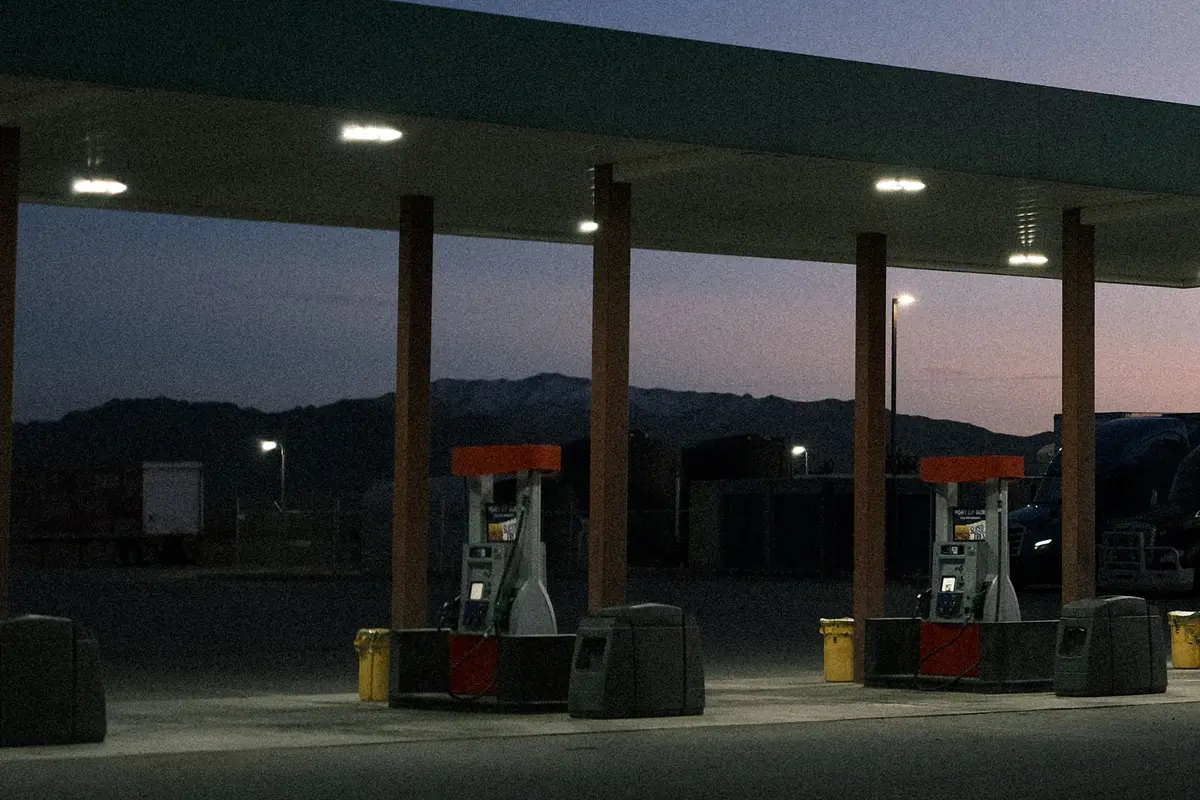
Gas station insurance for branded and unbranded operators.
Pollution, storage tank, canopy and dispenser property, GL, commercial auto, and umbrella — assembled across specialty carriers that quote the petroleum class daily. Your station, your tanks, your forecourt, written by carriers with specific appetite for fuel-dispensing occupancy.
Nate is a Chartered Property Casualty Underwriter and the founder of Wexford Insurance, LLC. He places branded and unbranded gas station programs across 48 states — UST configurations, canopy and dispenser property schedules, supplier additional-insured endorsements, and the pollution and storage tank coverage the EPA financial responsibility rule requires. Reach him via the Gas Station Guard Insurance quote form or call 317-942-0549.
Last updated · Reviewed by Nate Jones, CPCU
Gas station insurance is not one policy. It is a stacked program of separately underwritten lines — general liability on the forecourt and c-store premises, property on the canopy and dispensers, pollution and storage tank liability on the petroleum exposure, commercial auto on any owned vehicles, workers compensation on your employees, crime on the cash handling, and an umbrella over the top — written across specialty carriers that have specific appetite for fuel-dispensing occupancy. Standard business owners policies exclude or sub-limit the petroleum class precisely because the two largest losses your operation faces (pollution releases and tank failures) sit outside the BOP form.
The carriers that write your station are not the same carriers that write a restaurant or a retail strip. Petroleum-class appetite moves in a narrower lane: a surplus lines carrier may take the GL and property while an admitted carrier writes the pollution line, and the umbrella may sit with a third carrier entirely. We assemble the package in pieces and route each line to the carrier most likely to take your specific configuration — your tanks, your fuel volume, your canopy spec, your loss history, your geography. That assembly work is the difference between a quote that closes and a submission that bounces.
Branded operators (Shell, BP, Marathon, Sunoco, Valero, Citgo, Phillips 66, ExxonMobil, Chevron, 76, Mobil, Speedway, Circle K’s branded outlets, and others) carry the same coverage lines as unbranded operators but bring a different submission profile — supply agreements, image standards, the additional-insured wording the brand expects, and the royalty structure that affects your fuel margin. Unbranded operators have more flexibility on canopy and dispenser spec, no brand royalty, and a thinner fuel margin to defend, which changes how a carrier prices your business interruption exposure. The form is the same; the underwriting story is different.
This page walks through what makes gas station insurance distinct, the state and regulatory framework you operate inside, the coverage lines in the typical program, the cost drivers that move your premium, the claims categories carriers actually see, and the underwriting realities that determine which carriers will take your submission. It is written by an agency that places gas stations every week, not one that places one or two a year.
48
States licensed (all except Hawaii and Alaska)
20+
Specialty markets in our gas station panel
1–2 hr
Quote turnaround during business hours
Petroleum
Class-focused agency, not generic commercial
What makes gas station insurance different
A gas station is the densest concentration of insurance exposure on a half-acre of commercial real estate in American retail. Your forecourt has customers walking under a canopy, refueling at high-flow dispensers, with underground tanks holding tens of thousands of gallons of motor fuel beneath them. Most of that exposure does not fit on a standard business policy form, which is why a gas station program is built across specialty carriers rather than placed with whichever carrier writes the c-store next door.
Underground storage tanks dominate the underwriting story
The petroleum in your tanks is a federal regulated substance. Releases — whether from a tank failure, piping leak, dispenser-area spill, or drive-off contamination — trigger EPA financial responsibility requirements and almost always require state-supervised corrective action. Underwriters spend most of their time on your UST configuration: tank age, material, wall construction, cathodic protection, overfill prevention, sump and spill bucket condition, piping construction, and your release detection method. A station with newer double-wall fiberglass tanks and electronic line leak detection writes more easily than a station with single-wall steel tanks and stick-gauging.
The canopy is a property line all its own
Your canopy is the most-claimed property element on a gas station. Wind damage during hurricanes and severe thunderstorms, hail strikes, drive-off impact from box trucks and high-vehicles that misjudge clearance, and lighting and electrical failures all hit the canopy more often than any other structure on the site. Carriers schedule the canopy with stated replacement cost, weigh wind and hail loss histories carefully, and apply separate wind/hail deductibles in coastal and tornado-belt states. The canopy column-and-deck system is engineered to specific brand image standards on branded sites, which affects replacement cost.
Dispenser equipment and the EMV liability shift
Your dispensers contain payment-card processing equipment that has been subject to the EMV chip-card liability shift since the 2020 fuel-pump deadline. Stations that have not migrated to EMV-compliant dispensers bear the fraud loss on any chip-card transaction processed at a non-compliant pump — and the carriers writing your cyber liability and crime lines are aware of that exposure. Dispenser breakdowns also drive equipment breakdown claims more than any other piece of equipment on the site.
C-store sales mix changes the GL underwriting
If your station has a c-store, the GL underwriting weighs the sales mix. Tobacco, lottery, and alcohol sales each carry compliance exposure that the carrier prices into the policy. Tobacco compliance failures (selling to minors, FDA inspection violations) can trigger fines that are not covered by GL but signal operational risk; lottery sales carry their own state-licensure rules; and alcohol sales add liquor liability as a separately rated line. A station with high in-store sales but low alcohol mix is a different underwriting story from a station built around beer and wine.
Workers compensation rates the petroleum class
NCCI and state rating bureaus assign specific class codes to gas station operations, c-store clerks, and station maintenance staff. The class code carries the rate. Workers compensation underwriting at a gas station looks at your hours of operation (24-hour stations rate differently), the staffing pattern (single-employee overnight shifts are scrutinized), and your loss history on robbery, slip-and-fall, and lifting injuries. Many states require workers compensation regardless of your employee count.
State and regulatory considerations
Gas station regulation is mostly federal at the floor (EPA UST financial responsibility, OSHA workplace safety, DOT fuel-haul rules, FDA tobacco enforcement) and substantially state and city above the floor. The state environmental agency administers your UST program; the state fire marshal often holds the actual UST regulatory authority; the state department of revenue collects motor fuel tax and runs compliance audits; and the state department of insurance regulates the carriers that write your policy. We write across 48 states and have particular depth in the Tier 1 petroleum markets:
Texas: The Texas Commission on Environmental Quality (TCEQ) runs the UST program; the Petroleum Storage Tank fund has been wound down for new releases, which pushes more of the financial responsibility burden onto pollution and storage tank insurance. Texas writes a large branded and unbranded station population; surplus lines appetite is steady.
California: The State Water Resources Control Board administers the UST program through the Local Oversight Program in many counties. California’s Vapor Recovery Phase II rules and CARB compliance add equipment cost beyond the federal floor. The CalUST Cleanup Fund still operates but is heavily oversubscribed, and pollution coverage carries higher premium in California than most states.
Florida: Florida DEP administers the UST program with one of the more demanding state-level inspection schedules. Wind and hurricane exposure on canopy and dispenser property dominates the property underwriting; carriers apply named-storm deductibles separately from all-other-perils. Coastal stations carry the highest property premium in the country outside of the Gulf Coast.
New York: New York DEC runs the PBS (Petroleum Bulk Storage) registration program — a state-level overlay above the federal UST rule. New York City layers additional fire department and zoning requirements; the metro market is dense and the surplus appetite for downstate stations is narrower than upstate.
Pennsylvania: PADEP administers the UST program and the Underground Storage Tank Indemnification Fund (USTIF) — one of the more active state cleanup funds in the country. USTIF participation affects how pollution and storage tank policies are structured, and Pennsylvania has a deep specialty market for the class.
Beyond the Tier 1 states, the same coverage program applies across all 48 licensed states. State-specific endorsements, UST fund coordination, and surplus lines filings vary; we handle those at submission time.
Coverage breakdown
The typical gas station program is assembled from these lines. Every coverage below links to a deeper page on what the line covers, how it is structured, and how carriers underwrite it.
Property and equipment breakdown
Property coverage schedules your station structure, canopy, dispensers, c-store building, signage, and business personal property with stated replacement cost. The same form carries business income during a covered shutdown — critical because a canopy strike or fire can take your station out of revenue for weeks. Equipment breakdown is endorsed on for the dispensers, refrigeration, walk-in coolers, and point-of-sale equipment. Underground tanks are typically not on the property form; they sit under storage tank liability instead.
General liability
General liability covers customer bodily injury and third-party property damage on your forecourt and inside your c-store — slip-and-fall on a fuel spill, dispenser-area injuries, tripping on c-store flooring, and incidents in the restroom. The form is endorsed to handle tobacco and lottery exposures alongside the standard premises GL. Liquor liability is excluded and must be added separately if your c-store sells alcohol.
Pollution liability
Pollution liability responds to third-party bodily injury, property damage, and cleanup costs from petroleum releases at your station — spill events at the dispenser, drive-off contamination, and gradual seepage from piping or fittings. The form covers releases that are not strictly tied to the underground tank, which is the gap that storage tank liability does not always fill. Most stations carry both.
Storage tank liability
Storage tank liability is the EPA-recognized form that responds to releases from underground or aboveground storage tanks. It is the most common mechanism for satisfying the federal EPA UST financial responsibility rule. The form covers corrective action, third-party bodily injury, and third-party property damage from a tank release. State UST fund participation affects how the policy is structured and at what limit.
Commercial auto
Commercial auto covers owned, hired, and non-owned vehicle exposure — fuel-haul vehicles if you transport your own fuel, c-store delivery vehicles, and employee-driven errand exposure. Fuel-haul rates are substantially higher than standard commercial auto because of the cargo hazard. Most independent stations buy from a jobber rather than haul their own fuel; jobber operations carry their own MCS-90 endorsement and auto coverage.
Workers compensation
Workers compensation is statutory in most states and rates to the gas station class code. C-store clerks, fuel-attendant employees, and station maintenance staff each have separate class codes. Loss history on lifting injuries, slip-and-fall behind the counter, and robbery-related injuries drives the experience modifier.
Crime / employee dishonesty
Crime coverage responds to employee theft, money and securities loss, robbery, and inside-the-premises theft. Gas stations are high-cash-handling operations even with payment-card adoption, and overnight robbery exposure drives the underwriting in many urban and interstate-exit locations.
Cyber liability
Cyber liability covers data breach, payment-card compromise, ransomware, and business interruption from cyber events affecting your point-of-sale and dispenser payment systems. EMV migration status, PCI-DSS compliance, and the segmentation of your POS network from your back-office systems are all weighed at underwriting.
Umbrella / excess
Umbrella coverage sits over your primary general liability, commercial auto, and employer’s liability. It is standard on multi-pump, high-traffic, or c-store-with-liquor operations because a single severe claim can exhaust primary GL limits. Pollution and storage tank liability are usually written separately rather than picked up by the umbrella.
Liquor liability
Liquor liability applies if your c-store sells beer, wine, or spirits. Most states require it as a separate line; state dram-shop statutes vary on whether liability attaches on strict-liability or negligence grounds. The GL form excludes alcohol-related claims, so this line is non-optional for any station with off-premises alcohol sales.
What gas station insurance costs
Premium on a gas station program varies more than almost any other commercial class. Two stations on opposite corners of the same intersection can pay materially different premium based on UST configuration, claims history, fuel volume, and the carriers willing to write the risk. We segment cost discussion by operation size and lead with the cost drivers rather than premium ranges.
Single location
Most independent station owners run a single site. Premium is driven by your tank configuration (age, wall construction, release detection), your fuel volume and grade mix, the canopy and dispenser replacement cost, your c-store sales mix if you have a store, and your geography. Coastal and tornado-belt stations carry higher property premium; high-fuel-volume stations carry higher pollution premium; stations with alcohol or 24-hour operation carry higher GL and crime premium. Loss history matters more on a single site than on a portfolio because there is no diversification to offset it.
Small portfolio (2–5 sites)
Multi-site owners get the benefit of scheduled rating and shared deductibles, but pricing is still driven by individual-site risk. Carriers may write the schedule on a single policy or split it across two or three carriers depending on geographic spread, tank age across the portfolio, and aggregated loss experience. The cost drivers stay the same as a single site; portfolio operators just see them weighted across multiple locations. A single bad-loss site in a small portfolio can affect the entire schedule’s pricing.
Mid-size portfolio (6–20 sites)
At this scale, the program looks more like a small commercial schedule than a single-site policy. Carriers will quote blanket property limits, aggregated GL, and master pollution programs across the portfolio. Cost drivers shift to portfolio-level metrics: average tank age across the fleet, aggregate fuel volume, geographic concentration risk (multiple sites in one hurricane corridor reads differently from sites spread across regions), and the operator’s centralized loss-control program. Operators at this scale often consolidate their pollution coverage onto a single master form.
Large portfolio (20+ sites)
Large operators move into the layered program structure — primary GL with a large self-insured retention, layered umbrella towers, master pollution with site-specific endorsements, and direct carrier relationships. Cost drivers become loss-control sophistication, captive insurance options, retained-risk financing, and the operator’s safety and compliance program. Carrier appetite at this scale is narrower but more stable because the underwriters writing 20+ site operators are deeper in the petroleum class than carriers writing single-site risks.
Loss history — pollution events, storage tank releases, severe property claims, and large GL claims all move premium
Operator experience — first-time station owners face stricter underwriting and higher premium than established operators
Claims scenarios
The categories below reflect what carriers in the petroleum class actually see across their book. Specific scenarios are illustrative; carrier names are intentionally generic.
Dispenser-area pollution release
A customer overfills at the dispenser; the spill exceeds the spill bucket capacity and migrates into the soil under the forecourt. The state environmental agency is notified, a Phase II site assessment is ordered, and corrective action is required. A specialty carrier writing the pollution and storage tank lines responds — coordinating the cleanup, defending any third-party claims if contamination migrates to a neighboring property, and reporting to the state UST regulator. The financial responsibility rule’s claim mechanics are exactly what the policy was designed for.
Canopy strike by an over-height vehicle
A box truck or RV misjudges canopy clearance and strikes a column. The canopy roof deck partially collapses, taking out two dispensers and the lighting. The property carrier responds to the canopy, dispensers, and signage; the GL carrier handles any third-party bodily injury claims if a customer is at the forecourt; commercial auto on the striking vehicle is the responsible primary. Business income coverage pays for the days the station is offline. Canopy strikes are among the most common property losses in the class.
Slip-and-fall on the forecourt
A customer slips on a fuel spill that was not cleaned up promptly, sustains a back injury, and files a third-party bodily injury claim. The GL carrier defends the claim. Severity varies — minor injuries settle at the lower end of GL claim severity, while serious back or head injuries can move toward primary limits. Stations with documented spill-cleanup protocols and timestamped maintenance logs defend these claims more cleanly than stations without.
Overnight robbery and employee injury
A late-night robbery results in cash loss and an employee injury. Crime coverage responds to the cash and securities loss; workers compensation responds to the employee injury; the GL form may pick up any third-party customer injury depending on facts. Stations with robbery histories face tighter underwriting on both crime and workers compensation, and carriers may require specific physical-security measures (drop safes, dual-control opening procedures, alarmed exits) to keep coverage in place.
Underwriting realities
What carriers in the gas station market actually care about — and what gets a submission declined.
What they want to see
UST registration data: tank count, capacities, year installed, material, wall construction, release detection method, cathodic protection status, overfill and spill prevention equipment
Five years of loss runs across all lines — pollution, storage tank, property, GL, auto, workers compensation, crime
Fuel volume by grade for the trailing 12 months; sites with declining volume read differently from growing sites
Supply agreement for branded operators (the carrier wants to confirm the additional-insured wording the brand requires)
Photos of the canopy, dispensers, c-store, and tank pad — current condition, not file photos
The existing pollution and storage tank declarations pages, if you have current coverage
What gets declined
Active pollution releases — most carriers will not write a station with an open corrective action case until the state closes the file
Single-wall steel tanks that have not been upgraded — increasingly difficult to place after 30 years of EPA upgrade mandates
Stations with two or more pollution releases in the prior five years — appetite tightens fast in the petroleum class
Sites in flood plains without elevation certificates or flood mitigation on the tank pad
First-time owners with no operating history and a UST configuration the underwriter cannot get comfortable with
Stations with abandoned tanks that have not been closed in place or removed per state UST closure procedures
Operations that have been non-renewed by two or more petroleum-class carriers — that record follows the submission
What gets surplus-lines placement instead of admitted
Stations with older tank configurations, prior pollution claims, coastal exposure, large fuel volumes, or unusual operations (truck-stops with mechanic shops, stations with kerosene or aviation fuel, c-stores with extensive prepared food) often place into the surplus lines market rather than with admitted carriers. Surplus is not a downgrade — it is the market designed for risks that fall outside the standard admitted appetite. Surplus carriers in the petroleum class write the bulk of pollution and storage tank business in many states.
Why Gas Station Guard Insurance
We quote the petroleum class daily. We work a 20-carrier specialty panel that includes both admitted and surplus markets, and we know which carriers want which configurations — which one takes single-wall tanks at a price, which one will not; which one writes coastal canopies, which one declines; which one has appetite for first-time owners, which one wants three years of operating history. That pattern recognition is the difference between a submission that closes and one that bounces.
We are the agency, not a marketing brand. Wexford Insurance, LLC is the licensed entity behind Gas Station Guard Insurance — 48-state licensure, NPN 19887690, and a founder who is a Chartered Property Casualty Underwriter (CPCU) — the highest professional designation in property and casualty insurance. We do not place your station as a side category to a homeowners book. The petroleum and c-store class is what we do.
We respond in 1–2 hours during business hours on a complete submission. The bottleneck on a fast quote is the completeness of the data we receive, not the carrier’s response time. We will tell you exactly what we need on the first call.
If your site is more than a fuel stop
Fuel dispensing sets the pollution and storage tank exposure, but it rarely sets the whole program. Two adjacent operations underwrite differently enough to sit on their own form:
Convenience store insurance: If the store attached to your forecourt carries meaningful inventory, sells alcohol or tobacco, or handles overnight cash, the retail side drives crime, liquor liability, and business personal property decisions that the fuel side does not. Most operators need both programs written together.
Truck stop insurance: If you dispense diesel to Class 8 traffic, run scales, mechanic bays, showers, or a restaurant, the exposure profile leaves the gas station class entirely — larger fuel volumes, driver injury, and on-site service operations that a station form is not built to carry.
Frequently asked questions
What is gas station insurance and how is it different from a standard business policy?
Gas station insurance is a stacked program — general liability, property on the canopy and dispensers, pollution and storage tank liability, commercial auto if you own fuel-haul or errand vehicles, workers compensation, crime, and an umbrella — placed across specialty carriers that have appetite for petroleum occupancy. A standard business owners policy excludes or sub-limits fuel-dispensing, the canopy structure, and underground tanks; the two largest loss drivers on your station (pollution and tank releases) are precisely what the standard form excludes. We assemble the program in pieces because no single admitted carrier writes the whole thing on one form.
Does branded supply (Shell, BP, Marathon, Sunoco, etc.) change what insurance my station needs?
Branded supply changes the underwriting submission, not the coverage form. The carrier wants to see your supply agreement, the brand image standards your canopy and dispensers comply with, and the additional insured wording the supplier expects on your general liability and pollution policies. Unbranded stations carry the same lines but typically have more flexibility on canopy and dispenser specs, no royalty obligation, and a different fuel margin profile — all of which a carrier weighs when pricing the risk.
Is pollution liability required by law at a gas station?
If your station has underground storage tanks, the federal EPA financial responsibility rule requires you to demonstrate the ability to pay for corrective action and third-party claims from petroleum releases. Most owners satisfy that requirement through pollution liability and storage tank liability coverage. Several states layer their own UST trust fund, surety bond, or insurance requirement on top of the federal rule, and a handful of states will not accept self-insurance below a fuel-volume threshold.
What does the canopy and dispenser property coverage actually cover?
Your canopy, dispensers, dispenser piping, signage, and the c-store building are scheduled on the property form with stated replacement cost. The form responds to wind, hail, fire, vehicle impact (including drive-off canopy strikes), and most named perils. Underground tank coverage is usually carried separately under storage tank liability rather than on the standard property form. Equipment breakdown is endorsed on for the dispensers, refrigeration, and point-of-sale systems.
How do carriers underwrite UST configuration?
They look at the number, size, age, and material of your tanks; the year of the last tank tightness test; whether you have cathodic protection and overfill prevention; the spill bucket and sump condition; the corrosion-protection method on the piping; and your release detection method (automatic tank gauging, statistical inventory reconciliation, etc.). They also pull your historical release records from the state UST regulator. Older single-wall steel tanks face stricter underwriting than newer double-wall fiberglass.
Will one claim get my gas station non-renewed?
A single pollution or storage tank release can absolutely trigger non-renewal at petroleum-class carriers — appetite tightens fast after a release event, especially if the release migrated off-site or required corrective action above a state threshold. A slip-and-fall or a small property claim on the canopy is less likely to drive non-renewal on its own. We see the most non-renewals on stations that combine a pollution event with a deferred-maintenance UST profile.
How fast can you quote my station?
One to two hours during business hours on a complete submission. Complete means current loss runs (five years where available), tank registration data, fuel volume by grade, c-store sales mix if you have a store, the existing pollution and storage tank declaration pages, and a recent canopy and dispenser inventory. Incomplete submissions take longer because we have to go back for the missing items before any carrier will quote.
Quote your gas station program
Tank data, current declarations, and five years of loss runs — we will route your submission across the specialty panel and come back in 1–2 hours during business hours.