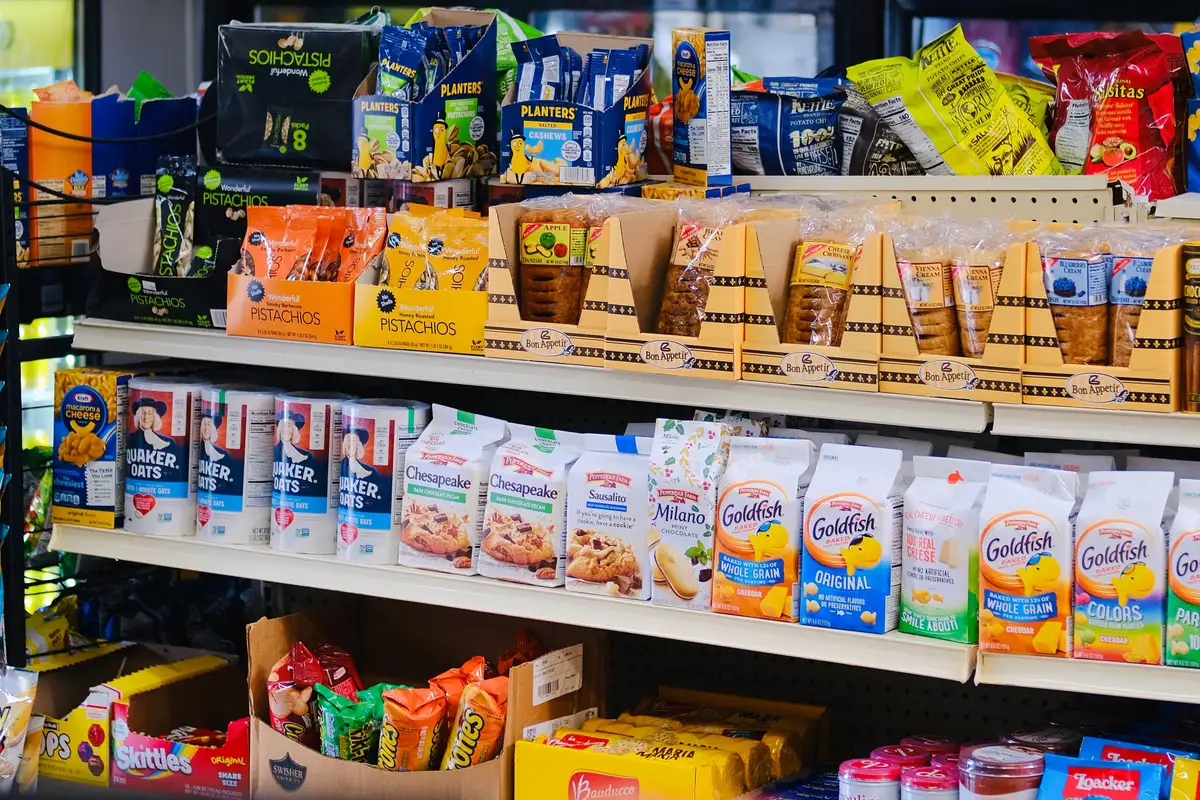
Inventory and business personal property, liquor liability in a state that trains the permit holder and requires nothing of the people behind the counter, severe-storm property exposure, refrigeration and spoilage, crime, and workers compensation at three employees.
Nate is a Chartered Property Casualty Underwriter and the founder of Wexford Insurance, LLC. He places convenience store programs across 48 states — inventory and business personal property, the liquor liability the GL form excludes, crime and cash-handling, and the workers compensation that store staffing triggers. Reach him via the Gas Station Guard Insurance quote form or call 317-942-0549.
Last updated · Reviewed by Nate Jones, CPCU
Arkansas puts the training obligation on exactly one person, and it is not the one making the sale. Every individual applying for a permit must attend an educational seminar covering the responsibilities of holding a permit and serving alcoholic beverages. Against that, the Alcoholic Beverage Control Division states the position for everyone else plainly: Arkansas law does not currently require bartenders or servers to attend training classes or to be certified in any way.
Third-party programs exist and plenty of operators use them, but participation is entirely at the business’s discretion. Which produces an unusual situation for an insurance conversation — because the state requires nothing of your staff, whatever training you run voluntarily is not a supplement to the legal minimum. It is the whole control, and it is the only thing an underwriter has to look at.
Carriers do not underwrite convenience stores as generic retail. The class carries robbery and burglary frequency above strip retail, premises claims that behave more like restaurant claims, refrigeration failures landing on stocked perishables, and the regulatory exposure of age-restricted sales. Arkansas adds tornado and severe convective storm exposure across the state, ice storms in winter, and long rural distances outside the corridor between Little Rock and Fayetteville.
This page covers the Arkansas store: what moves premium here, what it means to be the only party the state has trained, the coverage lines in a typical program, the three-employee compensation threshold, the claims we see, and the underwriting realities that decide appetite. Fuel-dispensing sites layer the petroleum lines on top.
48
States licensed (all except Hawaii and Alaska)
20+
Specialty markets in our c-store panel
1–2 hr
Quote turnaround during business hours
C-store
Class-focused agency, not generic retail
What Arkansas convenience store insurance costs
We do not publish premium ranges, because a c-store premium is built from the operation rather than a state average. These are the drivers that move the number on an Arkansas store.
What your own training program actually is: With no state mandate for staff, your documented program is the entire age-verification control. It is worth describing in detail rather than mentioning, because there is nothing else in the file.
Whether that program is documented at all: Training that happened but was never recorded is indistinguishable, after an incident, from training that never happened.
Tornado and severe convective storm exposure: Roof age, roof covering and canopy construction decide both the deductible structure and, on a poor loss history, appetite.
Ice storm loading: Arkansas sits where winter systems stall, and accumulation on canopies and signage engineered for wind is a distinct failure mode.
Rural distance and response time: Outside the corridor the catchments widen and the nearest responding service is further away, which changes how a fire or a robbery develops.
Prepared food operations: A hot case or deli brings product liability and cooking equipment onto the program and widens the injury pattern.
Headcount against three: The compensation threshold sits at three employees for a retail operation, and part-time staff count toward it.
The state trained you, and nobody else
Arkansas requires every individual applying for a permit to attend an educational seminar about the responsibilities of holding a permit and serving alcoholic beverages. The Division runs the sessions on a set schedule and attendance is a condition of the application, so the person whose name goes on the permit arrives having been told what the obligations are.
For everyone else the position is the opposite, and the ABC says so directly rather than leaving it to be inferred: Arkansas law does not currently require bartenders or servers to attend training classes or be certified in any way. Educational programs exist and many businesses use them, but participation is completely at the discretion of the business to fit its own policies.
Permit types themselves are determined by the nature of the business — a convenience store, a restaurant, a liquor store and a bar sit in different categories with different permissions. That part is ordinary. What is not ordinary is the gap between who the state has educated and who actually completes the transaction at the register on a Friday night.
The insurance consequence is worth being direct about, because it runs against the instinct. In most states a store’s training program supplements a statutory floor, and an underwriter reads it as evidence of care above the minimum. In Arkansas there is no floor beneath it. Your program is not doing better than the law requires — it is doing everything the law does not. That makes documentation, refresher intervals and a record of who completed what into the substance of the age-verification control rather than the paperwork around it.
Coverage lines for an Arkansas convenience store
Property and business personal property: Building if owned, plus inventory, coolers, shelving, POS hardware, signage and canopy. Wind, hail and ice loading are the three perils that decide Arkansas property terms.
General liability: Third-party injury and property damage on the sales floor, at the entrance and across the lot, including surface conditions after an ice event.
Liquor liability: The general liability form excludes alcohol-related bodily injury and property damage. In a state with no staff training mandate, the limit and the store’s own program are doing more work than usual, because there is no statutory control underneath either.
Crime and employee dishonesty: Money and securities, robbery, burglary and employee theft. Rural sites bank less often than metro ones, so more sits on the premises than a nightly cycle assumes.
Spoilage and equipment breakdown: The failed refrigeration unit and the stock lost behind it, as separate agreements — and an ice storm outage can take both at once.
Cyber liability: Card compromise at the register and the pump, ransomware, and the interruption that follows an outage.
Workers compensation: Statutory coverage at three or more employees, with the exemptions drawn around categories of work rather than around the size of the business.
Workers compensation for Arkansas store employees
Arkansas requires employers with three or more employees to carry workers compensation coverage. Certain high-risk industries, construction among them, are required to carry it below that number, but for a retail operation such as a convenience store the threshold is three.
The exemptions are drawn around categories of work rather than around business size. Agricultural farm labor sits outside the Act, as do domestic servants in private homes, real estate agents compensated solely by commission, casual employees, and employees of certain religious, charitable and non-profit organizations. None of those categories describes a convenience store payroll.
Three is a low enough number that most staffed stores are inside the system, and high enough that a genuinely small operation can sit outside it without noticing when it crosses. A husband-and-wife store that takes on a single weekend clerk has reached three if both owners are counted as employees of the business, and the arithmetic is worth doing against the actual roster rather than against an impression of how big the store feels.
Arkansas convenience store claims we see
An underage sale with no training record behind it
The clerk was told what to do and nobody wrote it down. Where the state mandates nothing, an undocumented program and no program look identical once a file is being reviewed.
Tornado or straight-line wind damage
Canopy and signage fail before the roof does, and a percentage deductible means the retained loss scales with the insured value.
Ice loading on a canopy built for wind
Accumulation applies a load the structure was never designed to carry, frequently with an extended outage arriving behind it.
Extended outage taking the perishable assortment
The building is intact and the coolers are not. Spoilage and business income carry that loss; the property form does not see it.
Robbery at a rural store
Distance lengthens the incident and the response, and the clerk injury and closure typically cost more than what was taken.
An injury at a store that had just reached three
The threshold arrived with a weekend hire that nobody registered as a milestone, and the arithmetic had not been done against the roster.
The Arkansas c-store risk profile
Arkansas is a severe-weather property market with three distinct seasons of exposure. Spring and early summer bring tornado and straight-line wind risk; hail runs through the same period; and winter brings ice storms that load canopies and signage engineered for wind rather than weight. A schedule spread across the state carries all three rather than choosing between them.
The trade profile divides between the Little Rock and northwest Arkansas corridors and a large rural remainder. Corridor stores are underwritten on customer count and hours; rural stores on isolation, banking frequency and a business income exposure that runs well beyond what the property schedule suggests, because the store is often the only convenient option for a wide area.
The training position is the Arkansas-specific layer and its effect is on evidence rather than on hazard. The exposure to an underage sale is the same as anywhere else. What differs is that the state has supplied no baseline control, so everything an underwriter or a claimant looks at afterwards comes from the store itself. Operators who run and record a proper program are not exceeding a standard here; they are supplying one.
There is a practical consequence for multi-site operators that is easy to miss. Where a state mandates staff certification, consistency across a group is largely handled for you — every location is working to the same externally set requirement, and a new store inherits it on day one. In Arkansas consistency is entirely an internal achievement. A group that grew by acquisition can be running three different training practices under one insurance program without anyone having decided that, because each site brought whatever its previous owner did or did not do. Before a renewal it is worth asking not whether the company has a training program but whether every location is actually running the same one, and whether the records would show it.
Why Arkansas c-store owners work with Gas Station Guard Insurance
We place convenience store programs across 48 states and write south-central petroleum and c-store risks routinely, so an Arkansas submission describes the store’s own training program and how it is recorded, roof age and canopy construction, banking frequency on rural sites, and loss history with enough storm context to be read fairly.
As an independent agency we place to carriers with appetite for the class rather than to a single company. Where an Arkansas store sits behind a forecourt, the petroleum and retail lines are written as one program rather than two policies with a seam between them.
Arkansas convenience store insurance FAQs
Does Arkansas require our clerks to be certified to sell alcohol?
No. The Alcoholic Beverage Control Division states that Arkansas law does not currently require bartenders or servers to attend training classes or be certified in any way. Third-party programs exist, and participation is completely at the discretion of the business.
Then who does the state train?
The permit holder. Every individual applying for a permit must attend an educational seminar about the responsibilities of holding a permit and serving alcoholic beverages. The obligation sits with the person whose name is on the permit rather than with the people completing transactions.
Should we run our own training anyway?
Yes, and for a reason specific to this state. Elsewhere a store program supplements a statutory floor. Here there is no floor beneath it, so your program is not doing better than the law requires — it is doing everything the law does not, and it is the only control an underwriter or a claimant will find.
What should that program look like on paper?
Documented, dated and attributable. Who was trained, on what, when, and when they were refreshed. Training that happened but was never recorded is indistinguishable after an incident from training that never happened, and in a state with no mandate there is nothing else in the file to fall back on.
How many employees before we need workers compensation?
Three or more for a retail operation. Some high-risk industries such as construction are required to carry it below that, but a convenience store’s threshold is three.
Which employments are exempt?
The exemptions are drawn around categories of work rather than business size — agricultural farm labor, domestic servants in private homes, real estate agents paid solely by commission, casual employees, and employees of certain religious, charitable and non-profit organizations. None of them describes a convenience store payroll.
Why does an ice storm cost more than the wind damage suggests?
Because accumulation loads structures that were engineered for wind rather than weight, and because the outage usually arrives with it. The canopy or sign failure is the visible claim; the coolers and the days closed are frequently the larger number.
Does a standalone Arkansas c-store need pollution coverage?
Not usually, where there is no fuel dispensing and no storage tank on site. Pollution and storage tank liability are petroleum lines. A standalone store carries the retail stack described here without them, which is part of why standalone and fuel-attached stores go to different carrier panels.