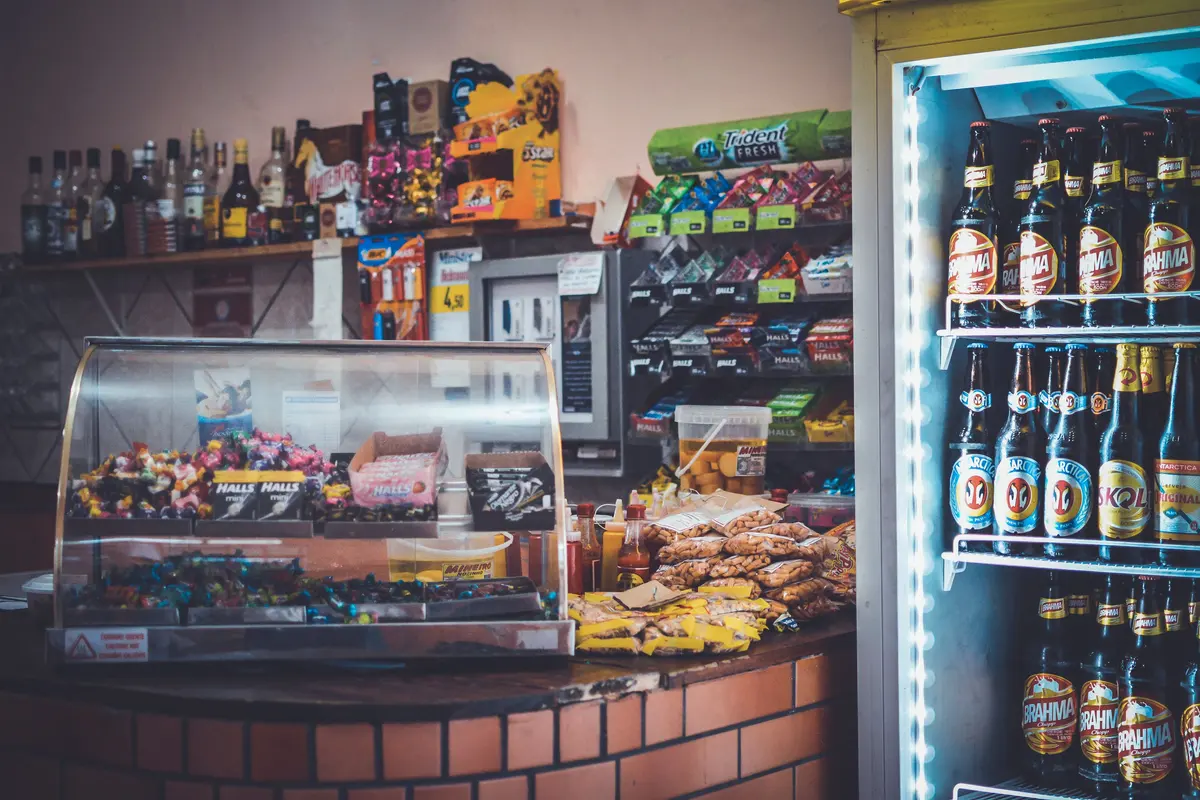
Inventory and business personal property, liquor liability under the beer and wine retailer class, hail-exposed property, refrigeration and spoilage, crime, and workers compensation from the first employee.
Nate is a Chartered Property Casualty Underwriter and the founder of Wexford Insurance, LLC. He places convenience store programs across 48 states — inventory and business personal property, the liquor liability the GL form excludes, crime and cash-handling, and the workers compensation that store staffing triggers. Reach him via the Gas Station Guard Insurance quote form or call 317-942-0549.
Last updated · Reviewed by Nate Jones, CPCU
Colorado changed what a convenience store sells. Proposition 125 converted the off-premises class that most grocery and convenience stores hold into the Fermented Malt Beverage and Wine Retailer license, and from March 2023 those stores could put wine on the shelf alongside beer. That expanded the alcohol exposure on a large number of Colorado stores in a single step, and a program written before the conversion may still be sized for the narrower risk.
The rest of the store is high-velocity retail with a compliance overlay. Your Colorado store moves tobacco, alcohol, lottery, prepared food, packaged grocery, and the impulse categories that turn over weekly. The inventory needs property coverage, the aisles need general liability, the safe and register need crime coverage, the card reader needs cyber, and every employee needs workers compensation from the first hire.
Carriers do not underwrite convenience stores as generic retail. The class carries robbery and burglary frequency above strip retail, premises claims that behave more like restaurant claims, refrigeration failures landing on stocked perishables, and the regulatory exposure of age-restricted sales across a busy counter. Colorado adds a property dimension that dominates the conversation on the Front Range: hail.
This page covers the Colorado store: what moves premium here, how the license class shapes the alcohol exposure, the coverage lines in a typical program, the compensation requirement that begins at one employee, the claims we see, and the underwriting realities that decide appetite. Fuel-dispensing sites layer the petroleum lines on top.
48
States licensed (all except Hawaii and Alaska)
20+
Specialty markets in our c-store panel
1–2 hr
Quote turnaround during business hours
C-store
Class-focused agency, not generic retail
What Colorado convenience store insurance costs
We do not publish premium ranges, because a c-store premium is built from the operation rather than a state average — and in Colorado the hail exposure alone can separate two otherwise similar stores. These are the drivers that actually move the number.
Hail exposure and roof condition: Front Range hail is the dominant Colorado property factor. Roof age, material, and condition drive deductible structure and terms, and wind and hail deductibles are frequently written as a percentage of value rather than a flat amount.
Alcohol product mix: A store selling beer and wine under the retailer class presents a different severity profile from one selling beer alone. What the store actually stocks matters more than what the class permits.
Elevation, distance, and responding service: Mountain and rural stores are underwritten on distance from responding fire service, access in winter conditions, and the revenue concentration of being the only retail food source in the area.
Prepared food and refrigeration depth: A deli or hot case brings product liability and raises the dependence on refrigeration, which in turn raises what a compressor failure costs.
Hours and overnight staffing: Overnight single-clerk operation is rated on both crime and compensation, and protective safeguards move terms.
Loss history shape: Frequency of small claims moves appetite on this class faster than one significant loss does.
Brush and wildland interface: Colorado stores sited where development meets wildland are underwritten for that exposure separately from hail, and defensible space around the building and fuel storage affects both appetite and terms.
Protective safeguards: Camera coverage, drop and time-delay safes, alarm and monitoring, and lighting at the entrance feed the crime rating directly, and on isolated stores they sometimes decide whether a carrier offers at all.
The license class sets the product mix
Colorado separates off-premises retail alcohol into distinct license classes with different privileges. Following the passage of Proposition 125, licensed fermented malt beverage off-premises retailers — the class most convenience and grocery stores hold — converted to the Fermented Malt Beverage and Wine Retailer license, which carries beer and wine in sealed containers for off-premises consumption. The Liquor Enforcement Division ran training on the change and adopted emergency rules as it took effect in 2023.
Spirits sit elsewhere. The retail liquor store license is the class the Colorado General Assembly’s licensing handbook describes as the one that may sell spirituous liquors for off-premises consumption, and the c-store class does not reach that far. For an operator the practical question is therefore not what Colorado permits in general but which class the specific store holds and what it actually stocks.
The class also carries distance considerations relative to existing retail liquor stores, which is why a new license is not simply a matter of applying. Where a Colorado store’s alcohol permissions changed at conversion, the liquor liability limit is worth revisiting — a program sized for a beer-only store is sized for the operation as it was before March 2023, not as it is now.
Coverage lines for a Colorado convenience store
Property and business personal property: Building if owned, plus inventory, coolers, shelving, POS hardware, and signage. Colorado property terms are shaped by hail more than by any other peril, and the wind and hail deductible is often the most important number on the quote.
General liability: Customer bodily injury and third-party property damage in the aisles, at the entrance, and across the lot — including winter surface conditions at elevation.
Liquor liability: The general liability form excludes alcohol-related bodily injury and property damage. Wherever a Colorado store sells beer or wine, this is the separate line that responds, and carriers writing the class commonly require it.
Crime and employee dishonesty: Money and securities, robbery, burglary, and employee theft, with the discovery terms mattering as much as the limit on sustained shortages.
Cyber liability: Card compromise at the register and the pump, ransomware, and the interruption that follows an outage.
Workers compensation: Statutory coverage for clerks and deli staff, required in Colorado from the first employee including part-time and family members.
Umbrella and excess: Higher limits over general liability, liquor liability, and auto — standard on multi-store operators and stores with meaningful alcohol volume.
Workers compensation for Colorado store employees
Colorado requires workers compensation coverage from employers with one or more employees, and the requirement does not distinguish between part-time, full-time, and family members. Anyone paid for work performed is presumed to be an employee.
There is no small-store threshold to reason about here, which makes Colorado simpler than Tennessee and stricter than most. A single part-time clerk creates the requirement. Operating without coverage exposes the business to daily penalties and to paying an injured worker’s claim directly, with an additional penalty applied to the benefits owed.
The injury pattern is the usual one for the class: lifting cases of product, slips behind the counter and in the walk-in, cuts in the deli area, and injuries arising during a robbery. Rate follows class code and payroll; the loss pattern follows housekeeping and delivery handling.
Colorado convenience store claims we see
Front Range hail event damaging roof, canopy, and HVAC
The single most common significant property claim in Colorado. Percentage wind and hail deductibles mean the retained loss is often much larger than operators expect, and roof age drives how the settlement lands.
Compressor failure in a store with deep perishable stock
Equipment breakdown responds to the unit, spoilage to the stock, business income to the closure. On a rural Colorado store where the perishable assortment is the reason customers come, all three matter.
Robbery at an isolated or late-night store
Distance from responding service lengthens everything — the incident, the closure, and the investigation. The compensation and business income elements typically exceed the money taken.
Slip on ice at the entrance
Elevation and freeze-thaw cycles produce entrance ice well outside deep winter. These claims turn on documented inspection and treatment procedure.
Alcohol sale to a minor during a compliance check
The consequence lands on the license. Liquor liability responds to third-party injury rather than to the administrative penalty, so the training and ID-check program is the meaningful control.
Employee theft discovered at inventory reconciliation
Usually small amounts over a long period rather than a single event, and usually found when stock is counted rather than when it is taken. Crime coverage responds subject to the discovery terms, and the employee dishonesty sub-limit is frequently set well below what a sustained shortage actually reaches.
The Colorado c-store risk profile
Colorado convenience retail divides between the Front Range corridor from Fort Collins through Denver to Colorado Springs and the mountain and eastern-plains stores beyond it. The Front Range store is underwritten on hail, foot traffic, and crime; the mountain or plains store is underwritten on distance from responding fire service, winter access, and the revenue concentration that comes with being the only retail food source for some distance.
Hail is the statewide constant on the property side. It shapes deductible structure, drives the roof questions on every submission, and is the reason Colorado property terms often look stricter than an operator expects from the loss history of their own store.
The alcohol layer changed recently enough to be worth checking. Stores whose permissions expanded at the Proposition 125 conversion carry more alcohol exposure than they did before March 2023, and programs that have not been revisited since may still reflect the narrower operation.
Business income deserves particular attention on Colorado accounts, and for two separate reasons. On the Front Range, a hail event that takes the roof can put a store into a contractor queue shared with every other damaged building in the same trade area, which lengthens the period of restoration well beyond what the repair itself would suggest. In the mountains and on the plains, the constraint is different — a store that is the only retail food source for some distance has no nearby alternative location to trade from, and its customers cannot simply shop elsewhere. Both situations push the realistic restoration period longer than a standard assumption, and the limit should be built from that period rather than from a percentage of last year’s revenue.
Why Colorado c-store owners work with Gas Station Guard Insurance
We place convenience store programs across 48 states and write Colorado petroleum and c-store risks routinely, so submissions go out with what underwriters on this class ask for — roof age and condition, hours and overnight staffing, alcohol permissions and actual product mix, protective safeguards, prepared food, and loss detail with enough context to read properly.
As an independent agency we place to carriers with appetite for the class rather than to a single company’s appetite. Where a Colorado store sits behind a forecourt, the petroleum and retail lines are written as one program rather than as two policies with a seam between them.
Colorado convenience store insurance FAQs
Does my Colorado store need liquor liability if it only sells beer?
In most cases yes. The general liability form excludes bodily injury and property damage arising from the sale of alcohol, and that exclusion does not distinguish between beer and spirits. Liquor liability is the separate line that responds, and carriers writing convenience store business commonly require it wherever alcohol is sold at all.
Our store started selling wine after Proposition 125. Should the program change?
It is worth revisiting. Adding wine expands what the store sells and therefore the severity a liquor liability claim can reach. A program written for a beer-only operation before March 2023 was sized for a narrower risk, and the limit is the part most often left behind.
Why is my Colorado wind and hail deductible so large?
Because hail is the dominant property peril in the state and carriers manage it through deductible structure rather than through rate alone. Wind and hail deductibles on Colorado accounts are frequently written as a percentage of the insured value, which means the retained loss scales with the building — and roof age is the biggest single factor in where that percentage lands.
Do I need workers compensation for one part-time clerk in Colorado?
Yes. Colorado requires coverage from employers with one or more employees, with no distinction between part-time, full-time, and family members — anyone paid for work performed is presumed an employee. There is no small-store threshold in Colorado of the kind that exists in some other states.
How does spoilage coverage differ from equipment breakdown?
Equipment breakdown responds to the failed refrigeration unit itself. Spoilage responds to the stock that was lost because the unit failed. They are separate agreements and a store can carry one without the other, which is the gap that shows up on Colorado accounts where perishable inventory is a large share of the floor.
We are the only store for thirty miles. Does that help or hurt?
Both. Revenue concentration raises the business income exposure, because customers have nowhere else to go and the store has no nearby alternative location to operate from. Distance from responding fire service raises the property exposure. Underwriters price both, and business income is the line most often set too low on isolated stores.
We sell fuel as well. Is this the right page?
It covers the retail half. If your Colorado site dispenses fuel, storage tank and pollution liability lead the program and the retail lines described here sit alongside them — start from the gas station side and add the store.
Can several Colorado stores go on one program?
Yes, scheduled by location. The schedule should record roof age, alcohol permissions and actual product mix, hours, and overnight staffing per site, because those vary between stores in the same company and a schedule that assumes uniformity will produce the wrong limits somewhere.