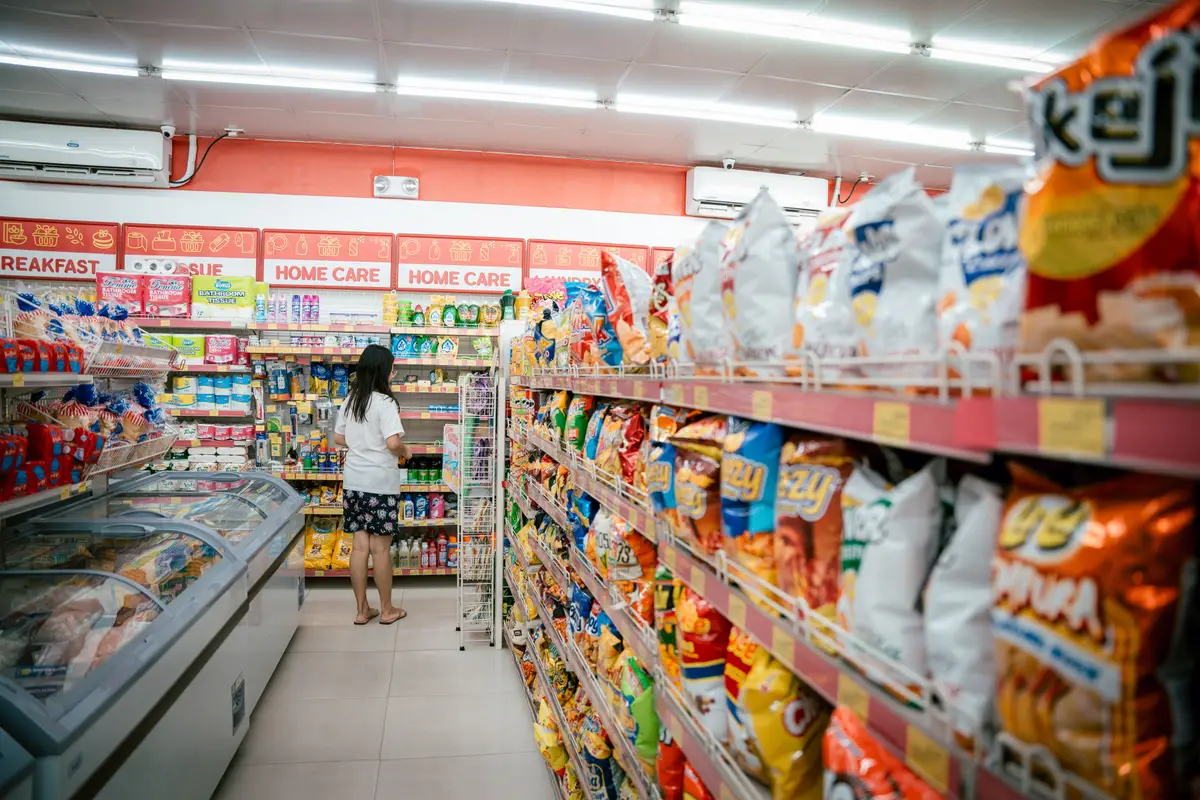
Inventory and business personal property, liquor liability across two separate licensing authorities, winter-exposed property, refrigeration and spoilage, crime and cash handling, and workers compensation before your first hire.
Nate is a Chartered Property Casualty Underwriter and the founder of Wexford Insurance, LLC. He places convenience store programs across 48 states — inventory and business personal property, the liquor liability the GL form excludes, crime and cash-handling, and the workers compensation that store staffing triggers. Reach him via the Gas Station Guard Insurance quote form or call 317-942-0549.
Last updated · Reviewed by Nate Jones, CPCU
Idaho splits alcohol between two agencies that do not overlap, and a convenience store can end up answering to both. Spirits belong to the Idaho State Liquor Division, which runs state stores and authorizes contract retail stores. Beer and wine are not the Division’s business at all — those licenses come from the Idaho State Police. One store, two regulators, two entirely separate compliance relationships.
The rest of the store behaves like high-velocity retail with a compliance overlay. Your Idaho store moves tobacco, alcohol, lottery, prepared food, packaged grocery, and the impulse categories that turn over weekly. The inventory needs property coverage, the aisles need general liability, the safe and register need crime coverage, the card reader needs cyber, and every employee needs workers compensation from before the first hire.
Carriers do not underwrite convenience stores as generic retail. The class carries robbery and burglary frequency above strip retail, premises claims that behave more like restaurant claims, refrigeration failures landing on stocked perishables, and the regulatory exposure of age-restricted sales. Idaho adds distance: a large share of the state’s stores serve trade areas where the next retail food source is a long drive.
This page covers the Idaho store: what moves premium here, how the two-agency structure shapes the alcohol exposure, the coverage lines in a typical program, the compensation requirement that begins before hiring, the claims we see, and the underwriting realities that decide appetite. Fuel-dispensing sites layer the petroleum lines on top.
48
States licensed (all except Hawaii and Alaska)
20+
Specialty markets in our c-store panel
1–2 hr
Quote turnaround during business hours
C-store
Class-focused agency, not generic retail
What Idaho convenience store insurance costs
We do not publish premium ranges, because a c-store premium is built from the operation rather than a state average. These are the drivers that move the number on an Idaho store.
Whether the store is a state liquor contractor: A store operating as a contract retail store for the Liquor Division holds state-owned inventory and a different obligation set from a store selling beer and wine only. Tell your broker if this applies — it is not the default assumption for the class.
Beer and wine permissions: Beer and wine licenses come from a different agency than spirits, so a store’s permissions can look inconsistent on paper. The liquor liability limit follows what is actually on the shelf.
Distance from responding fire service: Rural Idaho stores are rated partly on response time and water availability, both of which change how a fire develops before anyone arrives.
Winter property exposure: Roof loading, ice damming and freeze protection on sprinkler and water systems drive Idaho property terms, and mountain locations carry more of all three.
Revenue concentration: A store that is the only retail food source for some distance has no nearby alternative to trade from, which lengthens the realistic period of restoration.
Hours and overnight staffing: Overnight operation on a single clerk is rated on both crime and compensation, and protective safeguards move terms.
Prepared food and refrigeration depth: A deli or hot case brings product liability and raises what a compressor failure costs.
Two agencies, one store, no overlap
Distilled spirits in Idaho are sold only in state-operated liquor stores and in contract retail stores authorized by the Idaho State Liquor Division. That second category is the one worth noticing: a private business can be authorized to sell spirits as the state’s contractor, which means an Idaho convenience store may be operating part of the state’s retail liquor system inside its own four walls.
The Division has no oversight of beer and wine. Those move through private distributors, and the off-premises licenses that let a store sell them are issued by the Idaho State Police Alcohol Beverage Control division. So the same store can hold a Liquor Division authorization and a State Police license simultaneously, governed by two agencies with separate rules, separate enforcement and separate renewal cycles.
All Idaho retailers must purchase liquor from the Liquor Division, which makes the state both regulator and supplier on the spirits side while the beer and wine side runs through ordinary private wholesalers. For an operator this is a split-brain compliance position, and it is the reason a state-level answer about what Idaho allows rarely settles what a specific store is permitted to do.
At underwriting, the practical consequence is that Idaho submissions need the permissions listed separately rather than summarized. A store described simply as selling alcohol tells a carrier much less here than in a single-agency state.
Coverage lines for an Idaho convenience store
Property and business personal property: Building if owned, plus inventory, coolers, shelving, POS hardware and signage. Idaho property carries a severe-winter emphasis — roof loading, ice damming and freeze exposure on water and sprinkler systems.
General liability: Customer bodily injury and third-party property damage in the aisles, at the entrance and across the lot, including winter surface conditions.
Liquor liability: The general liability form excludes alcohol-related bodily injury and property damage. Wherever an Idaho store sells beer or wine under its State Police license — or spirits as a Liquor Division contractor — this is the separate line that responds.
Crime and employee dishonesty: Money and securities, robbery, burglary and employee theft. A store holding state-owned spirits inventory has more value behind the counter than the register suggests.
Cyber liability: Card compromise at the register and the pump, ransomware, and the interruption that follows an outage.
Workers compensation: Statutory coverage for clerks and deli staff, required in Idaho from the first hire, with the ownership layer generally exempt.
Umbrella and excess: Higher limits over general liability, liquor liability and auto, worth considering wherever alcohol volume or highway traffic is meaningful.
Workers compensation for Idaho store employees
Idaho requires a workers compensation policy from employers with one or more full-time, part-time, seasonal or occasional employees, and the coverage must be in place before the first employee is hired rather than after. There are no waivers — the law prohibits them outright.
The exemptions run the opposite way from some neighboring states. The owner of a sole proprietorship, working members of a partnership or LLC, and individuals who are corporate officers are exempt from the requirement, as is household domestic service and, for sole proprietorships, family members living in the employer’s household. Coverage can be elected for exempt employment.
For a convenience store that means the ownership layer generally sits outside the count while every clerk sits inside it, and the trigger is the first hire rather than a headcount. The injury pattern is the usual one for the class: lifting cases, slips behind the counter and in the walk-in, cuts in the deli area, and injuries arising during a robbery.
Idaho convenience store claims we see
Frozen and burst water line during a cold snap
A thinly staffed or closed store can run for hours before a burst line is found, and the damage lands on stock and fit-out rather than plumbing. Heat maintenance, monitored low-temperature alarms and a written cold-snap procedure are the controls carriers ask about.
Compressor failure with deep perishable stock
Equipment breakdown responds to the unit, spoilage to the stock, business income to the closure. On a rural Idaho store where the perishable assortment is the reason customers come, all three matter.
Robbery at an isolated or late-night location
Distance from responding service lengthens the incident, the closure and the investigation. The compensation and business income elements typically exceed the money taken.
Slip on ice at the entrance
Freeze-thaw cycles produce entrance ice well outside deep winter, and these claims turn on documented inspection and treatment procedure.
Alcohol sale to a minor during a compliance check
Which agency responds depends on which product was sold, and the consequence lands on that license. Liquor liability responds to third-party injury rather than the administrative penalty.
Loss of state-owned liquor inventory
A contract retail store holds stock it does not own. Fire, theft or water damage to that inventory raises questions a standard business personal property limit was not sized for, and it is worth confirming how the program treats it.
The Idaho c-store risk profile
Idaho convenience retail runs from the Treasure Valley corridor around Boise and Nampa to mountain and panhandle stores where the next retail food source can be a long drive. The valley store is underwritten on traffic, crime and premises liability; the mountain or rural store is underwritten on distance from responding fire service, winter access, and the revenue concentration that comes with being the only option for miles.
Winter is the statewide property constant — roof loading, ice damming, freeze exposure on water and sprinkler systems, and the slip-and-fall pattern that follows melt-water indoors. Elevation intensifies all of it, and a schedule spanning the valley and the mountains carries two different property conversations.
The two-agency alcohol structure is the Idaho-specific layer. Because spirits and beer/wine are governed separately, a store’s permissions have to be established individually rather than inferred, and a store operating as a state liquor contractor carries obligations and inventory that a beer-and-wine store does not.
Why Idaho c-store owners work with Gas Station Guard Insurance
We place convenience store programs across 48 states and write western petroleum and c-store risks routinely, so submissions carry what underwriters on this class ask for — distance from responding service, winter protection detail, hours and staffing, both sets of alcohol permissions listed separately, protective safeguards, and loss history with enough context to read properly.
As an independent agency we place to carriers with appetite for the class rather than to a single company. Where an Idaho store sits behind a forecourt, the petroleum and retail lines are written as one program rather than as two policies with a seam between them.
Idaho convenience store insurance FAQs
Our Idaho store is a state liquor contract store. Does that change the program?
It should be disclosed, because it changes two things. The store holds spirits inventory it does not own, which raises questions about how the property limit treats that stock, and it adds a second regulator to the compliance picture. Neither makes the risk unplaceable, but neither is the default assumption for a c-store submission.
Why do my beer and spirits permissions come from different places?
Because Idaho splits them. The Idaho State Liquor Division handles spirits, including state stores and contract retail stores, and has no oversight of beer and wine. Off-premises beer and wine licenses come from the Idaho State Police Alcohol Beverage Control division instead.
Do I need workers compensation for one part-time clerk in Idaho?
Yes, and it needs to be in place before the hire rather than after. Idaho requires coverage from employers with one or more full-time, part-time, seasonal or occasional employees, and waivers are prohibited. Sole proprietors, working LLC members and corporate officers are exempt but may elect coverage.
How does spoilage coverage differ from equipment breakdown?
Equipment breakdown responds to the failed refrigeration unit itself. Spoilage responds to the stock lost because the unit failed. They are separate agreements, and carrying only one is the gap that shows up on Idaho accounts where perishable inventory is a large share of the floor.
We are the only store for thirty miles. Does that help or hurt?
Both. Revenue concentration raises the business income exposure, because customers have nowhere else to go and the store has no nearby alternative location to operate from. Distance from responding fire service raises the property exposure. Business income is the line most often set too low on isolated stores.
What does freeze protection have to do with my quote?
A great deal in Idaho. Frozen and burst water or sprinkler lines are a frequent and expensive winter claim, and carriers look for heat maintenance, monitored alarms and a documented procedure for cold snaps and closures. It is one of the few property controls an operator can improve quickly and see reflected in terms.
Can several Idaho stores go on one program?
Yes, scheduled by location. The schedule should record each site’s alcohol permissions separately — spirits and beer/wine come from different agencies — along with roof and freeze protection, hours and overnight staffing, because those vary between stores in the same company.
Does a standalone Idaho c-store need pollution coverage?
Not usually, where there is no fuel dispensing and no storage tank on site. Pollution and storage tank liability are petroleum lines. A standalone store carries the retail stack described here without them, which is part of why standalone and fuel-attached stores go to different carrier panels.