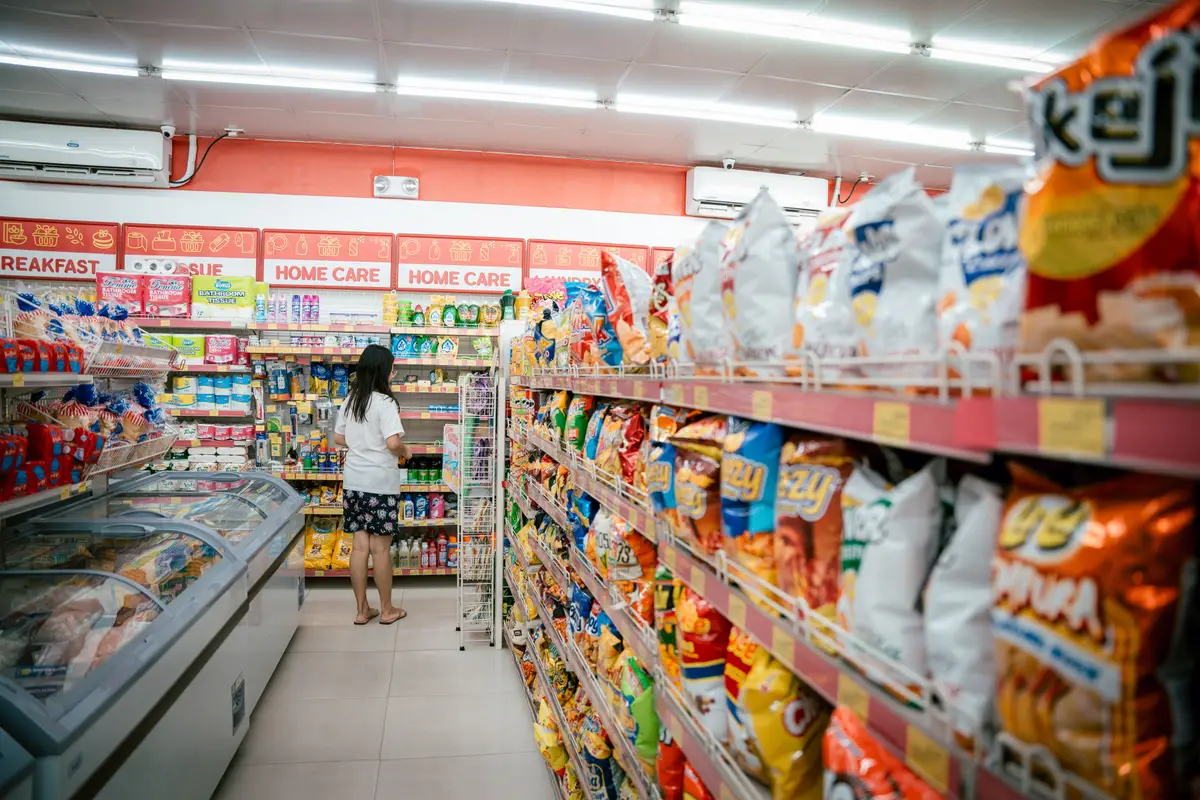
Inventory and business personal property, liquor liability on the beer a cereal malt beverage license permits, severe-storm property exposure, refrigeration and spoilage, crime, and a workers compensation requirement measured in dollars of payroll.
Nate is a Chartered Property Casualty Underwriter and the founder of Wexford Insurance, LLC. He places convenience store programs across 48 states — inventory and business personal property, the liquor liability the GL form excludes, crime and cash-handling, and the workers compensation that store staffing triggers. Reach him via the Gas Station Guard Insurance quote form or call 317-942-0549.
Last updated · Reviewed by Nate Jones, CPCU
Kansas is unusual in who it lets own an alcohol business. Ask the state’s Alcoholic Beverage Control whether a corporation can hold a retailer’s license and the answer is a flat no. The tier that sells spirits and full-strength wine is reserved for natural persons, which means the store selling the strong products near you is not, and cannot be, a company.
That is a structural fact with commercial consequences. A retail liquor store in Kansas cannot be capitalized, insured or scaled the way a corporate chain can, so the competitive landscape around your store is populated by owner-operated businesses rather than regional groups. It also means the convenience store, which operates on an entirely separate license, is the corporate participant in the market.
Carriers do not underwrite convenience stores as generic retail. The class carries robbery and burglary frequency above strip retail, premises claims that behave more like restaurant claims, refrigeration failures landing on stocked perishables, and the regulatory exposure of age-restricted sales. Kansas adds hail, wind and tornado exposure that drives property terms harder than almost anything else on the submission.
This page covers the Kansas store: what moves premium here, how an ownership restriction shapes the market you operate in, the coverage lines in a typical program, a compensation requirement counted in dollars rather than people, the claims we see, and the underwriting realities that decide appetite. Fuel-dispensing sites layer the petroleum lines on top.
48
States licensed (all except Hawaii and Alaska)
20+
Specialty markets in our c-store panel
1–2 hr
Quote turnaround during business hours
C-store
Class-focused agency, not generic retail
What Kansas convenience store insurance costs
We do not publish premium ranges, because a c-store premium is built from the operation rather than a state average. These are the drivers that move the number on a Kansas store.
Hail and severe convective storm exposure: This is the single largest property driver in Kansas. Roof age, roof covering and canopy construction decide both the deductible structure and whether a carrier wants the risk at all.
Total annual payroll: The compensation requirement is triggered by a dollar figure rather than a headcount, so the payroll total — including wages paid outside the state — is what decides whether the store is in the system.
Tornado and total-loss potential: A property limit set several renewals ago is the most common problem we find on Kansas schedules, because this is a market where total losses genuinely happen.
Whether the store holds its CMB license: A cereal malt beverage license brings a liquor liability line onto the program. Whether it exists, and how much beer actually moves, are different questions and both belong on a submission.
Distance from responding fire service: Across western and rural Kansas the response time and the nearest water supply decide how far a fire develops before anyone arrives.
Prepared food operations: A hot case or deli brings product liability and cooking equipment onto a schedule that would otherwise be packaged goods.
Hours and single-clerk shifts: Overnight operation with one person behind the counter is rated on the crime line and the compensation line together.
A corporation may not hold a Kansas retailer’s license
Kansas Alcoholic Beverage Control states the position plainly in its own licensing guidance: a corporation cannot hold a retailer’s license. The retail liquor store — the outlet where alcoholic liquor, cereal malt beverage, non-alcoholic malt beverage and other goods may be sold — is a business form reserved to individuals rather than to companies.
A convenience store operates on a different footing entirely. Off-premise retailers sell cereal malt beverage and beer containing not more than 6% alcohol by volume, in the original unopened container, for consumption off the licensed premises. That permission comes through a cereal malt beverage license issued by the city or county clerk where the business sits, with the state Alcoholic Beverage Control issuing the CMB stamp.
The consequence worth planning around is what the ownership rule does to the market rather than to your paperwork. The businesses selling spirits near your store are owner-operated by law, which shapes their hours, their capitalization and their staying power. A corporate convenience chain and an individually owned liquor store are not competing on equal structural terms, in either direction.
For a program this means the alcohol exposure on a Kansas c-store is bounded and knowable — beer, in sealed containers, to go — while the surrounding competitive picture is unusual enough to be worth describing when an underwriter asks what the trade area looks like.
Coverage lines for a Kansas convenience store
Property and business personal property: Building if owned, plus inventory, coolers, shelving, POS hardware, signage and canopy. Hail is the defining Kansas peril and roof age is the first thing an underwriter looks at.
General liability: Third-party injury and property damage on the sales floor, at the door and across the lot, including surface conditions after ice and after hail damage to paving.
Liquor liability: The general liability form excludes alcohol-related bodily injury and property damage. A Kansas c-store sells sealed beer to go under its cereal malt beverage license, which is a narrower exposure than a full-privilege store but still needs its own line.
Crime and employee dishonesty: Money and securities, robbery, burglary and employee theft. On rural sites the deposit run is infrequent enough that more accumulates on the premises than the limit assumes.
Cyber liability: Card compromise at the register and the pump, ransomware, and the interruption that follows an outage.
Workers compensation: Statutory coverage once gross annual payroll passes $20,000, counting wages paid outside Kansas as well as inside it.
Umbrella and excess: Higher limits over general liability, liquor liability and auto, worth carrying wherever highway traffic or alcohol volume is meaningful.
Workers compensation for Kansas store employees
Kansas measures the workers compensation requirement in dollars rather than in people. An employer in a non-agricultural business with more than $20,000 in gross annual payroll in a calendar year must both secure coverage for its employees and file reports of alleged work accidents. There is no headcount that triggers it and none that exempts you.
When the payroll total is calculated, all wages paid to all workers count — including wages paid outside Kansas. That reach matters for an operator running stores across a state line, because out-of-state payroll pulls a Kansas business over the threshold even when the in-state operation on its own would sit below it. Sole proprietors, LLC members and partners are excluded from the calculation, though every other employee would need to be covered once the threshold is crossed.
The penalty for getting it wrong is proportional rather than nominal: a civil penalty of twice the annual premium or $25,000, whichever is greater. That structure means the exposure grows with the size of the operation, so the businesses most likely to assume they are too small to bother are not the ones facing the largest number.
Kansas convenience store claims we see
Hail damage to roof, canopy and rooftop units
The most frequent large property claim in the state. Percentage wind-and-hail deductibles mean the retained amount scales with the insured value, and cosmetic-damage exclusions decide how much of a roof claim actually pays.
Tornado loss with a total-loss outcome
Kansas is one of the few markets where a limit set for a partial loss is genuinely inadequate. Rebuild cost and the full period of restoration both need checking at every renewal.
Payroll crossing $20,000 without anyone noticing
A store that added a second part-timer, or an operator whose out-of-state wages pushed the total over, discovers the requirement when a claim arrives. The penalty is twice the annual premium or $25,000, whichever is greater.
Refrigeration failure during a heat event
Sustained high temperatures put a load on compressors that marginal units do not survive. Equipment breakdown answers for the machine and spoilage for the stock, and they are separate agreements.
Robbery at a rural site with a long response time
Distance lengthens the incident and the investigation, and the compensation claim for the clerk usually exceeds whatever was taken from the drawer.
Sale of beer to a minor at a compliance check
The consequence lands on a license issued by the city or county clerk, so the remedy is local. Liquor liability responds to third-party injury rather than to an administrative penalty.
The Kansas c-store risk profile
Kansas is a severe-weather property market before it is anything else. Hail frequency across the state is high enough that roof condition, roof age and canopy construction dominate the underwriting conversation, and percentage deductibles for wind and hail are standard rather than exceptional. An operator who has not revisited the property limit in several years is very likely underinsured.
The geography splits the rest. Wichita, Topeka, the Kansas City suburbs and the college towns produce the customer counts and the crime frequency that drive liability; western Kansas produces distance, isolation and revenue concentration, where the nearest alternative store and the nearest fire service are both a long way off.
The alcohol layer is narrow and predictable — sealed beer to go, under a locally issued license — but the market structure behind it is not like anywhere else, because the tier selling the strong products is legally barred from corporate ownership. That is worth knowing when assessing what competition around a site actually looks like and how durable it is.
Why Kansas c-store owners work with Gas Station Guard Insurance
We place convenience store programs across 48 states and write plains-state petroleum and c-store risks routinely, so a Kansas submission goes out with roof age and covering documented, canopy construction described, payroll totals stated properly for the compensation trigger, and loss history presented with enough hail context for an underwriter to read it fairly.
As an independent agency we place to carriers with appetite for the class rather than to a single company, which matters in a market where hail history alone can close doors. Where a Kansas store sits behind a forecourt, the petroleum and retail lines are written as one program.
Kansas convenience store insurance FAQs
Can my company own a Kansas liquor store as well as the c-store?
Not as a corporation. Kansas Alcoholic Beverage Control states that a corporation cannot hold a retailer’s license — the retail liquor store tier is reserved to natural persons. Your convenience store operates on a separate cereal malt beverage license, which is not subject to that restriction.
What can my Kansas convenience store actually sell?
Cereal malt beverage and beer containing not more than 6% alcohol by volume, in the original unopened container, for consumption off the licensed premises. The license comes from the city or county clerk where the business is located, and the state Alcoholic Beverage Control issues the CMB stamp.
How does Kansas decide whether I need workers compensation?
By payroll, not headcount. A non-agricultural employer with more than $20,000 in gross annual payroll in a calendar year must secure coverage and file accident reports. There is no number of employees that triggers or exempts you — the dollar total is the test.
Do wages paid outside Kansas count toward that figure?
Yes, and this catches operators with stores across a state line. All wages paid to all workers are counted, inside and outside Kansas, so out-of-state payroll can pull a Kansas business over the threshold even when the in-state operation alone would sit below it.
What is the penalty for not carrying it?
A civil penalty of twice the annual premium or $25,000, whichever is greater. Because it scales with the premium the business should have been paying, the exposure grows with the size of the operation rather than being a flat fine.
Why does my hail deductible work differently from my other deductible?
Wind and hail are commonly written as a percentage of insured value rather than a flat amount, so the retained loss rises with the building. Many Kansas policies also carry a cosmetic damage exclusion, which decides how much of a dented but functional roof actually pays — worth reading before a storm rather than after one.
How often should we revisit the property limit here?
Every renewal. Kansas is one of the markets where a genuine total loss is a realistic scenario rather than a theoretical one, and rebuild costs have moved faster than most schedules have been updated. A limit set for a partial loss is the most common gap we find.
Does a standalone Kansas c-store need pollution coverage?
Not usually, where there is no fuel dispensing and no storage tank on site. Pollution and storage tank liability are petroleum lines. A standalone store carries the retail stack described here without them, which is part of why standalone and fuel-attached stores go to different carrier panels.