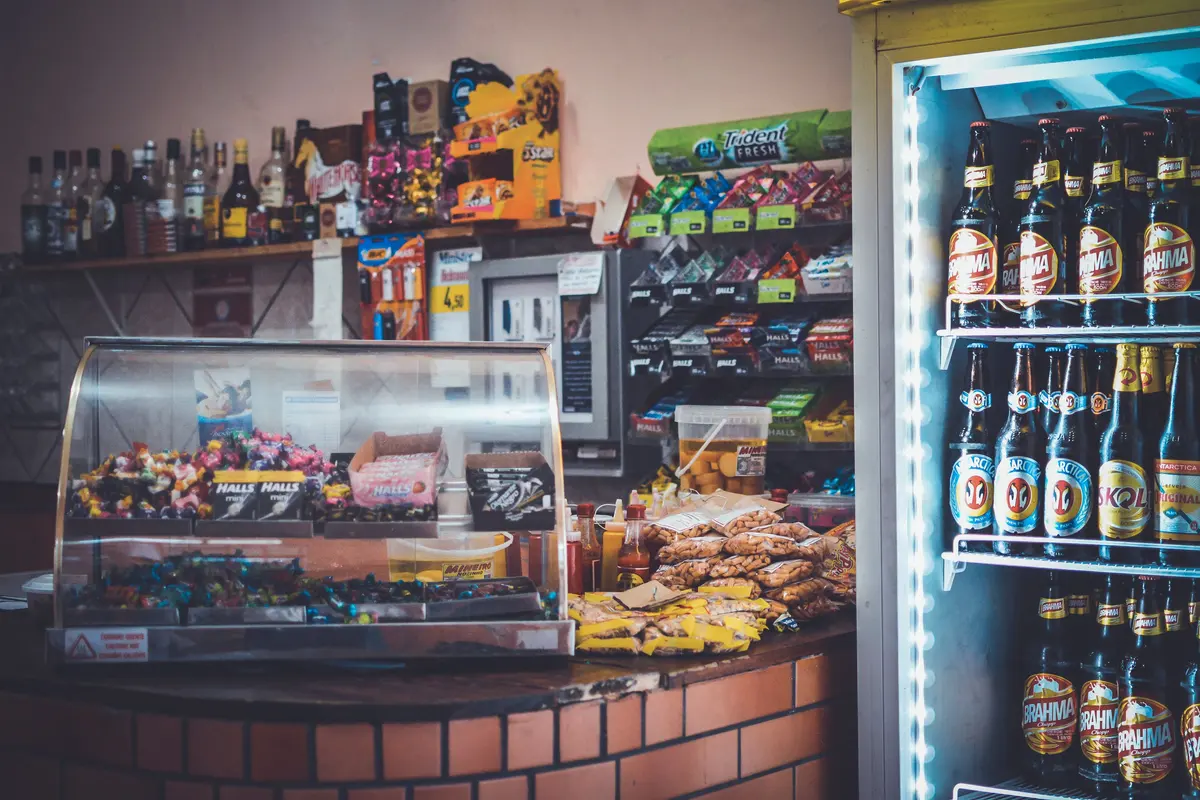
Inventory and business personal property, liquor liability where your store may be the state’s own spirits outlet, seasonal business income, winter-exposed property, crime and cash handling, and workers compensation for essentially any employee.
Nate is a Chartered Property Casualty Underwriter and the founder of Wexford Insurance, LLC. He places convenience store programs across 48 states — inventory and business personal property, the liquor liability the GL form excludes, crime and cash-handling, and the workers compensation that store staffing triggers. Reach him via the Gas Station Guard Insurance quote form or call 317-942-0549.
Last updated · Reviewed by Nate Jones, CPCU
Maine does something most states do not: it lets a private store be the state’s liquor outlet. An agency liquor store is a licensed private business selling spirits in sealed containers for off-premises consumption on the state’s behalf, and a convenience store can hold that license. The question in Maine is not only what your store may sell — it is whether your store is part of the state’s retail system.
The rest of the store behaves like high-velocity retail with a compliance overlay. Your Maine store moves tobacco, alcohol, lottery, prepared food, packaged grocery, and the impulse categories that turn over weekly. The inventory needs property coverage, the aisles need general liability, the safe and register need crime coverage, the card reader needs cyber, and essentially any employee triggers workers compensation.
Carriers do not underwrite convenience stores as generic retail. The class carries robbery and burglary frequency above strip retail, premises claims that behave more like restaurant claims, refrigeration failures landing on stocked perishables, and the regulatory exposure of age-restricted sales. Maine adds a revenue-shape problem that catches operators out: pronounced seasonality on coastal and inland tourist routes.
This page covers the Maine store: what moves premium here, how agency store licensing shapes the alcohol exposure, the coverage lines in a typical program, the compensation requirement that reaches almost every employer, the claims we see, and the underwriting realities that decide appetite. Fuel-dispensing sites layer the petroleum lines on top.
48
States licensed (all except Hawaii and Alaska)
20+
Specialty markets in our c-store panel
1–2 hr
Quote turnaround during business hours
C-store
Class-focused agency, not generic retail
What Maine convenience store insurance costs
We do not publish premium ranges, because a c-store premium is built from the operation rather than a state average. These are the drivers that move the number on a Maine store.
Whether the store holds an agency liquor license: An agency store sells spirits and carries the inventory and the exposure that comes with it. It is a materially different alcohol profile from a beer-and-wine store and should be stated rather than assumed.
Agency license scarcity at the premises: A license rationed by municipal vote and population formula cannot be replaced quickly if the premises is lost, which lengthens the realistic period of restoration well beyond the rebuild itself.
Winter property exposure: Roof loading, ice damming and freeze protection on sprinkler and water systems are central to Maine property terms.
Distance from responding fire service: Northern and inland Maine stores are rated partly on response time and water availability.
Store format and staffing depth: Smaller-format stores run thin staffing, and single-clerk shifts are rated on both the crime and compensation lines.
Prepared food and refrigeration depth: A deli or hot case brings product liability and raises what a compressor failure costs.
Protective safeguards: Drop and time-delay safes, camera coverage, monitored alarm and lit entrances feed the crime rating, and carry more weight on thinly staffed stores than the trade area does.
Your store can be the state’s liquor outlet
The bureau may license and regulate a business as an agency liquor store, on an annual or temporary basis, for the purpose of selling liquor in sealed bottles, containers or original packages for off-premises consumption. These are private businesses operating as the state’s retail outlets, and a convenience store is exactly the kind of business that holds one.
The licenses are rationed twice over. Allocation follows a population formula: in every municipality that has voted to allow the sale of spirits for off-premises consumption, the bureau may issue at least one and up to eleven licenses. So the number available depends on the size of the municipality, and the availability of any at all depends on whether that municipality voted for it.
That double constraint is an underwriting fact rather than trivia. An agency license is scarce, attached to the premises, and difficult to replace, so a fire or a long shutdown at a Maine agency store threatens revenue that an ordinary beer-and-wine store would simply resume earning. Business income limits should be set against a realistic rebuild and re-licensing timeline rather than against inventory value alone.
It also means Maine portfolios are non-uniform in a specific way. Two stores in the same company can sit in municipalities that voted differently, and the alcohol exposure — and therefore the liquor liability limit — should be set per location rather than per operator.
Coverage lines for a Maine convenience store
Property and business personal property: Building if owned, plus inventory, coolers, shelving, POS hardware and signage. Maine property carries a severe-winter emphasis — roof loading, ice damming and freeze exposure on water and sprinkler systems.
General liability: Customer bodily injury and third-party property damage in the aisles, at the entrance and across the lot. Winter surface conditions dominate the premises claim pattern.
Liquor liability: The general liability form excludes alcohol-related bodily injury and property damage. An agency store selling spirits presents a higher severity profile than a beer-and-wine store, and the limit should reflect which of the two the location actually is.
Crime and employee dishonesty: Money and securities, robbery, burglary and employee theft. An agency store holds spirits inventory that raises the value behind the counter well above the register.
Cyber liability: Card compromise at the register and the pump, ransomware, and the interruption that follows an outage.
Workers compensation: Statutory coverage for clerks and deli staff, required of almost all Maine employers with employees, subject only to narrow exemptions that rarely reach retail.
Umbrella and excess: Higher limits over general liability, liquor liability and auto — worth considering wherever alcohol volume or seasonal traffic is meaningful.
Workers compensation for Maine store employees
Maine law requires almost all public and private employers to carry workers compensation coverage. There is no convenience-store-sized headcount threshold to reason about: a store with employees needs the coverage, and the question is about exemptions rather than about a number.
The exemptions are narrow and mostly irrelevant to retail. Employers of employees engaged in domestic service are outside the requirement, as are employers of seasonal or casual agricultural and aquacultural labor where the employer maintains employer’s liability insurance at defined limits. A sole proprietor does not need to file waiver forms to be exempt personally — but a sole proprietor with employees is required to carry coverage for them.
For a Maine convenience store the practical reading is simple: if anyone works for you who is not you, assume the coverage is required. The injury pattern is the usual one for the class — lifting cases, slips behind the counter and in the walk-in, cuts in the deli area, and injuries arising during a robbery — and on a thinly staffed seasonal store a single clerk injury is also an operating problem, which is why compensation and business income tend to be discussed together here.
Maine convenience store claims we see
Peak-season loss at a seasonal store
A fire or major property loss landing in the busy months costs far more than the annual average implies. Business income limits calculated from a yearly figure are the most common shortfall on Maine accounts.
Ice damming and consequent interior water damage
A New England winter classic. The property claim is often modest; the inventory and business income consequences of a closed store are not.
Frozen and burst water line during a cold snap
A closed or thinly staffed store can run for hours before a burst line is discovered, and the damage is to stock and fit-out rather than plumbing.
Robbery on a single-clerk shift
The compensation claim and closure typically exceed the money taken. Drop safes, camera coverage and lit entrances move terms and sometimes decide whether a carrier offers.
Loss of agency store spirits inventory
An agency store carries stock and a license that are both hard to replace quickly. The property limit and the business income period should be sized against re-licensing as well as rebuilding.
Compressor failure with stocked perishables
Equipment breakdown responds to the unit, spoilage to the stock, business income to the closure. Carrying only the first insures the cheapest part of the event.
The Maine c-store risk profile
Maine convenience retail is organized around who holds a state spirits license and who does not. An agency store carries inventory it sells on the state’s behalf, a scarce permission attached to its premises, and a customer base that travels for it; a non-agency store a few miles away carries none of that and competes on fuel, food and convenience alone. Two stores of identical size and revenue can therefore sit in entirely different underwriting positions.
The municipal vote is what makes a Maine portfolio genuinely non-uniform. Because a municipality must have approved off-premises spirits sales before any license can issue there, and because the population formula then caps how many exist, neighboring towns in one operator’s footprint can be on opposite sides of the line. Alcohol exposure has to be established per location and cannot be inferred from the company.
The agency store structure is the Maine-specific layer, and it cuts both ways. Holding the license adds spirits inventory, a higher-severity alcohol exposure and a scarce asset attached to the premises; not holding it leaves a narrower alcohol profile. Because allocation depends on municipal vote and population, neighboring stores in one portfolio can sit on opposite sides of that line.
Why Maine c-store owners work with Gas Station Guard Insurance
We place convenience store programs across 48 states and write New England petroleum and c-store risks routinely, so submissions carry what underwriters on this class ask for — seasonality and revenue shape, agency license status where it applies, hours and staffing depth, roof and freeze protection detail, protective safeguards, and loss history with enough context to be read properly.
As an independent agency we place to carriers with appetite for the class rather than to a single company. Where a Maine store sits behind a forecourt, the petroleum and retail lines are written as one program rather than as two policies with a seam between them.
Maine convenience store insurance FAQs
Can my Maine convenience store sell spirits?
It can if it holds an agency liquor store license. Those are private businesses licensed to sell liquor in sealed containers for off-premises consumption as the state’s outlets. Availability is limited by a population formula — at least one and up to eleven per municipality — and only in municipalities that have voted to allow off-premises spirits sales.
How should an agency license change my limits?
In two places. Liquor liability should reflect spirits rather than beer and wine, because the severity profile is higher. And business income should reflect that the license is scarce and attached to the premises, so a long closure threatens revenue that would not simply resume — the period of restoration should assume re-licensing, not just rebuilding.
How should seasonal revenue affect my business income limit?
It should be set against the worst realistic timing rather than the average. A store earning a large share of its revenue in a short season needs a limit and a period of restoration that assume the loss lands at the peak, because that is the scenario that actually threatens the operation.
Do I need workers compensation for one part-time clerk in Maine?
Almost certainly. Maine requires coverage from almost all employers, with narrow exemptions for domestic service and for seasonal or casual agricultural labor under defined conditions. A sole proprietor is exempt personally without filing waivers, but a sole proprietor with employees must carry coverage for them.
Does spoilage coverage come with my property policy?
No. Spoilage and equipment breakdown are separate agreements. Equipment breakdown responds to the failed refrigeration unit; spoilage responds to the stock lost because it failed. Carrying only one leaves a real gap on any store with a meaningful perishable assortment.
What does freeze protection have to do with my quote?
A great deal in Maine. Frozen and burst water or sprinkler lines are a frequent and expensive winter claim, and carriers look for heat maintenance, monitored alarms and a documented procedure for cold snaps and closures. It is one of the few property controls an operator can improve quickly and see reflected in terms.
Can several Maine stores go on one program?
Yes, scheduled by location. The complication in Maine is that municipal votes and the population formula make agency licenses non-uniform across a portfolio, so the schedule needs to record which locations hold one rather than assuming the company is homogeneous.
Does a standalone Maine c-store need pollution coverage?
Not usually, where there is no fuel dispensing and no storage tank on site. Pollution and storage tank liability are petroleum lines. A standalone store carries the retail stack described here without them, which is part of why standalone and fuel-attached stores go to different carrier panels.