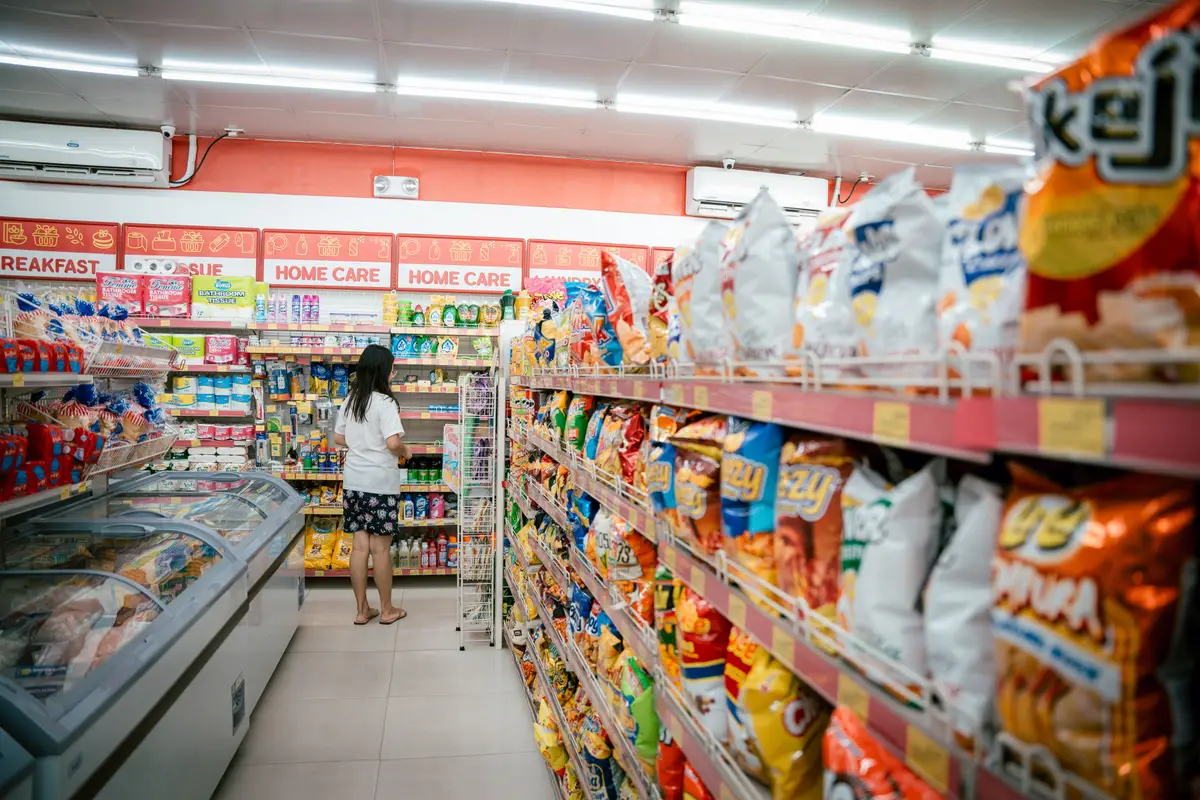
Inventory and business personal property, liquor liability, a tobacco category the state narrowed by law, refrigeration and spoilage, crime, and workers compensation for every employee regardless of hours.
Nate is a Chartered Property Casualty Underwriter and the founder of Wexford Insurance, LLC. He places convenience store programs across 48 states — inventory and business personal property, the liquor liability the GL form excludes, crime and cash-handling, and the workers compensation that store staffing triggers. Reach him via the Gas Station Guard Insurance quote form or call 317-942-0549.
Last updated · Reviewed by Nate Jones, CPCU
On the first of June 2020, Massachusetts became the first state in the country to restrict the sale of all flavored tobacco products, menthol cigarettes included. From that date the category could be sold only in licensed smoking bars, for on-site consumption. Every other retailer holding unsold stock had to take it off the shelves.
For a convenience store that is not a compliance detail — it is a change to what the business is. Tobacco is one of the two largest revenue and theft categories in this class, and Massachusetts removed a substantial share of it in a single step. The behind-the-counter wall that anchors the crime exposure in most states is smaller here, and what replaced the revenue is a different mix with different risk attached.
Carriers do not underwrite convenience stores as generic retail. The class carries robbery and burglary frequency above strip retail, premises claims that behave more like restaurant claims, refrigeration failures landing on stocked perishables, and the regulatory exposure of age-restricted sales. Massachusetts adds a dense, expensive market, older building stock, and a compensation requirement with no lower bound at all.
This page covers the Massachusetts store: what moves premium here, what the tobacco restriction did to the category and the counter, the coverage lines in a typical program, a compensation rule that covers everyone, the claims we see, and the underwriting realities that decide appetite. Fuel-dispensing sites layer the petroleum lines on top.
48
States licensed (all except Hawaii and Alaska)
20+
Specialty markets in our c-store panel
1–2 hr
Quote turnaround during business hours
C-store
Class-focused agency, not generic retail
What Massachusetts convenience store insurance costs
We do not publish premium ranges, because a c-store premium is built from the operation rather than a state average. These are the drivers that move the number on a Massachusetts store.
What replaced the tobacco revenue: Stores that shifted toward prepared food carry product liability and cooking equipment; stores that shifted toward beverages and grocery carry more perishable stock. The substitution matters more than the loss.
Remaining behind-counter value: The portable, high-value stock at the counter is smaller than in most states, which changes how crime limits should be reasoned rather than simply lowering them.
Building age and construction class: A large share of Massachusetts retail occupies older mixed-use stock, and electrical and plumbing age drive property terms accordingly.
Density and customer volume: Premises frequency follows footfall, and the eastern corridor produces high counts through small floor areas.
Winter property exposure: Roof loading, ice damming and freeze protection are standard property conversations here, and coastal sites add wind.
Every employee, without exception: There is no headcount or hours threshold, so the compensation line is on the program from the first person hired, part-time included.
Protective safeguards: Camera coverage, drop safes and lighting still drive the crime rating, particularly on late-operating urban sites.
A whole category left the shelf
Beginning 1 June 2020, the sale of flavored combustible cigarettes and other flavored tobacco products — including menthol cigarettes and flavored chewing tobacco — was restricted in Massachusetts to licensed smoking bars, where they may be sold only for on-site consumption. All other retailers holding any of those products unsold at that date were required to remove them from their shelves.
Massachusetts was the first state in the country to restrict the sale of all flavored tobacco products, and the reach of the restriction is what makes it consequential for this class. Menthol is not a niche segment; removing it takes a meaningful share of the tobacco category out of a convenience store’s offer at a stroke.
The insurance consequences run in two directions. Downward, because the concentrated high-value stock behind the counter — the thing that makes a c-store tobacco wall a target — is smaller here than in a state with the full range. Upward, because the revenue did not disappear so much as move, and where it moved to carries its own exposure: prepared food brings product liability and cooking equipment, and a deeper chilled offer brings spoilage.
The practical instruction for a submission is to describe the current mix rather than the category label. Two Massachusetts stores of the same size can have replaced the same lost revenue in entirely different ways, and an underwriter reading “convenience store, tobacco and beverages” will price a store that no longer exists.
It is also worth being precise about what remains permitted, because the restriction is about flavor rather than about tobacco as a whole. Unflavored combustible cigarettes and other unflavored tobacco products continue to be sold by ordinary retailers under the usual licensing and age-verification rules, so the store still carries an age-restricted category with the compliance exposure that goes with it. What changed is the breadth of the range, not the existence of the counter or the training obligation behind it.
Coverage lines for a Massachusetts convenience store
Property and business personal property: Building if owned, plus inventory, coolers, shelving, POS hardware and signage. Older construction and winter loading are the two things Massachusetts underwriters look at first.
General liability: Third-party injury and property damage on the sales floor, at the entrance and on any sidewalk frontage, where responsibility for the surface is not always obvious.
Liquor liability: The general liability form excludes alcohol-related bodily injury and property damage. Where a Massachusetts store holds an off-premises license, the limit should follow actual volume and hours.
Crime and employee dishonesty: Money and securities, robbery, burglary and employee theft. The counter holds less portable high-value stock than in most states, so the limit should be reasoned from the current assortment rather than from habit.
Spoilage and equipment breakdown: More relevant here than the national pattern suggests, because stores replacing tobacco revenue have generally deepened chilled and prepared offerings.
Cyber liability: Card compromise at the register and the pump, ransomware, and the interruption that follows an outage.
Workers compensation: Statutory coverage for every employee regardless of hours or headcount, with a stop work order and a daily civil penalty behind the requirement.
Workers compensation for Massachusetts store employees
Massachusetts requires all employers operating in the Commonwealth to carry workers compensation insurance for their employees under Massachusetts General Laws chapter 152, section 25A. The requirement applies regardless of the number of hours worked and regardless of the number of employees.
That is about as simple as this rule gets anywhere in the program. There is no threshold, no counting question, no distinction between full-time and part-time, and no ownership structure that changes the answer. The Department of Industrial Accidents investigates businesses employing one or more people, full or part-time, to determine whether proper coverage is in place.
The enforcement side is worth knowing. Failure to secure coverage can bring criminal penalties of a fine up to fifteen hundred dollars and up to a year of imprisonment, alongside civil penalties in the form of a stop work order and a fine of up to two hundred and fifty dollars a day. For a single-location store the daily accrual is the part that compounds fastest.
Massachusetts convenience store claims we see
Spoilage in a store that deepened its chilled offer
The category that replaced tobacco revenue is frequently perishable, so a compressor failure costs more here than it would have before 2020.
Product liability from a prepared food program
Stores that added hot food to replace lost tobacco margin took on an exposure they had never carried, and the claims turn on temperature logs and handling procedure.
Ice damming and interior water damage
A New England winter produces roof and water losses together, and older building stock makes the interior consequences worse.
Slip on the sidewalk frontage
Many stores open directly onto a public walkway, which raises a question about who is responsible for clearing it that is best answered before a claim rather than during one.
Injury to a weekend part-timer
There is no hours threshold in Massachusetts. A few shifts a month is inside the Act exactly as full-time work is.
Stop work order after a lapse
The order stops the business, and the civil penalty accrues daily while it is in force. Neither is an insured loss.
The Massachusetts c-store risk profile
Massachusetts convenience retail is dense, expensive and often housed in old buildings. Customer counts run high through small floor areas, which drives premises frequency; construction age drives the property conversation; and the eastern corridor concentrates both. Coastal sites add named-storm exposure that inland stores do not carry.
The tobacco restriction is the state-specific layer and its main effect is compositional. It reduced the concentrated, portable value that usually sits behind a convenience store counter, and pushed operators toward categories with different risk — food and chilled goods rather than cartons. A crime limit and a spoilage limit set on national assumptions will both be wrong here, in opposite directions.
On the compensation side there is nothing to reason about. Every employee is covered regardless of hours or headcount, so the only question is whether the policy exists. Given that a lapse brings a stop work order and a daily penalty, continuity is an operating requirement rather than a financial preference.
The other thing worth understanding about this market is how narrow the margins are behind a small floor area. Massachusetts rents and rebuild costs are among the highest in the program, and a store operating on a few hundred square feet of sales space has very little room to absorb either a closure or an underinsured loss. That is the practical argument for setting business income against a realistic period of restoration in older buildings, where a repair that would take three weeks in newer stock can take considerably longer once permitting and access are accounted for.
Why Massachusetts c-store owners work with Gas Station Guard Insurance
We place convenience store programs across 48 states and write New England petroleum and c-store risks routinely, so a Massachusetts submission describes the current product mix rather than the category label, states building age and construction, and gives the winter and coastal detail that decides property terms.
As an independent agency we place to carriers with appetite for the class rather than to a single company. Where a Massachusetts store sits behind a forecourt, the petroleum and retail lines are written as one program rather than two policies with a seam between them.
Massachusetts convenience store insurance FAQs
Can my Massachusetts store sell menthol cigarettes?
No. From 1 June 2020 the sale of all flavored tobacco products, including menthol cigarettes and flavored chewing tobacco, has been restricted to licensed smoking bars for on-site consumption. Retailers holding unsold stock at that date were required to remove it from their shelves. Massachusetts was the first state in the country to do this.
How should that change our crime limits?
By re-reasoning them rather than simply reducing them. The tobacco wall behind a convenience store counter is usually the concentration of portable value that makes it a target, and here it is smaller. What matters is what the counter actually holds now, which is a different question from what stores in other states hold.
Does the restriction affect our spoilage exposure?
Indirectly, and often significantly. Stores did not simply lose the revenue — they replaced it, commonly with chilled goods and prepared food. Both are more perishable than cartons, so a refrigeration failure costs more than it would have before the change.
What should we tell an underwriter about our product mix?
What is actually on the floor today. Two Massachusetts stores of identical size can have replaced the same lost category in entirely different ways, and a submission that says only “tobacco and beverages” describes a store that no longer exists.
How many employees before we need workers compensation?
One, and hours do not matter. Massachusetts General Laws chapter 152 section 25A requires all employers to carry coverage for their employees regardless of the number of hours worked or the number of employees. A single weekend part-timer is inside it.
What happens if we do not have it?
Criminal penalties of a fine up to fifteen hundred dollars and up to a year of imprisonment, plus civil penalties in the form of a stop work order and a fine of up to two hundred and fifty dollars a day. The daily accrual is what makes a short lapse expensive.
Our store is in an old building. Does that matter?
Yes, more than in newer markets. Electrical and plumbing age drive both the property terms and the most common losses — water damage from failing systems is a recurring claim in this stock, and the inventory and closure consequences typically exceed the repair.
Does a standalone Massachusetts c-store need pollution coverage?
Not usually, where there is no fuel dispensing and no storage tank on site. Pollution and storage tank liability are petroleum lines. A standalone store carries the retail stack described here without them, which is part of why standalone and fuel-attached stores go to different carrier panels.
Authoritative Massachusetts and federal references