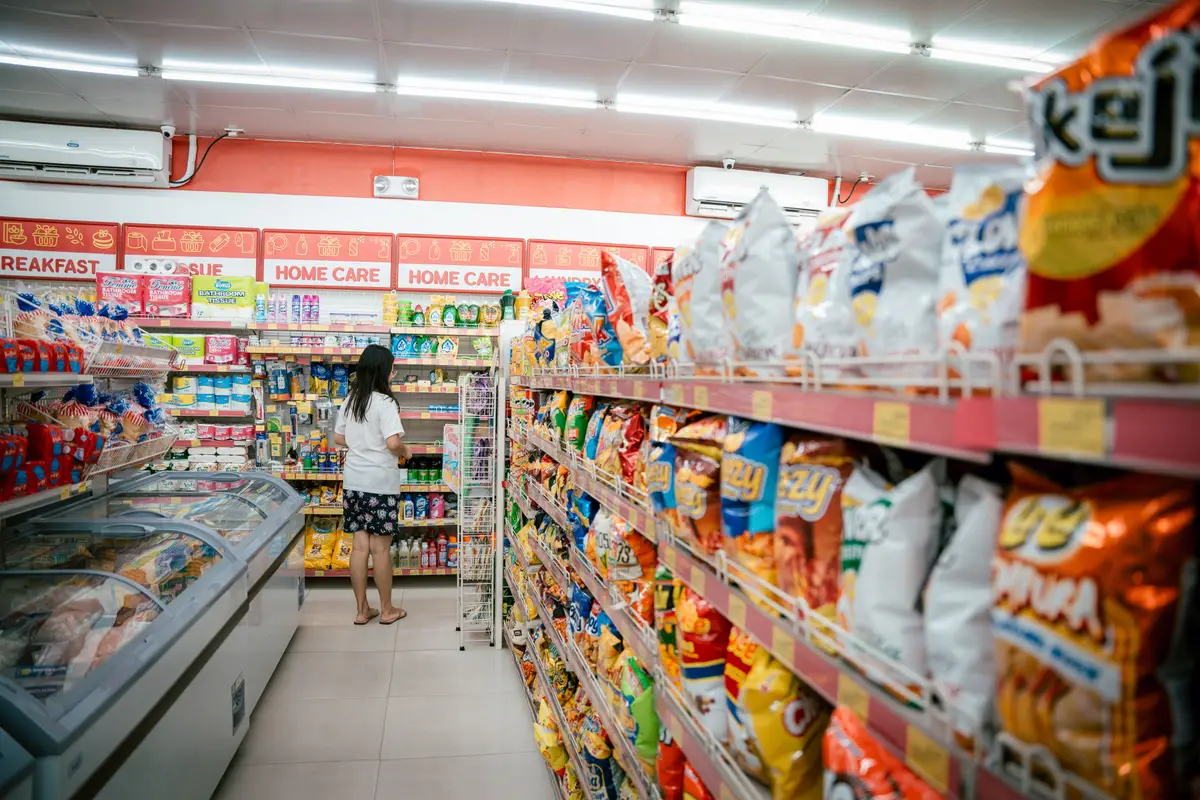
Inventory and business personal property, liquor liability at limits the legislature wrote down, severe winter property exposure, refrigeration and spoilage, crime, and workers compensation with no minimum headcount at all.
Nate is a Chartered Property Casualty Underwriter and the founder of Wexford Insurance, LLC. He places convenience store programs across 48 states — inventory and business personal property, the liquor liability the GL form excludes, crime and cash-handling, and the workers compensation that store staffing triggers. Reach him via the Gas Station Guard Insurance quote form or call 317-942-0549.
Last updated · Reviewed by Nate Jones, CPCU
Minnesota is the one state in this program where the alcohol license itself is conditioned on carrying insurance. Under the liquor act, no retail license may be issued, maintained or renewed unless the applicant demonstrates proof of financial responsibility for dram-shop liability — and the statute does not leave the amount to the market. It writes the minimums down.
For an insurance conversation that is unusually concrete, and it comes with a warning attached. The figures in the statute are a licensing threshold, not a considered view of what a serious claim costs. A store that buys exactly the statutory minimum is licensed and underinsured at the same time, and nothing in the process tells it so.
Carriers do not underwrite convenience stores as generic retail. The class carries robbery and burglary frequency above strip retail, premises claims that behave more like restaurant claims, refrigeration failures landing on stocked perishables, and the regulatory exposure of age-restricted sales. Minnesota adds one of the hardest winters in the country and a compensation requirement with no lower bound.
This page covers the Minnesota store: what moves premium here, what the statute actually requires and why meeting it is not the same as being covered, the coverage lines in a typical program, a compensation rule that reaches a single part-time employee, the claims we see, and the underwriting realities that decide appetite. Fuel-dispensing sites layer the petroleum lines on top.
48
States licensed (all except Hawaii and Alaska)
20+
Specialty markets in our c-store panel
1–2 hr
Quote turnaround during business hours
C-store
Class-focused agency, not generic retail
What Minnesota convenience store insurance costs
We do not publish premium ranges, because a c-store premium is built from the operation rather than a state average. These are the drivers that move the number on a Minnesota store.
The gap between statutory limits and real ones: Buying to the statutory minimum is the cheapest way to hold a license and one of the more expensive ways to lose a claim. Where the limit actually sits is the single largest decision on a Minnesota alcohol program.
Alcohol volume and hours: What the store sells and when drives the severity the liquor line is protecting, and the statute has nothing to say about either.
Winter property exposure: Snow loading, ice damming and freeze protection on water and sprinkler systems drive property terms, and Minnesota sits at the severe end of that range.
Hail exposure in the south and west: Convective storm damage to roof, canopy and rooftop units is a live property driver away from the northern forest counties.
Prepared food operations: A hot case or deli brings product liability and cooking equipment onto the program and widens the injury pattern on the payroll.
Any employee at all: There is no minimum headcount for the compensation requirement, so a single part-time clerk brings the store inside the system.
Protective safeguards: Drop and time-delay safes, camera coverage and lit entrances feed the crime rating, and matter more through a long dark season.
The legislature wrote your limits down
Minnesota Statute 340A.409 is headed simply “Liability insurance.” It provides that no retail license may be issued, maintained or renewed unless the applicant demonstrates proof of financial responsibility with regard to dram-shop liability. Proof of financial responsibility is a condition of holding the license, not a recommendation attached to it.
The statute then sets the minimum amounts. Fifty thousand dollars of coverage for bodily injury to one person, and one hundred thousand for injury to two or more. Ten thousand dollars for property damage. Fifty thousand for loss of means of support to one person and one hundred thousand to two or more, with the same pair of figures again for other pecuniary loss. The annual aggregate policy limit is three hundred and ten thousand dollars.
Certain smaller licensees sit outside the requirement on sales volume — on-sale 3.2 percent malt liquor licensees with less than twenty-five thousand dollars of annual sales, off-sale 3.2 percent licensees under fifty thousand, on-sale wine licensees under twenty-five thousand, and a few temporary and wholesaler categories. Most convenience stores selling meaningful alcohol volume are not among them.
Here is the part the statute does not say, and the part that matters most. Those figures are a licensing floor written to make sure a licensee is not wholly uninsured. They are not a judgment about what a dram-shop claim costs. A single incident involving serious injury or a death can exhaust a three hundred and ten thousand dollar annual aggregate outright, and the aggregate is annual — a second claim in the same year has nothing left behind it. Meeting the statute and being adequately insured are two different questions, and only one of them is answered by the license.
Coverage lines for a Minnesota convenience store
Property and business personal property: Building if owned, plus inventory, coolers, shelving, POS hardware and signage. Minnesota property terms are set by snow loading, freeze exposure and, in the south and west, hail.
General liability: Third-party injury and property damage on the sales floor, at the entrance and across the lot, where ice is a condition for months rather than an event.
Liquor liability: Required as a condition of licensure and specified in the statute at minimum amounts — which is exactly why the limit deserves a decision rather than a default. The statutory figures are where cover starts, not where it should stop.
Crime and employee dishonesty: Money and securities, robbery, burglary and employee theft, with rural deposit intervals leaving more on the premises than a nightly cycle assumes.
Spoilage and equipment breakdown: The failed refrigeration unit and the stock lost behind it, as separate agreements — and a winter outage can take both at once.
Cyber liability: Card compromise at the register and the pump, ransomware, and the interruption that follows an outage.
Workers compensation: Statutory coverage with no minimum headcount, and an uninsured employer facing reimbursement of the Special Compensation Fund plus a sixty-five percent penalty.
Workers compensation for Minnesota store employees
Minnesota requires all employers to purchase workers compensation insurance or to become self-insured. There is no minimum number of employees before the requirement applies, so an employer with a single part-time employee generally must provide coverage. Exceptions exist and are specified in statute, but none of them reaches an ordinary convenience store payroll.
The consequence of going without is structured in an unusual way, and it is worth understanding before it applies. If an employee suffers a compensable injury and the employer has neither purchased coverage nor followed the self-insurance procedures, the employee may ask the state Special Compensation Fund to pay the benefits. A compensation judge determines whether the employer is liable and, if so, orders the fund to pay the worker.
The employer is then ordered to reimburse the fund — plus a penalty of sixty-five percent of those benefits. So the uninsured employer does not simply face the claim it would have faced with a policy; it faces that claim, in full, with more than half again added on top, and with no insurer handling it. For a single-location store that is a business-ending sequence rather than a fine.
Minnesota convenience store claims we see
A dram-shop claim against a statutory-minimum limit
The store was compliant and underinsured simultaneously. A serious injury exhausts a three hundred and ten thousand dollar annual aggregate, and the aggregate does not reset for the next claim in the same year.
Ice damming and the interior water behind it
Roof and water losses arrive together in a Minnesota winter, and the stock and closure consequences usually exceed the repair bill.
Frozen and burst lines during a deep cold snap
A store closed overnight can run for hours before anyone finds the water, and the damage lands on fit-out and inventory rather than plumbing.
Hail damage to roof, canopy and rooftop units
Southern and western counties see genuine convective storm exposure, with percentage deductibles that scale the retained loss to insured value.
Injury to a single part-time clerk
There is no headcount threshold here. A store that assumed it was too small to need coverage faces the claim plus a sixty-five percent penalty on the benefits the fund pays.
Slip on melt-water inside the entrance
Salt and slush come through the door for months. Mat placement, wet-floor routine and a genuine inspection log decide these claims.
The Minnesota c-store risk profile
Minnesota convenience retail is a severe-winter business with a long dark season and, outside the Twin Cities, wide rural catchments. Stores serve settled communities where a closure has an outsized business income consequence, because the nearest alternative is often a genuine drive rather than a different corner.
Winter drives the property side and does so from several directions at once — snow loading on roofs, ice damming into interiors, freeze exposure on water and sprinkler systems, and a months-long premises exposure from melt-water at the door. Away from the north, hail adds a second property peril with its own deductible structure.
The alcohol layer is where the state does something no other state in this program does. It makes insurance a licensing condition and writes the minimums into the act, which guarantees that every licensed store carries something and guarantees nothing about whether that something is enough. The most useful work on a Minnesota program is the conversation about where the limit sits relative to those figures — because the statute has already decided the store will have a policy, and left the important question open.
Why Minnesota c-store owners work with Gas Station Guard Insurance
We place convenience store programs across 48 states, and on a Minnesota alcohol program we start from the assumption that the statutory limits are the beginning of the discussion rather than the end of it. A submission goes out with alcohol volume, hours, winter protection detail and roof condition described, and with a limit recommendation that reflects claim severity rather than licensing compliance.
As an independent agency we place to carriers with appetite for the class rather than to a single company. Where a Minnesota store sits behind a forecourt, the petroleum and retail lines are written as one program rather than two policies with a seam between them.
Minnesota convenience store insurance FAQs
Does Minnesota require me to carry liquor liability?
Yes, and unusually it is a condition of the license itself. Minnesota Statute 340A.409 provides that no retail license may be issued, maintained or renewed unless the applicant demonstrates proof of financial responsibility with regard to dram-shop liability.
What are the statutory minimum limits?
Fifty thousand dollars for bodily injury to one person and one hundred thousand for two or more; ten thousand for property damage; fifty and one hundred thousand for loss of means of support; the same pair again for other pecuniary loss; and an annual aggregate policy limit of three hundred and ten thousand dollars.
If I buy exactly those limits, am I properly insured?
No, and this is the most important thing on the page. Those figures are a licensing floor written so that a licensee is not wholly uninsured. They are not a judgment about what a claim costs. A single serious injury can exhaust a three hundred and ten thousand dollar annual aggregate on its own, and because the aggregate is annual, a second claim in the same year has nothing behind it.
Are any licensees exempt?
Some smaller ones, on sales volume — on-sale 3.2 percent malt liquor licensees under twenty-five thousand dollars of annual sales, off-sale 3.2 percent licensees under fifty thousand, on-sale wine licensees under twenty-five thousand, and certain temporary and wholesaler categories. A convenience store selling meaningful alcohol volume is generally not among them.
How many employees before I need workers compensation?
One, and it may be part-time. Minnesota requires all employers to purchase coverage or become self-insured, and there is no minimum number of employees before the requirement applies.
What happens if we have no coverage and someone is hurt?
The employee can ask the state Special Compensation Fund to pay benefits. A compensation judge decides whether you are liable and, if so, orders the fund to pay the worker and orders you to reimburse it — plus a penalty of sixty-five percent of those benefits. You face the full claim with more than half again on top and no insurer handling it.
How should we set the liquor liability limit in practice?
From the exposure rather than the statute. What the store sells, how much of it, at what hours, and to what kind of trade all bear on severity, and none of them appear in the licensing figures. We will give you a recommendation based on those, and say clearly where it sits relative to the statutory minimum.
Does a standalone Minnesota c-store need pollution coverage?
Not usually, where there is no fuel dispensing and no storage tank on site. Pollution and storage tank liability are petroleum lines. A standalone store carries the retail stack described here without them, which is part of why standalone and fuel-attached stores go to different carrier panels.