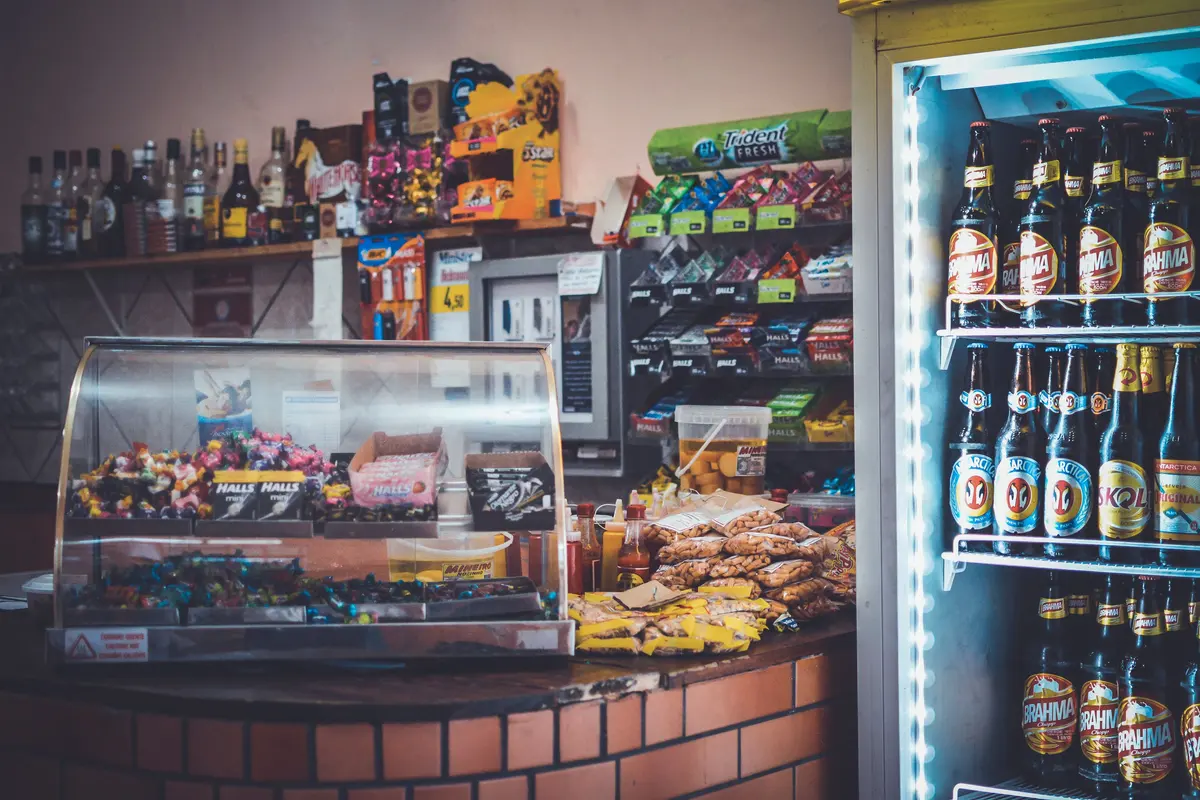
Inventory and business personal property, liquor liability on the light-alcohol products a c-store may carry, Gulf hurricane and severe-storm exposure, refrigeration and spoilage, crime, and workers compensation at five regularly employed.
Nate is a Chartered Property Casualty Underwriter and the founder of Wexford Insurance, LLC. He places convenience store programs across 48 states — inventory and business personal property, the liquor liability the GL form excludes, crime and cash-handling, and the workers compensation that store staffing triggers. Reach him via the Gas Station Guard Insurance quote form or call 317-942-0549.
Last updated · Reviewed by Nate Jones, CPCU
In most states that involve themselves in alcohol, the state runs shops. Mississippi runs a warehouse. State law gives the Department of Revenue sole authority to import and sell, at wholesale within the state, wine containing 6.25% alcohol by volume or more and distilled spirits above 7.5% by volume. Above those lines, the state is not your competitor at retail — it is the supplier standing behind every retailer in Mississippi.
The scale of that operation is substantial: Alcoholic Beverage Control distributes more than three million cases of spirits and wines a year, services roughly 700 off-premise and 1,900 on-premise accounts, and runs a bailment warehouse in which the vendor owns the stock until it is withdrawn for shipment to permitted businesses. The whole upper tier of the market moves through one building.
Carriers do not underwrite convenience stores as generic retail. The class carries robbery and burglary frequency above strip retail, premises claims that behave more like restaurant claims, refrigeration failures landing on stocked perishables, and the regulatory exposure of age-restricted sales. Mississippi adds Gulf hurricane exposure, long rural distances and a supply chain with a single point of concentration in it.
This page covers the Mississippi store: what moves premium here, what a state-owned wholesale tier means for the products on your shelves, the coverage lines in a typical program, a compensation requirement that turns on regular employment rather than a snapshot count, the claims we see, and the underwriting realities that decide appetite. Fuel-dispensing sites layer the petroleum lines on top.
48
States licensed (all except Hawaii and Alaska)
20+
Specialty markets in our c-store panel
1–2 hr
Quote turnaround during business hours
C-store
Class-focused agency, not generic retail
What Mississippi convenience store insurance costs
We do not publish premium ranges, because a c-store premium is built from the operation rather than a state average. These are the drivers that move the number on a Mississippi store.
Distance from the coast: Named-storm exposure dominates the Gulf counties and is underwritten with its own deductible structure. An inland store of identical size and construction carries entirely different property terms.
Generator capacity: After a hurricane the building often survives and the stock does not. Whether a store can hold refrigeration through a multi-day outage is one of the few things that changes both the spoilage and the business income conversation.
Products carried above and below the light-alcohol lines: A store selling beer, light wine and light spirits has a bounded alcohol exposure. What it may not carry never enters the liquor liability conversation at all.
Rural revenue concentration: Across much of the state a store serves a wide catchment with no nearby alternative, which lengthens the realistic period of restoration and raises what business income is protecting.
Whether five people are regularly employed: The compensation trigger turns on regular employment rather than a headcount on any given day, which makes rotating part-time schedules the thing to look at.
Prepared food operations: Hot food is a larger share of the Mississippi convenience offer than in many states, and it brings product liability and cooking equipment with it.
Protective safeguards: Time-delay safes, camera coverage and lit forecourts feed the crime rating, and matter more where response times are long.
The state is the wholesaler, not the shopkeeper
Mississippi statute grants the Department of Revenue sole authority to import and to sell at wholesale, within the state, wine containing 6.25% alcohol by volume or more and distilled spirits containing more than 7.5% by volume. That is a wholesale monopoly rather than a retail one — the state does not run the shops, it supplies them.
The operation behind that authority is a genuine distribution business. Alcoholic Beverage Control moves over three million cases a year to roughly 700 off-premise and 1,900 on-premise accounts, offering thousands of stocked items and many more by special order, and it runs a bailment program under which the vendor retains ownership of stock held in the state’s distribution center until it is withdrawn for shipment to a permitted business.
What a convenience store may sell sits below those lines and moves through ordinary private wholesalers. Beer may not contain more than 8% alcohol by weight, which is 10.3% by volume. Light wine may not exceed 5% by weight, or 6.25% by volume. Light spirits may not exceed 6% by weight, or 7.5% by volume. The excise tax on beer and light wine is reported and paid by the wholesale distributor rather than by the retailer.
For risk purposes the useful observation is about the supply chain rather than the shelf. The upper tier of the state’s alcohol market has a single physical point of concentration, and a store whose adjacent businesses depend on that tier sits in a trade area with a shared exposure that would not exist in a state with competing private wholesalers. It rarely changes a c-store’s own coverage, but it is worth understanding when assessing what a regional disruption would do to the block.
Coverage lines for a Mississippi convenience store
Property and business personal property: Building if owned, plus inventory, coolers, shelving, POS hardware, signage and canopy. Gulf counties carry named-storm deductibles applied separately from all-other-perils.
General liability: Third-party injury and property damage across the sales floor, the entrance and the lot, with the forecourt included where fuel is dispensed.
Liquor liability: The general liability form excludes alcohol-related bodily injury and property damage. A Mississippi c-store’s exposure is bounded by what it may carry — beer, light wine and light spirits — but the line is still required.
Crime and employee dishonesty: Money and securities, robbery, burglary and employee theft, with the deposit interval on rural sites mattering as much as the limit itself.
Spoilage and equipment breakdown: The pairing that decides what a hurricane actually costs a Mississippi store, because extended power loss destroys stock in a building that is otherwise intact.
Cyber liability: Card compromise at the register and the pump, ransomware, and the interruption that follows an outage.
Workers compensation: Statutory coverage at five or more regularly employed, judged on the size of the operation rather than on how many are rostered on a given day.
Workers compensation for Mississippi store employees
Mississippi requires workers compensation coverage from employers with five or more employees regularly employed. Below five the coverage is not mandatory, though an employer may provide it voluntarily and many do.
The word doing the work is "regularly." The test is generally one of the size of the operation and whether five or more employees are regularly used to carry it on — and it is satisfied even if all five are not employed at the same time. A convenience store running rotating part-time shifts can therefore be inside the Act without ever having five people on the floor together, which is exactly the pattern that leads owners to assume they are outside it.
Certain employers sit outside the requirement regardless of headcount, including nonprofit charitable, fraternal, cultural and religious corporations. Domestic servants and farm labor are also excluded, though the exclusion does not extend to the commercial processing of agricultural products. None of those categories reaches an ordinary convenience store payroll.
Mississippi convenience store claims we see
Named-storm damage in the Gulf counties
Wind deductibles here are commonly a percentage of insured value, so the retained loss scales with the building rather than sitting at a flat figure.
Multi-day power loss after a storm
Frequently the larger number. A store with an intact roof can lose its entire perishable assortment and weeks of trade, which lands on spoilage and business income rather than on the property claim.
Rotating part-timers adding up to five
The operation was regularly carried on by five or more people even though five were never on shift together. The requirement applied; the policy did not exist.
Refrigeration failure in sustained heat
Gulf summers run compressors hard for months. Marginal units fail under that load, and the stock behind them is the expensive part.
Robbery at an isolated rural store
Long response times lengthen the incident and its aftermath, and the compensation and business income elements generally exceed the cash taken.
Slip and fall on a wet entrance
Heavy rainfall events move water into the store repeatedly through the season, and these claims turn on mat placement, wet-floor routine and whether an inspection log exists.
The Mississippi c-store risk profile
Mississippi divides on the coast. The Gulf counties carry hurricane exposure that is underwritten separately from every other peril, with its own deductible structure and its own appetite question, while the interior is a severe-thunderstorm and tornado market with a very different property conversation. An operator holding stores in both is really holding two portfolios.
What the two halves share is distance and revenue concentration. Away from the metropolitan areas a store frequently serves a wide catchment with no nearby alternative, which lengthens how long a closure actually lasts, raises what business income is protecting, and puts weight on the perishable assortment because customers are relying on it for more than impulse purchases.
The alcohol layer is bounded and easy to state — beer, light wine and light spirits below published lines, everything above them supplied at wholesale by the state. That boundary keeps the c-store’s own liquor exposure modest, while the concentration in the tier above is a feature of the market worth understanding rather than a coverage item on the store’s program.
Why Mississippi c-store owners work with Gas Station Guard Insurance
We place convenience store programs across 48 states and write Gulf petroleum and c-store risks routinely, so a Mississippi submission carries distance from the coast, generator capacity, roof and canopy detail, the regular-employment picture for the compensation trigger, and loss history with enough storm context to be read fairly.
As an independent agency we place to carriers with appetite for coastal convenience store risks rather than to a single company, which matters here more than in most states. Where a Mississippi store sits behind a forecourt, the petroleum and retail lines are written as one program.
Mississippi convenience store insurance FAQs
Does the state of Mississippi compete with my store?
Not at retail. Mississippi statute gives the Department of Revenue sole authority to import and sell at wholesale wine of 6.25% ABV or more and spirits above 7.5% ABV. The state operates the distribution tier — moving over three million cases a year to around 700 off-premise and 1,900 on-premise accounts — rather than operating shops.
What may my convenience store sell?
Products below the state wholesale lines. Beer may not exceed 8% alcohol by weight, which is 10.3% by volume; light wine may not exceed 5% by weight, or 6.25% by volume; light spirits may not exceed 6% by weight, or 7.5% by volume. Those categories move through ordinary private wholesalers.
Who pays the excise tax on the beer we sell?
The wholesale distributor reports and pays it, not the retailer. That is worth knowing when reconciling invoices, because the tax is already embedded by the time the product reaches your shelf rather than being something the store remits separately.
We have four employees. Do we need workers compensation?
Probably worth checking rather than assuming. The requirement applies at five or more regularly employed, but the test is the size of the operation and whether five or more are regularly used to carry it on — and it can be met even if all five are never employed at the same time. Rotating part-time schedules are where this catches stores out.
Our building survived the storm but we lost everything in the coolers. What responds?
Spoilage responds to the stock, equipment breakdown to any failed refrigeration unit, and business income to the days you could not trade. None of those is part of the basic property form, so a store carrying only property after a multi-day outage finds the largest part of the loss uninsured.
Does a generator change our terms?
It can, particularly on the coast. Carriers look closely at whether a store can hold refrigeration through an extended outage, because that single capability decides whether a storm becomes a total stock loss and a long closure or a short interruption.
Can several Mississippi stores go on one program?
Yes, scheduled by location, and the schedule should record distance from the coast for each site. Applying inland terms to a Gulf-county store is the most common error we see on a Mississippi portfolio, because the wind structure differs materially.
Does a standalone Mississippi c-store need pollution coverage?
Not usually, where there is no fuel dispensing and no storage tank on site. Pollution and storage tank liability are petroleum lines. A standalone store carries the retail stack described here without them, which is part of why standalone and fuel-attached stores go to different carrier panels.