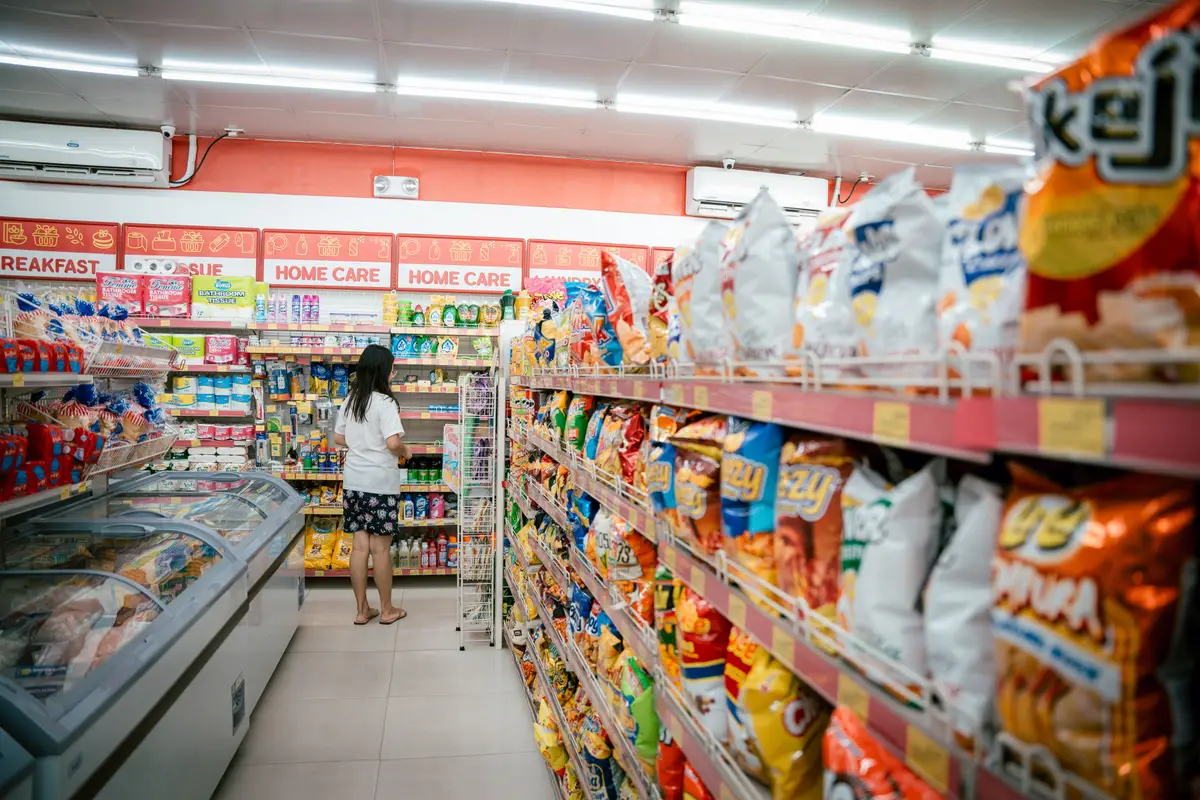
Inventory and business personal property, liquor liability where the state sets your hours and your shelf price, distance-driven property exposure, refrigeration and spoilage, crime, and workers compensation from a single employee.
Nate is a Chartered Property Casualty Underwriter and the founder of Wexford Insurance, LLC. He places convenience store programs across 48 states — inventory and business personal property, the liquor liability the GL form excludes, crime and cash-handling, and the workers compensation that store staffing triggers. Reach him via the Gas Station Guard Insurance quote form or call 317-942-0549.
Last updated · Reviewed by Nate Jones, CPCU
Montana is unusual in how far the state reaches into the operating decisions of a private store. A Montana business selling spirits does so under contract with the Department of Revenue, and that contract does not stop at what may be sold. It sets minimum hours the store must be open, a minimum quantity it must order, and a floor under the price it may charge the public. The state is not only the supplier — it is a party to how the business runs.
Everything outside that contract is ordinary high-velocity retail. A Montana store turns its floor over weekly across fuel-adjacent grocery, tobacco, lottery, packaged drinks and whatever the hot case holds, and each of those pieces attaches to a different part of an insurance program — stock to property, the aisle to general liability, the safe to crime, the card reader to cyber, and the person working the counter to compensation.
Carriers do not underwrite convenience stores as generic retail. The class carries robbery and burglary frequency above strip retail, premises claims that behave more like restaurant claims, refrigeration failures landing on stocked perishables, and the regulatory exposure of age-restricted sales. Montana adds distance to everything — response times, delivery schedules and the nearest alternative store are all measured in tens of miles across much of the state.
This page covers the Montana store: what moves premium here, how a state contract shapes both the alcohol exposure and the operating obligations, the coverage lines in a typical program, the compensation requirement and the contractor certificates that sit alongside it, the claims we see, and the underwriting realities that decide appetite. Fuel-dispensing sites layer the petroleum lines on top.
48
States licensed (all except Hawaii and Alaska)
20+
Specialty markets in our c-store panel
1–2 hr
Quote turnaround during business hours
C-store
Class-focused agency, not generic retail
What Montana convenience store insurance costs
We do not publish premium ranges, because a c-store premium is built from the operation rather than a state average. These are the drivers that move the number on a Montana store.
Contracted operating obligations: A store under state contract must keep defined hours and hold defined stock. Those obligations do not pause during a closure, which is what makes the business income conversation different here.
Distance from responding fire service: Across much of Montana the nearest responding service and the nearest water supply are the two facts that decide how a fire develops before anyone arrives.
Revenue concentration: A store that is the only retail option for a long drive has no nearby alternative location to operate from, which lengthens the realistic period of restoration.
Winter severity and roof loading: Snow loading, freeze exposure on water and sprinkler systems, and long cold spells drive Montana property terms.
Hours and overnight staffing: Late hours on a single clerk are rated on both the crime line and the compensation line, and protective safeguards move terms.
Use of contract labor: Cleaning, maintenance and delivery arrangements interact with Montana contractor-certificate rules in a way that can pull an apparent contractor back onto your compensation policy.
Prepared food and refrigeration depth: A deli or hot case brings product liability and raises what a compressor failure costs.
A state contract that sets your hours, your orders and your price
Montana spirits are sold through agency liquor stores — privately owned businesses under contract with the State to sell distilled spirits and wine both to the public and to licensed establishments. There are 95 of them statewide, and the Department of Revenue distributes all spirits and fortified wines from the state liquor warehouse.
What makes the arrangement distinctive is how much of the operation the contract governs. Agents must keep the store open not less than six hours a day, Tuesday through Saturday, within a defined window. They must order a minimum of ten cases at a time. And the Department sets a posted price for every product, which the store must charge at least, with full-case sales to licensees made at a fixed discount off that posted price.
For an operator this means the store carries obligations that survive a bad week. Minimum hours and minimum orders are contractual commitments rather than commercial choices, so a disruption that would simply reduce trade elsewhere can put a Montana agency store out of compliance with its contract. That is a business income question before it is anything else, and the period of restoration should be set against resuming contracted operation rather than merely reopening the doors.
It also constrains the pricing lever an operator would normally reach for after a loss. A store cannot discount its way back to volume on the spirits side, because the posted price is a floor. Recovery has to come from footfall and from the rest of the assortment, which is worth naming when the business income limit is being sized.
Coverage lines for a Montana convenience store
Property and business personal property: Building if owned, plus inventory, coolers, shelving, POS hardware and signage. Montana property terms reflect snow loading, long freezes and, on rural sites, distance from responding service.
General liability: Injury to a customer and damage to property that is not yours — on the sales floor, through the doorway and out across the parking area, where Montana ice makes the lot the harder half.
Liquor liability: The general liability form excludes alcohol-related bodily injury and property damage. A store selling spirits under a state contract presents a higher severity profile than one selling beer and wine, and the limit should reflect which it is.
Crime and employee dishonesty: Money and securities, robbery, burglary and employee theft. Because the state stocks the shelves, an agency store is holding somebody else’s spirits inventory as well as its own takings.
Cyber liability: Card compromise at the register and the pump, ransomware, and the interruption that follows an outage.
Workers compensation: Statutory coverage for clerks and deli staff from the first employee, with contractor arrangements checked against Montana certificate rules rather than assumed.
Umbrella and excess: Higher limits over general liability, liquor liability and auto, worth considering wherever alcohol volume or highway traffic is meaningful.
Workers compensation for Montana store employees
Montana requires workers compensation coverage for employees, and the requirement reaches a business with a single employee. The state is direct about the intent: an employer may not avoid the responsibility, and may not use coercion, misrepresentation or fraudulent means to push a worker into independent contractor status, nor exert so much control that the contractor relationship is destroyed in substance.
The mechanism that goes with that is the independent contractor exemption certificate. A genuine independent contractor can hold one, waiving the rights and benefits a compensation policy would otherwise provide. The consequence for a store owner sits on the other side of the transaction: hire someone without either a valid certificate or their own coverage, and the state can treat that person as your employee, leaving you responsible for an injury claim and exposed to penalties through the uninsured employers fund.
For a convenience store this matters most around the edges of the payroll — the cleaner who comes in after close, the person who plows the lot, the contractor who services the coolers. Those are exactly the arrangements where a certificate either exists or does not, and where the answer decides whether an injury is your claim.
Montana convenience store claims we see
A closure that breaches contracted hours
The property loss is only the first problem. A store that cannot keep its contracted hours is out of compliance with the arrangement that lets it sell spirits at all, so business income should be sized against resuming contracted operation, not merely reopening.
Fire at a store far from responding service
Distance and water availability decide how much of the building is left. On remote Montana sites the difference between a contained fire and a total loss is measured in response time.
Compressor failure with deep perishable stock
Equipment breakdown responds to the unit, spoilage to the stock, business income to the closure. On a store that is the only food source for a long drive, all three matter.
Injury to an uncertificated contractor
A cleaner or maintenance worker without a valid exemption certificate or their own coverage can be treated as your employee. The claim arrives on your policy, and penalties can follow if there was no policy.
Roof loading and burst lines after a long freeze
Snow load and extended cold produce structural and water claims together, and the inventory consequences usually exceed the repair.
Employee theft found at inventory reconciliation
Small amounts over a long period, usually discovered when stock is counted. The dishonesty sub-limit is frequently set below what a sustained shortage reaches on a store holding state-supplied spirits.
The Montana c-store risk profile
Montana convenience retail is defined by distance more than by metropolitan geography. Stores sit on highway corridors, in small towns and at the edges of very large trade areas, and a single location can serve a catchment that would hold several stores anywhere else. That concentrates revenue, lengthens the realistic period of restoration and raises the value of business income relative to the property schedule.
The property perils follow the same logic. Snow loading and long freezes apply statewide, but their consequences scale with how long help takes to arrive and how long a replacement part takes to reach the site. A burst line in a town with a supplier is a repair; the same burst line four hours from anywhere is a closure.
The state contract is the Montana-specific layer, and it cuts against the usual assumption that an operator can trim hours or discount stock to ride out a difficult period. Minimum hours, minimum orders and a posted price floor all remove levers that a store in a license state would still have.
Why Montana c-store owners work with Gas Station Guard Insurance
We place convenience store programs across 48 states and write western petroleum and c-store risks routinely, so submissions carry what underwriters on this class ask for — distance from responding service, winter protection detail, contracted operating obligations where they apply, hours and staffing, contractor arrangements, and loss history with enough context to be read properly.
As an independent agency we place to carriers with appetite for the class rather than to a single company. Where a Montana store sits behind a forecourt, the petroleum and retail lines are written as one program rather than as two policies with a seam between them.
Montana convenience store insurance FAQs
How should a state contract change my business income limit?
It should lengthen the period you plan for. A Montana agency store must keep minimum hours and place minimum orders under its contract, so the goal after a loss is not simply reopening — it is resuming contracted operation. Sizing business income against a straightforward reopening understates what the interruption actually costs.
Can I discount to recover volume after a bad quarter?
Not on the spirits side. The Department sets a posted price and the store must charge at least that to the public, so the usual pricing lever is unavailable. Recovery comes from footfall and from the rest of the assortment, which is worth reflecting in how the business income limit is set.
Do I need workers compensation for one employee in Montana?
Yes. The requirement reaches a business with a single employee, and Montana is explicit that an employer may not avoid it by pushing a worker into independent contractor status through coercion, misrepresentation or by exerting control that destroys the contractor relationship.
What happens if my cleaner has no exemption certificate?
The state can treat that person as your employee. If they are injured, the claim can land on you, and if there was no policy in place the uninsured employers fund brings penalties as well. Contractor arrangements around the edges of a store payroll are worth checking rather than assuming.
How does spoilage coverage differ from equipment breakdown?
Equipment breakdown responds to the failed refrigeration unit itself. Spoilage responds to the stock lost because it failed. They are separate agreements, and carrying only one is the gap that shows up on Montana stores where perishable inventory is a large share of the floor.
Being the only store for forty miles — is that an advantage in underwriting?
It cuts both ways, and the two directions land on different lines. Having no competitor for a long drive is why the business income figure needs to be generous: there is no second site to run from and no way to serve those customers while the doors are shut. The same isolation puts you further from a responding fire service, which is a property question. Isolated Montana stores are underinsured on business income more often than on anything else.
Can several Montana stores go on one program?
Yes, scheduled by location. The schedule should record which locations operate under a state contract, because the operating obligations and the spirits inventory both change the exposure, and they vary between stores in the same company.
Does a standalone Montana c-store need pollution coverage?
Not usually, where there is no fuel dispensing and no storage tank on site. Pollution and storage tank liability are petroleum lines. A standalone store carries the retail stack described here without them, which is part of why standalone and fuel-attached stores go to different carrier panels.