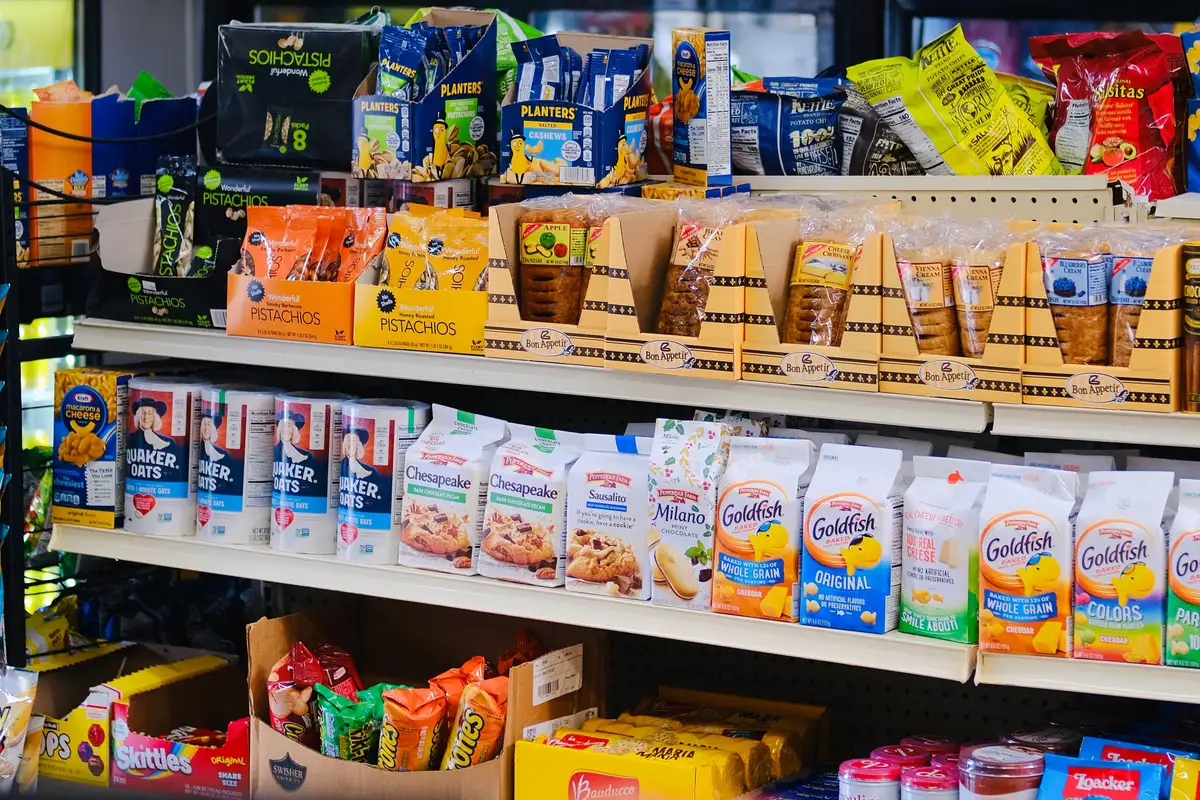
Inventory and business personal property, liquor liability under a license class defined by how much of your business alcohol is, severe-storm property exposure, refrigeration and spoilage, crime, and workers compensation for almost every employer.
Nate is a Chartered Property Casualty Underwriter and the founder of Wexford Insurance, LLC. He places convenience store programs across 48 states — inventory and business personal property, the liquor liability the GL form excludes, crime and cash-handling, and the workers compensation that store staffing triggers. Reach him via the Gas Station Guard Insurance quote form or call 317-942-0549.
Last updated · Reviewed by Nate Jones, CPCU
Nebraska has a retail license class that is defined not by what you sell or where you sell it, but by how much of your business it represents. A Class J license permits alcoholic liquor including beer, off the premises, in original packages only — and it is available to retail licensees whose annual gross revenue from the sale of alcohol does not exceed twenty percent of their total annual gross revenue from all retail sales.
That is an unusual thing to build a license class around. The permission is identical to the broader Class D; what differs is a ratio inside the licensee’s own accounts. A store can hold Class J for years and then stop qualifying — not because it did anything wrong, and not because the law changed, but because the alcohol side of the business grew faster than the rest of it.
Carriers do not underwrite convenience stores as generic retail. The class carries robbery and burglary frequency above strip retail, premises claims that behave more like restaurant claims, refrigeration failures landing on stocked perishables, and the regulatory exposure of age-restricted sales. Nebraska adds hail and severe convective storms across most of the state, and long rural distances west of the population corridor.
This page covers the Nebraska store: what moves premium here, how a license class tied to a revenue proportion affects planning, the coverage lines in a typical program, a compensation duty that reaches almost every employer, the claims we see, and the underwriting realities that decide appetite. Fuel-dispensing sites layer the petroleum lines on top.
48
States licensed (all except Hawaii and Alaska)
20+
Specialty markets in our c-store panel
1–2 hr
Quote turnaround during business hours
C-store
Class-focused agency, not generic retail
What Nebraska convenience store insurance costs
We do not publish premium ranges, because a c-store premium is built from the operation rather than a state average. These are the drivers that move the number on a Nebraska store.
Hail and severe convective storm exposure: The dominant property driver across most of the state. Roof age, roof covering and canopy construction decide the deductible structure and, on a poor loss history, whether a carrier wants the risk at all.
Where alcohol sits as a share of the business: The license class in use depends on it, and a store approaching the boundary has a licensing decision ahead of it that is worth knowing about before it arrives.
Tornado and total-loss potential: Nebraska is a market where a genuine total loss is a realistic scenario rather than a theoretical one, and a limit set several renewals ago is unlikely to reach it.
Rural distance west of the corridor: Beyond Lincoln and Omaha the catchments widen, response times lengthen and the nearest alternative store may be a long drive.
Prepared food operations: A hot case or deli adds product liability and cooking equipment and widens the injury pattern on the payroll.
Winter severity: Snow loading, blizzard closures and freeze exposure on water and sprinkler systems all bear on property terms.
Protective safeguards: Drop and time-delay safes, camera coverage and lit entrances feed the crime rating, and matter more where deposits are infrequent.
A license class you qualify for by proportion
Nebraska’s retail license classes are set out by statute, and two of them cover the same off-premises ground in different circumstances. A Class D license permits alcoholic liquor, including beer, for consumption off the premises, with sales in original packages only. A Class J license permits exactly that same activity — but it is available to retail licensees whose annual gross revenue from the sale of alcohol does not exceed twenty percent of the licensee’s total annual gross revenue from all retail sales.
The distinction, then, is not about the product, the premises, the population or the hours. It is about proportion. Class J describes a business that sells alcohol among many other things, and the twenty percent figure is the state’s way of saying where "among many other things" stops.
This is a genuinely different kind of rule from the ones a multi-state operator will have met elsewhere, and it is worth being precise about what it is not. No money changes hands because of it — the ratio is a qualifying condition for a class of license, not a payment, a fee or a tax. Nothing is remitted to the state on the strength of it. It is a threshold you either sit under or you do not.
The operational consequence is that success on the alcohol side is the thing most likely to move a store out of the category. A site that adds a cooler run, extends hours or picks up trade from a closing competitor can find alcohol drifting toward a fifth of total sales without any deliberate change of strategy. Knowing roughly where the business sits against that line is worth doing annually, in the same conversation as the insurance renewal, because both are questions about what the store has actually become rather than what it was set up to be.
Coverage lines for a Nebraska convenience store
Property and business personal property: Building if owned, plus inventory, coolers, shelving, POS hardware, signage and canopy. Hail is the defining Nebraska peril and roof age is the first thing an underwriter asks about.
General liability: Third-party injury and property damage on the sales floor, at the entrance and across the lot, including winter surface conditions.
Liquor liability: The general liability form excludes alcohol-related bodily injury and property damage. The line is needed whichever class the store holds — the class describes the business, not the exposure.
Crime and employee dishonesty: Money and securities, robbery, burglary and employee theft. On rural sites the deposit run is infrequent enough that more accumulates on the premises than a limit set for a metro store assumes.
Spoilage and equipment breakdown: The failed refrigeration unit and the stock lost behind it, as separate agreements — and a blizzard outage can take both.
Cyber liability: Card compromise at the register and the pump, ransomware, and the interruption that follows an outage.
Workers compensation: Statutory coverage for most employers, with an election available to an exempt employer that wants its people inside the system.
Workers compensation for Nebraska store employees
Most Nebraska employers are required to carry workers compensation insurance so that coverage is in place if an employee is injured at work. The exceptions are set out in statute and are narrow in the context of a convenience store — a sole proprietor with no employees is outside the Act, but a sole proprietor who hires anyone is not.
The exemptions that do exist are mostly agricultural and are drawn tightly. An employer engaged in an agricultural operation is exempt where it employs only related employees. An agricultural employer with unrelated employees is also exempt unless, in a calendar year, it employs ten or more unrelated full-time employees on each working day for thirteen calendar weeks, whether or not those weeks are consecutive. None of that reaches a retail store payroll.
One provision is worth knowing for the stores that sit near an edge. An employer that is exempt from the Act may elect to bring its employees under it by obtaining a policy of workers compensation insurance covering them. For an owner-operated store whose staffing sits just outside the requirement, that election converts an unpredictable liability into a scheduled one, and it is a decision worth making deliberately rather than defaulting into.
Nebraska convenience store claims we see
Hail damage to roof, canopy and rooftop units
The most frequent large property claim in the state. Percentage deductibles mean the retained amount scales with insured value, and cosmetic damage exclusions decide how much of a dented roof actually pays.
Tornado loss with a total-loss outcome
One of the few markets where a limit set for a partial loss is genuinely inadequate. Rebuild cost and the full period of restoration both deserve checking at every renewal.
Blizzard closure and the outage behind it
The property damage can be minor while the store is unreachable for days and the coolers are without power for most of them.
Compressor failure with deep perishable stock
Equipment breakdown answers for the unit, spoilage for the stock, business income for the closure. On a rural store the perishable assortment is why customers come.
Robbery at a store with a long deposit interval
Distance and infrequent banking leave more on the premises than the money and securities limit was set against.
An injury at a store that had elected in
The favorable version of this claim. A store just outside the requirement had taken the election, and the injury was handled as a scheduled benefit rather than as an open liability.
The Nebraska c-store risk profile
Nebraska is a severe-weather property market first. Hail frequency across most of the state is high enough that roof condition, roof age and canopy construction dominate the underwriting conversation, and percentage wind-and-hail deductibles are standard rather than exceptional. Tornado exposure runs through the same corridors, and winter adds snow loading and multi-day closures on top.
The trade profile divides between the Omaha and Lincoln corridor and everything west of it. Corridor stores are underwritten on customer count, hours and crime frequency. Western and rural stores are underwritten on isolation — wide catchments, long response times, infrequent deposits and a business income exposure that runs well past what the property schedule suggests.
The licensing layer is quiet but worth understanding, because it links commercial performance to a regulatory category in a way few states do. A store whose alcohol business grows past a fifth of total sales has changed licensing position by succeeding at something. It is not a risk in the insurance sense, but it is one of the few places where the renewal conversation and the licensing conversation are genuinely about the same underlying fact — what proportion of this business is what.
Why Nebraska c-store owners work with Gas Station Guard Insurance
We place convenience store programs across 48 states and write plains-state petroleum and c-store risks routinely, so a Nebraska submission goes out with roof age and covering documented, canopy construction described, rural distance and deposit practice explained, and loss history presented with enough hail context for an underwriter to read it fairly.
As an independent agency we place to carriers with appetite for the class rather than to a single company, which matters in a market where hail history alone can close doors. Where a Nebraska store sits behind a forecourt, the petroleum and retail lines are written as one program.
Nebraska convenience store insurance FAQs
What is a Class J license?
A Nebraska retail license permitting alcoholic liquor, including beer, for consumption off the premises with sales in original packages only — available to retail licensees whose annual gross revenue from the sale of alcohol does not exceed twenty percent of their total annual gross revenue from all retail sales.
How is that different from a Class D?
The permission is the same activity. What differs is the condition attached: Class J is scoped to licensees for whom alcohol is a limited share of overall retail revenue, while Class D carries no such proportion requirement.
Does the twenty percent figure mean we pay something?
No, and it is worth being clear about that because the arithmetic looks like a tax and is not one. Nothing is remitted to the state on the strength of the ratio. It is a qualifying condition deciding which class of license fits the business — a threshold you sit under or you do not.
What happens if our alcohol sales grow past it?
Then the store no longer fits that class and the licensing position needs revisiting. The uncomfortable part is that this is usually caused by the alcohol side doing well rather than by anything going wrong, so it tends to arrive without warning unless someone is watching the proportion.
How often should we check where we sit?
Annually is sensible, and the insurance renewal is a natural moment for it, because both conversations turn on the same underlying question — what this business has actually become as against how it was set up.
Do we need workers compensation?
Most Nebraska employers do. A sole proprietor with no employees sits outside the Act; a sole proprietor who hires anyone does not. The remaining exemptions are largely agricultural and drawn tightly enough that they do not reach a retail payroll.
We might be exempt. Should we buy it anyway?
It is worth weighing rather than dismissing. An exempt employer may elect to bring its employees under the Act by obtaining a policy covering them, which converts an unpredictable liability into a scheduled benefit. For a store sitting just outside the requirement that is usually the better trade.
Does a standalone Nebraska c-store need pollution coverage?
Not usually, where there is no fuel dispensing and no storage tank on site. Pollution and storage tank liability are petroleum lines. A standalone store carries the retail stack described here without them, which is part of why standalone and fuel-attached stores go to different carrier panels.