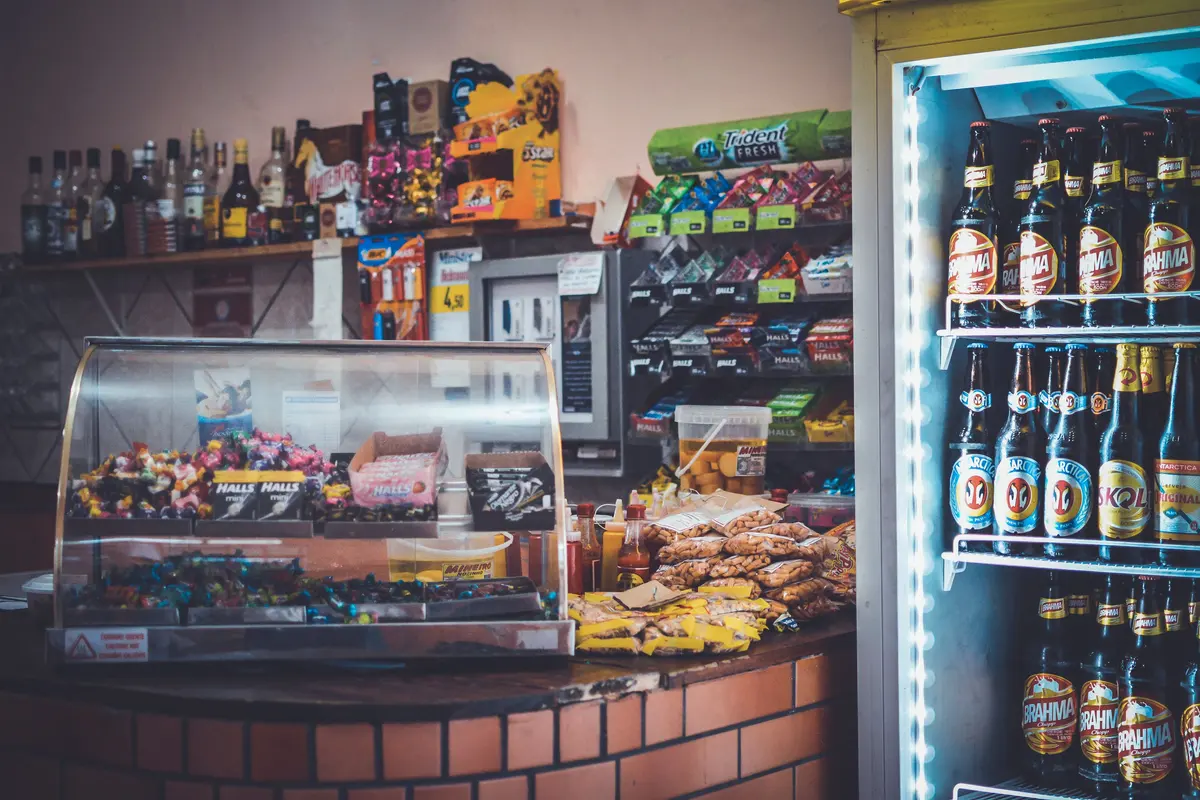
Inventory and business personal property, liquor liability, the cash and security profile of a store with gaming machines on the floor, refrigeration and spoilage, and workers compensation from a single employee.
Nate is a Chartered Property Casualty Underwriter and the founder of Wexford Insurance, LLC. He places convenience store programs across 48 states — inventory and business personal property, the liquor liability the GL form excludes, crime and cash-handling, and the workers compensation that store staffing triggers. Reach him via the Gas Station Guard Insurance quote form or call 317-942-0549.
Last updated · Reviewed by Nate Jones, CPCU
A Nevada convenience store can have slot machines in it, and the number is not left to the operator. A restricted gaming license permits not more than fifteen machines at an establishment where gaming is incidental to the primary business — and for convenience stores specifically, the Gaming Commission decided in 1990 that “incidental” means no more than seven.
Seven machines change what the business is from an insurance standpoint. They add cash that arrives and leaves outside the register, customers who stay in the building rather than passing through it, a reason to be open when a store otherwise would not be, and a second regulator with its own view of how the premises should be run. None of that shows up on a standard convenience store application.
Carriers do not underwrite convenience stores as generic retail. The class carries robbery and burglary frequency above strip retail, premises claims that behave more like restaurant claims, refrigeration failures landing on stocked perishables, and the regulatory exposure of age-restricted sales. Nevada adds gaming, extreme summer heat, and a long-distance highway network where a store can be the only stop for a very long way.
This page covers the Nevada store: what moves premium here, what gaming does to the risk when it is capped at seven machines, the coverage lines in a typical program, a compensation requirement that starts at one employee, the claims we see, and the underwriting realities that decide appetite. Fuel-dispensing sites layer the petroleum lines on top.
48
States licensed (all except Hawaii and Alaska)
20+
Specialty markets in our c-store panel
1–2 hr
Quote turnaround during business hours
C-store
Class-focused agency, not generic retail
What Nevada convenience store insurance costs
We do not publish premium ranges, because a c-store premium is built from the operation rather than a state average. These are the drivers that move the number on a Nevada store.
Whether the store holds a restricted gaming license: Machines on the floor change the cash cycle, the dwell time and the hours. It belongs on the submission as a fact about the operation, not as a footnote.
How machine cash is handled and collected: Gaming revenue does not move through the register. Who counts it, how often, and where it sits in between are crime-rating questions that a standard c-store application never asks.
Summer heat and refrigeration duty: Southern Nevada runs compressors against extreme ambient temperatures for months, and units that would last elsewhere do not last here.
Isolation on the highway network: A store that is the only stop for fifty miles has concentrated revenue, a long response time and no nearby alternative premises to operate from.
Hours and overnight staffing: Gaming gives customers a reason to stay late, which extends the exposure window on both the crime line and the compensation line.
Prepared food operations: A hot case or deli adds product liability and cooking equipment to the schedule.
Any employee at all: Nevada requires coverage from one employee, so the compensation line is on the program from the first hire rather than after a threshold.
Seven machines, and the number was written for your class
Nevada law defines a restricted license as a state gaming license to operate not more than fifteen slot machines at an establishment in which the operation of slot machines is incidental to the primary business. The principle behind it is that the licensee is not in the gaming business — the machines are secondary to whatever the establishment actually does.
For convenience stores the Gaming Commission drew the line lower. Regulation 3.015, adopted in 1990, provides that “incidental” in the convenience store context means no more than seven machines. So the general fifteen is not the operative number for a store like yours; seven is.
What that does to the risk is concrete. Machine cash accumulates separately from register cash and is collected on its own schedule, which means the total value on the premises at any moment is larger and less visible than a till reading suggests. Customers sit rather than pass through, which lengthens dwell time and changes the premises exposure. And a store with machines has a reason to stay open through hours when a purely retail site would close.
It also puts a second regulator in the building. Gaming compliance runs alongside alcohol and tobacco compliance rather than replacing it, and the record-keeping obligations that come with a restricted license are worth describing on a submission — they are evidence of operational discipline that an underwriter would otherwise have to take on trust.
Coverage lines for a Nevada convenience store
Property and business personal property: Building if owned, plus inventory, coolers, shelving, POS hardware, signage and any gaming equipment owned rather than routed. Desert heat and roof condition drive the property conversation.
General liability: Third-party injury and property damage on the sales floor, at the entrance and across the lot, with a longer dwell time than usual where machines keep customers in the building.
Liquor liability: The general liability form excludes alcohol-related bodily injury and property damage. Where a store combines alcohol sales with gaming and late hours, the limit should reflect that combination rather than the license alone.
Crime and employee dishonesty: Money and securities, robbery, burglary and employee theft. Machine cash sits outside the register and outside most operators’ instinct for what the limit should be.
Spoilage and equipment breakdown: Separate agreements for the failed unit and the stock behind it, and a real concern where ambient heat runs refrigeration at capacity for months.
Cyber liability: Card compromise at the register and the pump, ransomware, and the interruption that follows an outage.
Workers compensation: Statutory coverage from one employee, with contracted arrangements tested against the independent enterprise exemption rather than assumed to sit outside.
Workers compensation for Nevada store employees
Nevada requires workers compensation coverage from any employer with one or more employees, unless a specific statutory exclusion applies. The rule reaches every person, firm, association and private corporation that has anyone in service under a contract of hire, which takes in a single part-time clerk without argument.
The exclusion that matters most around the edges of a store payroll is the independent enterprise exemption. It is available where the person is genuinely operating a separate business and, importantly, is not in the same trade, business, profession or occupation as the party engaging them. That last condition is the one that fails most often in practice, because a store engaging someone to do store work rarely satisfies it.
For a Nevada convenience store the practical reading is straightforward: assume the clerks, deli staff and anyone working shifts are inside the system, and treat contracted arrangements as requiring a positive answer rather than an assumption. The classification is a legal determination, and it is settled by what the relationship looks like rather than by what the parties called it.
Nevada convenience store claims we see
Theft of machine cash between collections
The value at risk is the accumulated gaming cash rather than the till, and it is frequently well above what the money and securities limit was set against.
Robbery during late gaming hours
Machines keep a store open and occupied at hours when a purely retail site would be closed and empty. The clerk injury and the closure usually cost more than what was taken.
Compressor failure in extreme heat
Southern Nevada gives refrigeration no relief for months at a time. Equipment breakdown answers for the unit, spoilage for the stock.
A fall in a seated gaming area
Customers who sit and stay produce a different premises pattern than customers who walk in and out, including spills, chairs and cabling around machines.
Isolated highway store closed by a loss
With no alternative location and a wide catchment, the realistic period of restoration is long and business income is the line most often set too low.
A contractor found to be a subject worker
The independent enterprise exemption requires that the person not be in the same trade or business as the hirer, which store work rarely satisfies.
The Nevada c-store risk profile
Nevada convenience retail splits into two very different pictures. The Las Vegas and Reno metros carry high customer counts, extended hours and a crime profile driven by volume and by the visibility of cash. Beyond them the state is one of the emptiest in the country, and a highway store can be the only fuel, food and restroom for a long stretch in either direction.
Gaming runs through both. A store with seven machines holds more cash than its register suggests, keeps customers on the premises longer, and has an operational reason to be open at hours that concentrate the crime exposure. It is not an exotic risk, but it is a different one, and a submission that does not mention it leaves an underwriter pricing something else.
Heat is the property variable that outsiders underestimate. Extended periods above design temperature push refrigeration plant continuously, and the resulting failures land on stock rather than on the compressor. Roof condition and unit maintenance history do more work in a Nevada submission than building value does.
Why Nevada c-store owners work with Gas Station Guard Insurance
We place convenience store programs across 48 states and write western petroleum and c-store risks routinely, so a Nevada submission states the gaming position plainly, describes how machine cash is collected and held, gives roof and refrigeration detail against the heat, and explains the isolation where it applies.
As an independent agency we place to carriers with appetite for the class rather than to a single company. Where a Nevada store sits behind a forecourt, the petroleum and retail lines are written as one program rather than two policies with a seam between them.
Nevada convenience store insurance FAQs
How many slot machines can my Nevada convenience store have?
Seven. A restricted gaming license permits up to fifteen machines where gaming is incidental to the primary business, but Gaming Commission Regulation 3.015, adopted in 1990, provides that “incidental” for convenience stores means no more than seven.
Does having machines change our insurance?
Yes, in three specific ways. Cash accumulates outside the register between collections, which raises the money and securities exposure. Customers stay in the building rather than passing through, which changes the premises pattern. And there is an operational reason to stay open late, which extends the crime and compensation exposure window.
How should crime limits account for machine cash?
By counting it. Most limits are reasoned from a till reading and a nightly deposit, and neither captures gaming cash sitting in machines between collections. The right figure comes from the collection interval and what accumulates over it, not from what is in the drawer at closing.
Do I need workers compensation for one employee in Nevada?
Yes. Coverage is mandatory for an employer with one or more employees unless a statutory exclusion applies, and the rule reaches anyone in service under a contract of hire. A single part-time clerk brings the store inside it.
Our cleaner says they are an independent enterprise. Are they?
Only if they meet the conditions, and the one that usually fails is that the person must not be in the same trade, business, profession or occupation as the party engaging them. Someone engaged to do store work for a store rarely clears that. It is a legal determination rather than a matter of what the arrangement is called.
Why does heat matter so much on a Nevada submission?
Because refrigeration never gets a break. Extended periods at extreme ambient temperature run compressors at capacity for months, and marginal units fail under that load. The loss is usually the stock rather than the machine, which is why spoilage and equipment breakdown belong together on the program.
We are the only store for fifty miles. How should business income be set?
Against a long restoration rather than a quick repair. Isolation means no nearby alternative premises to operate from, a wide catchment with nowhere else to go, and longer waits for parts and contractors. Isolated Nevada stores are underinsured on business income more often than on anything else.
Does a standalone Nevada c-store need pollution coverage?
Not usually, where there is no fuel dispensing and no storage tank on site. Pollution and storage tank liability are petroleum lines. A standalone store carries the retail stack described here without them, which is part of why standalone and fuel-attached stores go to different carrier panels.