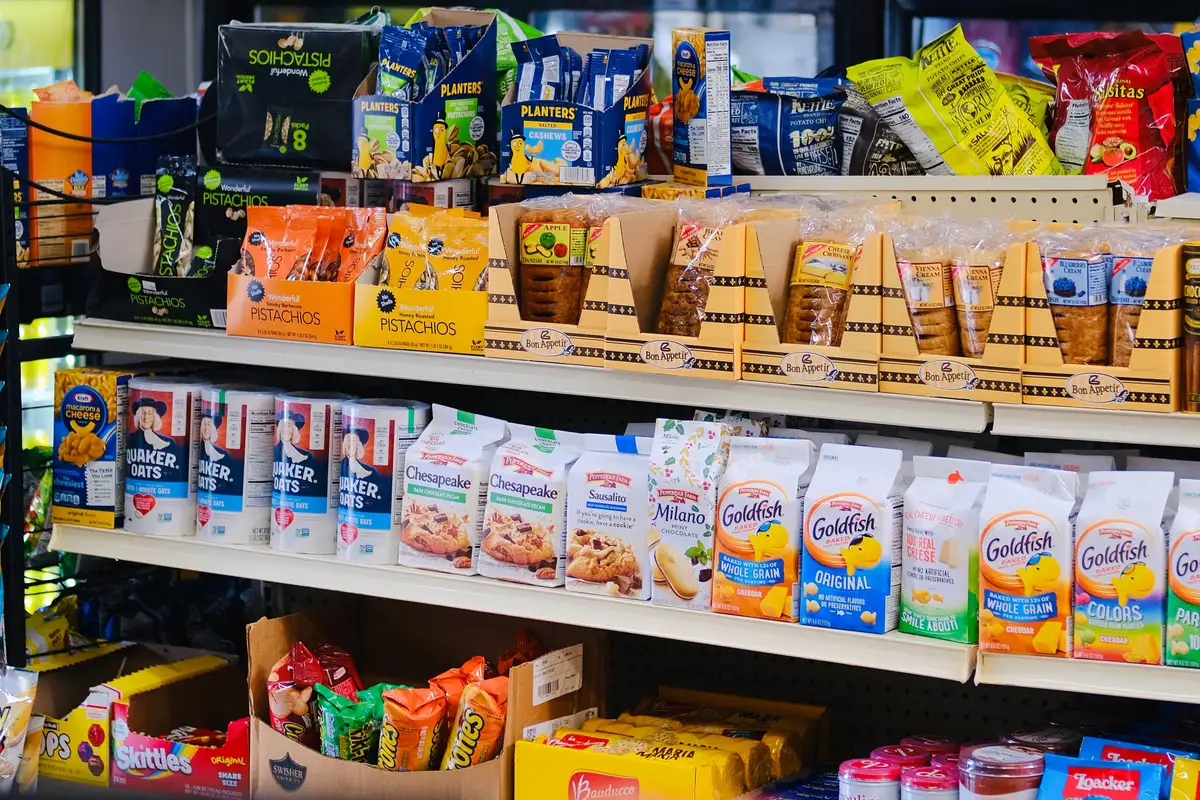
Inventory and business personal property, liquor liability that can follow a driver away from the premises, refrigeration and spoilage, crime, and a workers compensation threshold that counts more people than most owners expect.
Nate is a Chartered Property Casualty Underwriter and the founder of Wexford Insurance, LLC. He places convenience store programs across 48 states — inventory and business personal property, the liquor liability the GL form excludes, crime and cash-handling, and the workers compensation that store staffing triggers. Reach him via the Gas Station Guard Insurance quote form or call 317-942-0549.
Last updated · Reviewed by Nate Jones, CPCU
Every alcohol exposure on this program is a premises exposure. Someone buys, someone leaves, and whatever happens afterward is argued about in relation to a building. New Mexico is the state where that stops being true, because a retailer here can hold a permit to deliver, and the moment a bottle goes into a vehicle the store’s exposure is riding along with it.
The state is precise about what has to happen at the door. A delivery permittee must use an identification verification system meeting the department’s requirements to obtain valid proof of the recipient’s identity and age — and the practical instruction that follows is stricter than the one that governs the counter. For deliveries, identification must be requested even where the person clearly looks older than thirty-five.
Carriers do not underwrite convenience stores as generic retail. The class carries robbery and burglary frequency above strip retail, premises claims that behave more like restaurant claims, refrigeration failures landing on stocked perishables, and the regulatory exposure of age-restricted sales. New Mexico adds long rural distances, high-elevation winters in the north, and a delivery permission that pulls the automobile into a retail program.
This page covers the New Mexico store: what moves premium here, what changes when alcohol leaves the building, the coverage lines in a typical program, a compensation threshold with an unusual counting rule, the claims we see, and the underwriting realities that decide appetite. Fuel-dispensing sites layer the petroleum lines on top.
48
States licensed (all except Hawaii and Alaska)
20+
Specialty markets in our c-store panel
1–2 hr
Quote turnaround during business hours
C-store
Class-focused agency, not generic retail
What New Mexico convenience store insurance costs
We do not publish premium ranges, because a c-store premium is built from the operation rather than a state average. These are the drivers that move the number on a New Mexico store.
Whether the store delivers: A delivery operation adds owned or hired automobile exposure, driver selection and a second point where an age-restricted sale can go wrong. It changes the program rather than adding a line to it.
Who drives, and how they were vetted: Motor vehicle records, hiring practice and whether drivers use their own vehicles are the questions that decide the auto side, and none of them appear on a standard retail application.
Rural isolation and response time: Across much of the state the nearest fire service and the nearest alternative store are both a long way off, which lengthens the realistic period of restoration.
Elevation and winter severity in the north: Northern New Mexico carries genuine snow and freeze exposure that a southern desert store does not.
Headcount, counted the state’s way: The three-worker threshold counts part-time, temporary and seasonal workers, and counts an owner who has opted out of coverage. A store reaches it sooner than its payroll suggests.
Prepared food operations: A hot case or deli adds product liability and cooking equipment and widens the injury pattern.
Protective safeguards: Camera coverage, drop safes and lit entrances feed the crime rating, and carry more weight where response times are long.
When the bottle leaves the building
Under the Liquor Control Act, a person otherwise qualified may apply for an alcoholic beverage delivery permit, and the department may issue one where the applicant already holds a valid retailer’s, dispenser’s, craft distiller’s, winegrower’s, small brewer’s or restaurant license. For a convenience store, the retailer’s license is the relevant one, and the delivery permit sits on top of it rather than replacing it.
The permit comes with a specific verification obligation. A delivery permittee delivering alcoholic beverages must use an identification verification system that meets the department’s requirements to obtain valid proof of the recipient’s identity and age. Deliveries may not be made to an intoxicated person, and may not be made to a minor.
The detail that matters operationally is how much stricter this is than the counter. In store, staff are trained to ask for identification when a customer appears under a certain age. On a delivery, the guidance is that identification must be requested even where the person clearly looks older than thirty-five — the visual judgment that works behind a counter does not travel with the product, because the person at the door is not the person who placed the order and there is nobody else present to notice.
For a program the consequence is that a delivering store is running two different businesses under one roof. The retail side is a premises risk with the usual controls. The delivery side is a motor vehicle risk, a hiring risk and an age-verification risk happening at addresses the operator has never seen. Neither the general liability form nor a standard retail auto arrangement assumes the second, and both need to be told about it.
Coverage lines for a New Mexico convenience store
Property and business personal property: Building if owned, plus inventory, coolers, shelving, POS hardware and signage, with northern sites carrying real snow loading and freeze exposure.
General liability: Third-party injury and property damage on the sales floor, at the entrance and across the lot — the premises half of a business that may also operate off it.
Liquor liability: The general liability form excludes alcohol-related bodily injury and property damage. Where the store delivers, the limit is protecting sales completed at an address rather than at a counter, and should be sized knowing that.
Commercial auto and hired/non-owned: The line a delivering store cannot do without. Owned vehicles, employees using their own cars, and the liability that follows either — a retail program written without it has a hole shaped exactly like the delivery operation.
Crime and employee dishonesty: Money and securities, robbery, burglary and employee theft, with rural deposit intervals leaving more on the premises than a nightly cycle assumes.
Workers compensation: Statutory coverage at three or more workers, counting part-time, temporary and seasonal staff, and counting an owner who has opted out.
Workers compensation for New Mexico store employees
New Mexico requires employers of three or more workers to carry workers compensation coverage. Businesses engaged in activities requiring a license under the Construction Industries Licensing Act must carry it regardless of headcount, but for a convenience store the threshold is three.
The counting rules are where stores get this wrong, and they run in an unexpected direction. Workers count whether they are full-time, part-time, temporary or seasonal — so a summer hire and a weekend clerk are each a worker for this purpose. More surprisingly, an owner or executive employee who has elected to be excluded from coverage is still counted toward the three. Opting out removes a person from the policy; it does not remove them from the arithmetic.
Put together, those two rules mean a store that thinks of itself as having two employees frequently has three. An owner who works shifts and has excluded themselves, one full-time clerk and one weekend part-timer is at the threshold, and the only person who looks uncovered on paper is the one whose exclusion caused the count to be misread in the first place. Where there is any doubt, the compliance bureau will confirm whether a particular person counts.
New Mexico convenience store claims we see
A delivery that reached the wrong person
The order was placed by an adult and received by someone else. This is the failure the verification requirement exists to prevent, and it happens at a doorstep where no manager is watching.
Vehicle accident during a delivery run
An automobile claim arising out of a retail business, frequently in a personal vehicle the store does not own and may not have declared.
Robbery at an isolated store
Distance lengthens the incident, the response and the investigation, and the clerk injury and closure usually cost more than the money taken.
Winter freeze at a northern site
Elevation brings sustained cold that southern New Mexico never sees, and a burst line in a closed store is found hours later.
A compensation claim at a store that counted two
The owner had excluded themselves and was still counted toward the three. The threshold had been crossed before anyone examined the arithmetic.
Compressor failure with a deep perishable assortment
Equipment breakdown responds to the unit, spoilage to the stock, business income to the closure — and on a store that is the only option for a long drive, all three matter.
The New Mexico c-store risk profile
New Mexico is a large state with a small population and long gaps between towns. Outside Albuquerque, Las Cruces and Santa Fe, a convenience store is frequently the only fuel, food and restroom for a considerable distance, which concentrates revenue, lengthens the realistic period of restoration and gives business income more work to do than the property schedule suggests.
The climate splits by elevation rather than by latitude in the way outsiders expect. Northern and mountain sites carry genuine winter — snow loading, freeze exposure on water lines, and ice at the entrance for months. Southern desert stores carry heat and monsoon runoff instead. A schedule spanning both is carrying two property conversations.
Delivery is the state-specific layer, and its significance is that it moves part of the operation off the premises entirely. A store that delivers has an automobile exposure, a hiring exposure and an age-verification obligation happening at addresses nobody from the business has inspected. That is not a small addition to a retail program; it is a second risk running alongside the first, and it needs to be described rather than discovered.
Why New Mexico c-store owners work with Gas Station Guard Insurance
We place convenience store programs across 48 states and write southwestern petroleum and c-store risks routinely, so a New Mexico submission states plainly whether the store delivers, who drives and in whose vehicle, how identification is verified at the door, and a headcount counted the way the statute counts rather than the way the payroll reads.
As an independent agency we place to carriers with appetite for the class rather than to a single company, which matters where a retail risk carries a delivery operation inside it. Where a New Mexico store sits behind a forecourt, the petroleum and retail lines are written as one program.
New Mexico convenience store insurance FAQs
Can my New Mexico store deliver alcohol?
With the right permit, yes. A person otherwise qualified may apply for an alcoholic beverage delivery permit, and the department may issue one where the applicant holds a valid retailer’s, dispenser’s, craft distiller’s, winegrower’s, small brewer’s or restaurant license. For a convenience store the retailer’s license is the one that matters, and the delivery permit sits on top of it.
What has to happen when we hand the order over?
A delivery permittee must use an identification verification system meeting the department’s requirements to obtain valid proof of the recipient’s identity and age. Delivery may not be made to an intoxicated person or to a minor.
Do we really have to check ID if the customer is obviously middle-aged?
Yes. For deliveries, identification must be requested even where the person clearly looks older than thirty-five. The visual judgment staff use behind a counter does not travel with the product — the person at the door may not be the person who ordered, and there is nobody else present to notice.
Does our general liability cover the delivery driver?
No, and this is the gap we see most often on delivering stores. Injury and damage arising out of the use of a vehicle sit with commercial auto, and where employees use their own cars the relevant cover is hired and non-owned auto. A retail program written as though the business never leaves the building has a hole shaped exactly like the delivery run.
How many employees before we need workers compensation?
Three or more workers. Construction-licensed activity is the exception at any size, but for a convenience store the threshold is three.
How does New Mexico count to three?
More broadly than most owners expect. Workers count whether full-time, part-time, temporary or seasonal — and an owner or executive employee who has elected to be excluded from coverage is still counted toward the three. Opting out removes a person from the policy, not from the arithmetic.
So an owner who opted out still counts?
Yes, and that is exactly how stores miscount. An owner working shifts who has excluded themselves, one full-time clerk and one weekend part-timer is at the threshold. The person whose exclusion is on file is the one most likely to be left out of the tally.
Does a standalone New Mexico c-store need pollution coverage?
Not usually, where there is no fuel dispensing and no storage tank on site. Pollution and storage tank liability are petroleum lines. A standalone store carries the retail stack described here without them, which is part of why standalone and fuel-attached stores go to different carrier panels.