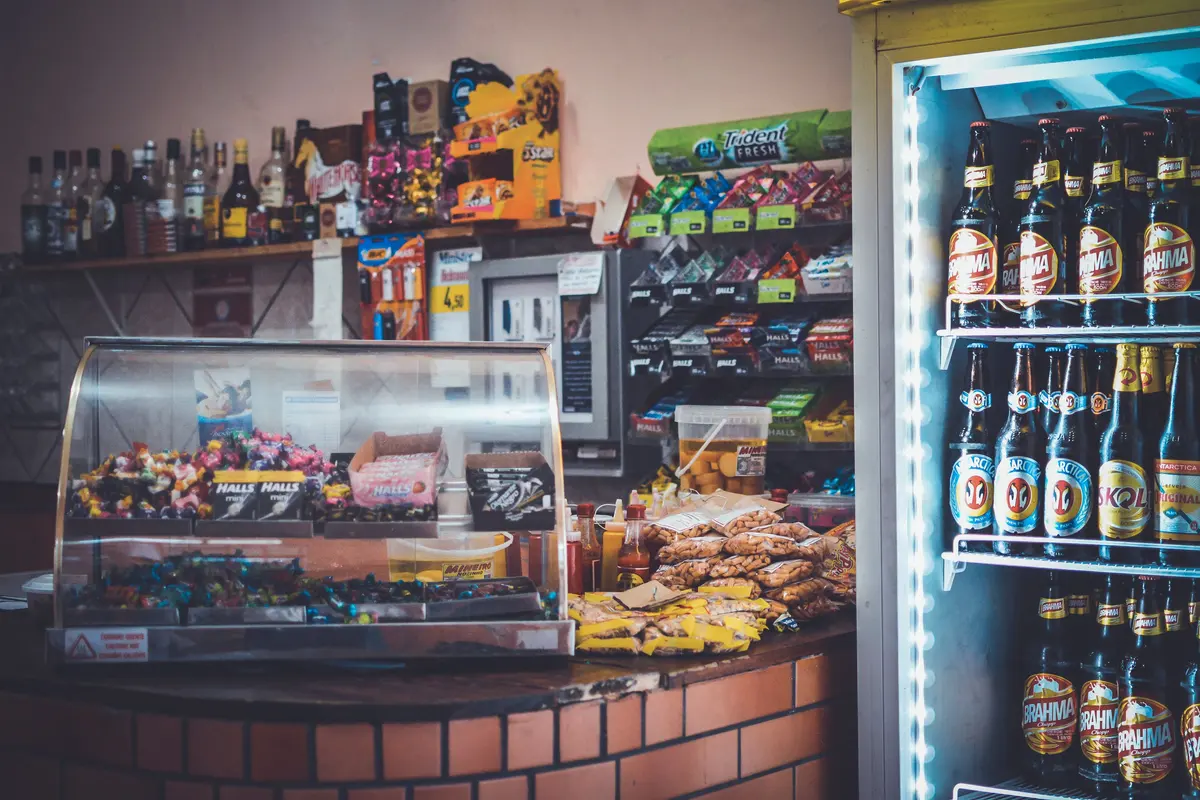
Inventory and business personal property, liquor liability under permits issued statewide while spirits stay in local hands, coastal and inland storm exposure, refrigeration and spoilage, crime, and workers compensation above two employees.
Nate is a Chartered Property Casualty Underwriter and the founder of Wexford Insurance, LLC. He places convenience store programs across 48 states — inventory and business personal property, the liquor liability the GL form excludes, crime and cash-handling, and the workers compensation that store staffing triggers. Reach him via the Gas Station Guard Insurance quote form or call 317-942-0549.
Last updated · Reviewed by Nate Jones, CPCU
North Carolina controls spirits, but the government doing the controlling is not the one most operators expect. Spirituous liquor may be sold only in ABC stores operated by local boards — independent political subdivisions of the State whose members are appointed by a city governing body or a county board of commissioners. The store down the road from you is run by a body appointed by your own local officials.
Beer and wine work differently and come from the state level: the ABC Commission issues off-premises retail permits to grocery and convenience stores. So a North Carolina c-store answers to a statewide permit system for what it sells and operates alongside a locally governed retail system for what it does not.
Carriers do not underwrite convenience stores as generic retail. The class carries robbery and burglary frequency above strip retail, premises claims that behave more like restaurant claims, refrigeration failures landing on stocked perishables, and the regulatory exposure of age-restricted sales. North Carolina spans a coastal plain with named-storm exposure and a mountain west with a different property profile entirely.
This page covers the North Carolina store: what moves premium here, how a locally governed control system shapes the competitive and regulatory picture, the coverage lines in a typical program, the three-employee compensation threshold and who counts toward it, the claims we see, and the underwriting realities that decide appetite. Fuel-dispensing sites layer the petroleum lines on top.
48
States licensed (all except Hawaii and Alaska)
20+
Specialty markets in our c-store panel
1–2 hr
Quote turnaround during business hours
C-store
Class-focused agency, not generic retail
What North Carolina convenience store insurance costs
We do not publish premium ranges, because a c-store premium is built from the operation rather than a state average — and North Carolina spans coastal and mountain exposure in one state. These are the drivers.
Coastal position and named-storm exposure: Eastern North Carolina carries hurricane exposure underwritten and deductibled separately from all-other-perils. A Piedmont or mountain store of the same size does not.
Which permits the store holds: Off-premises beer and wine permits decide whether liquor liability is on the program and what severity the limit is covering.
Hours and overnight staffing: Late and overnight operation on a single clerk is rated on both the crime line and the compensation line.
Prepared food and refrigeration depth: Hot cases and deli counters put product liability on the program, and they multiply what a single failed compressor destroys.
Headcount relative to the comp threshold: North Carolina sets the requirement at three or more employees, and who counts is not obvious — see the compensation section.
Trade area and foot traffic: Premises liability follows customer count and hours more than building value, and the state spans dense urban corridors and rural crossroads alike.
Protective safeguards: Camera coverage, drop and time-delay safes, monitored alarm and lighting at the entrance feed the crime rating directly.
Control exercised by local government, not the state
Spirituous liquor in North Carolina may be sold only in ABC stores operated by local boards. Those boards are independent political subdivisions of the State, established under the local ABC board provisions of the alcohol statutes, each consisting of three or five members appointed for fixed terms by the city governing body or by the county board of commissioners.
Each local board has the authority and the duty to operate one ABC store, with additional stores possible on Commission approval. The boards run as separate entities: they set their own policies and procedures, hire and fire their own staff, designate their own management, and buy, sell, transport and possess alcoholic beverages for their store operations.
The consequence for a convenience store is that the spirits channel is governed municipality by municipality rather than from Raleigh. Store hours, store placement and store count in your immediate trade area are decided by an appointed local body, which makes the competitive picture around alcohol genuinely local in a way it is not in a centrally operated control state.
What the c-store itself sells comes from the other direction. The ABC Commission issues retail permits for off-premises consumption to grocery and convenience stores, so beer and wine permissions are statewide and consistent while the spirits environment varies by locality. Both facts belong on a submission: the permit set describes the store, and the local board describes what it operates next to.
Coverage lines for a North Carolina convenience store
Property and business personal property: Building if owned, plus inventory, coolers, shelving, POS hardware and signage. Coastal counties carry named-storm deductibles applied separately from all-other-perils.
General liability: Customer bodily injury and third-party property damage in the aisles, at the entrance and across the lot.
Liquor liability: The general liability form excludes alcohol-related bodily injury and property damage. Where a North Carolina store holds off-premises beer and wine permits, this is the separate line that responds.
Crime and employee dishonesty: Money and securities, robbery, burglary and employee theft. On a store carrying deep tobacco and lottery, most of what a thief can walk out with was never in the till.
Cyber liability: Card compromise at the register and the pump, ransomware, and the interruption that follows an outage.
Workers compensation: Statutory coverage for clerks and deli staff, required at three or more employees, with corporate officers counted toward the threshold but able to exclude themselves from coverage.
Umbrella and excess: Higher limits over general liability, liquor liability and auto, standard on multi-store operators and any store with meaningful alcohol volume.
Workers compensation for North Carolina store employees
North Carolina requires workers compensation coverage from businesses employing three or more employees, and the requirement applies whether the business is a corporation, sole proprietorship, limited liability company or partnership.
Who counts is the part worth reading carefully. Sole proprietors, members of LLCs and partners are not automatically counted as employees. Corporate officers, by contrast, are counted in determining whether the business has three or more — although an officer may specifically exclude themselves from coverage under the policy once it is in force. So the ownership structure can move a store across the threshold in one direction and the officer election can adjust the covered population in the other.
Exceptions exist for casual employees whose work is both casual and outside the course of the business, domestic servants employed directly by a household, certain agricultural arrangements and federal employees. None of those reach an ordinary convenience store payroll. What the claims actually look like is unglamorous: a back strained unloading a delivery, a foot going out from under someone on a wet walk-in floor, a hand caught on a slicer, and — less often but far more expensively — a clerk hurt while the store is being robbed.
North Carolina convenience store claims we see
Named-storm damage on a coastal store
Eastern North Carolina carries a separate wind deductible, frequently written as a percentage of insured value, so the retained loss scales with the building rather than sitting at a flat figure.
Extended power loss after a storm
The wind claim is often smaller than the spoilage and business income that follow. A store without generator capacity can lose an entire perishable assortment while the building itself is intact.
Theft aimed at the tobacco wall rather than the till
Cartons are compact, valuable and easy to resell, which makes them a more attractive target than a drawer holding a float. A crime limit reasoned from cash on hand will not reach what actually left the building.
Compressor failure with stocked perishables
One event, three separate agreements: the unit itself is equipment breakdown, the ruined stock is spoilage, and the days the doors stay shut are business income. Buying only the first covers the least expensive part.
Clerk injury at a three-person store
North Carolina crosses into the system at three employees, and the ownership structure decides who counts. Stores that reasoned only from their hourly staff are the ones that discover the requirement after an injury.
Alcohol sale to a minor during a compliance check
The consequence lands on the permit the store trades under. Liquor liability responds to third-party injury rather than to the administrative penalty, so the training and identification program is the meaningful control.
The North Carolina c-store risk profile
North Carolina divides cleanly into three underwriting environments. The coastal plain carries hurricane and named-storm exposure with its own deductible structure. The Piedmont corridor from Charlotte through the Triad to the Triangle is underwritten on customer count, hours and crime. The mountain west carries winter access, distance from responding service and a very different property profile.
A single operator can hold stores in all three, and the schedule will carry three different property conversations as a result. The most common mistake on a North Carolina portfolio is applying the inland terms an operator is used to renewing against a coastal store that needs a separate wind structure.
The alcohol layer is locally governed rather than locally variable in what the c-store may sell. Permits for beer and wine are statewide and consistent, while the spirits stores next door are run by appointed local boards with their own hours, placement and management decisions. The store is regulated centrally and competes locally.
Why North Carolina c-store owners work with Gas Station Guard Insurance
We place convenience store programs across 48 states and write North Carolina petroleum and c-store risks routinely, so submissions carry what underwriters on this class ask for — coastal position and wind structure, hours and overnight staffing, permit set, generator capacity where it exists, protective safeguards, and loss detail with enough context to be read properly.
As an independent agency we place to carriers with appetite for the class rather than to a single company. Where a North Carolina store sits behind a forecourt, the petroleum and retail lines are written as one program rather than as two policies with a seam between them.
North Carolina convenience store insurance FAQs
Who runs the liquor store near my North Carolina site?
A local ABC board — an independent political subdivision of the State whose three or five members are appointed by the city governing body or the county commissioners. Each board operates at least one store and sets its own policies, staffing and management, so the spirits environment around your store is decided locally rather than from the state capital.
We have three employees. Do we need workers compensation?
Yes, at three or more. Read who counts carefully: sole proprietors, LLC members and partners are not automatically counted, while corporate officers are counted toward the threshold — although an officer may specifically exclude themselves from coverage once the policy is in force.
Why is my coastal store deductible structured differently?
Because named-storm exposure is underwritten separately from all-other-perils. Coastal wind deductibles are frequently a percentage of insured value rather than a flat amount, so the retained loss scales with the building. Piedmont and mountain stores generally do not carry that structure.
Does my policy respond to spoilage after a storm outage?
Only if spoilage is on the program. Extended power loss after a hurricane is one of the most reliable ways a North Carolina store loses its entire perishable assortment while the building stands undamaged, and spoilage is a separate agreement from the property form.
How should I set crime limits on a North Carolina store?
Start from the whole of what a thief could remove, not the float. On most stores the tobacco wall alone is worth several times the drawer, and it is far easier to move. Remember too that money and securities, robbery, and employee dishonesty are three different agreements carrying three different limits — a generous figure on one does nothing for the others.
Can several North Carolina stores go on one program?
Yes, scheduled by location. The schedule should record coastal versus inland position per site, because the wind structure differs materially and applying inland terms to a coastal store is the most common error on a North Carolina portfolio.
Does a generator change my terms?
It can, particularly on the spoilage and business income side in coastal counties. Carriers look at whether a store can hold refrigeration through an extended outage, because that single capability decides whether a storm becomes a stock loss as well as a building loss.
Does a standalone North Carolina c-store need pollution coverage?
Not usually, where there is no fuel dispensing and no storage tank on site. Pollution and storage tank liability are petroleum lines. A standalone store carries the retail stack described here without them, which is part of why standalone and fuel-attached stores go to different carrier panels.
Authoritative North Carolina and federal references