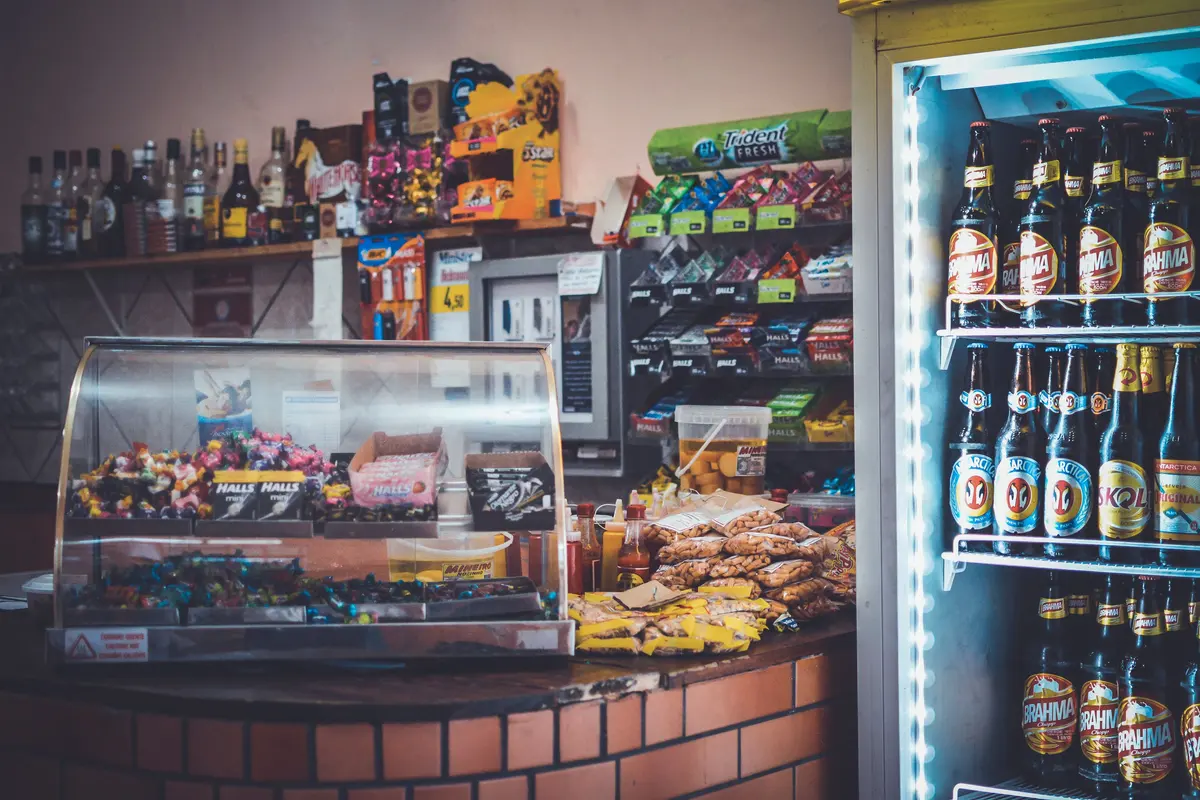
Inventory and business personal property, liquor liability that arrives attached to a food-service license, prepared-food exposure you may not have chosen, refrigeration and spoilage, crime, and workers compensation from a single employee.
Nate is a Chartered Property Casualty Underwriter and the founder of Wexford Insurance, LLC. He places convenience store programs across 48 states — inventory and business personal property, the liquor liability the GL form excludes, crime and cash-handling, and the workers compensation that store staffing triggers. Reach him via the Gas Station Guard Insurance quote form or call 317-942-0549.
Last updated · Reviewed by Nate Jones, CPCU
Pennsylvania asks a convenience store to become something else before it can sell beer. There is no simple off-premises beer license for a c-store here. The eating place license exists for premises whose primary purpose is the regular and customary preparation and service of food, and a restaurant license may be held by an establishment with approval for an interior connection to a grocery or convenience store. Either route means the store operates a food-service business, and the alcohol permission follows from that.
The other half of the picture is the Commonwealth itself. The Liquor Control Board operates around 560 Fine Wine and Good Spirits stores and acts as both retailer and wholesaler for wine and spirits while licensing some twenty thousand producers, retailers and handlers. Your store sells beer under a food-service license; the state sells the wine and spirits.
Carriers do not underwrite convenience stores as generic retail, and a Pennsylvania store licensed this way is doubly not generic. It carries the robbery, premises and refrigeration exposures of the class plus a working kitchen — product liability, cooking equipment, grease and burn exposure, and the staffing that goes with food service.
This page covers the Pennsylvania store: what moves premium here, how a license built around food service reshapes the risk, the coverage lines in a typical program, a compensation requirement that begins at one employee and counts family, the claims we see, and the underwriting realities that decide appetite. Fuel-dispensing sites layer the petroleum lines on top.
48
States licensed (all except Hawaii and Alaska)
20+
Specialty markets in our c-store panel
1–2 hr
Quote turnaround during business hours
C-store
Class-focused agency, not generic retail
What Pennsylvania convenience store insurance costs
We do not publish premium ranges, because a c-store premium is built from the operation rather than a state average. These are the drivers that move the number on a Pennsylvania store.
Whether the store holds a food-service license for beer: A licensed store is running a kitchen, which brings product liability, cooking equipment and burn exposure that an unlicensed store does not carry at all.
Cooking equipment and suppression: Fryers, grills and hoods change the property conversation. Suppression systems, hood cleaning intervals and documented maintenance all move terms.
Transaction volume against the cap: Off-premises beer is capped per transaction, so alcohol revenue comes from frequency rather than basket size — a different customer-flow profile from an uncapped state.
Hours and overnight staffing: One clerk working late is a crime exposure and a compensation exposure in the same shift, and carriers price both.
Winter property exposure: Roof loading, ice damming and freeze protection on water and sprinkler systems drive Pennsylvania property terms, with the northern tier carrying more of all three.
Trade area and foot traffic: Premises liability follows customer count and hours more than building value, and the state spans dense city corridors and rural crossroads alike.
Headcount including family: Pennsylvania begins at one employee and counts family members, so a store that thinks of itself as owner-operated may already be inside the system.
To sell beer, the store has to be a restaurant
Pennsylvania does not offer a convenience store a plain off-premises beer license. The eating place retail dispenser license exists for premises whose primary purpose is the regular and customary preparation and service of food to the public, and holders of that license may sell malt and brewed beverages but not wine or spirits. Restaurant licenses, separately, may be held by establishments that have obtained approval for an interior connection to a grocery or convenience store.
Both routes lead to the same place: a store selling beer in Pennsylvania is operating a food-service business, whether or not the operator thinks of it that way. That is a material underwriting fact. The store carries product liability on prepared food, cooking equipment and its suppression, grease handling, burn exposure for staff, and a payroll with kitchen roles in it — none of which appear on a packaged-goods c-store in a state that sells a simple beer license.
The volume rule is the second half. Off-premises beer sales are capped at 192 fluid ounces in a single transaction — roughly two six-packs — for both eating place and restaurant licensees. Alcohol revenue therefore accumulates through transaction count rather than basket size, which shapes footfall, staffing at the counter and the pattern of the day.
Wine and spirits are not on the table at all. The Liquor Control Board operates about 560 Fine Wine and Good Spirits stores and functions as both retailer and wholesaler for those categories, so the Pennsylvania c-store’s alcohol exposure is beer, sold under a food-service license, in capped quantities.
Coverage lines for a Pennsylvania convenience store
Property and business personal property: Building if owned, plus inventory, coolers, shelving, POS hardware, signage and kitchen equipment. Pennsylvania property carries winter loading and freeze exposure, heavier in the northern tier.
General liability: Customer bodily injury and third-party property damage in the aisles, at the entrance and across the lot — and, on a licensed store, product liability on prepared food.
Liquor liability: The general liability form excludes alcohol-related bodily injury and property damage. In Pennsylvania the exposure arrives attached to a food-service license, so the store is usually serving food and selling beer at once.
Crime and employee dishonesty: Money and securities, robbery, burglary and employee theft. On a licensed store the register sits beside the tobacco and lottery stock, and it is the combined total that needs a limit.
Cyber liability: Card compromise at the register and the pump, ransomware, and the interruption that follows an outage.
Workers compensation: Statutory coverage from the first employee, including family members, and covering kitchen roles wherever the license has brought food service into the store.
Umbrella and excess: Higher limits over general liability, liquor liability and auto, standard where a store combines alcohol sales with a working kitchen.
Workers compensation for Pennsylvania store employees
Pennsylvania requires workers compensation coverage from all employers with one or more employees, whether part-time or full-time, and the requirement expressly includes family members. Nonprofit corporations, unincorporated businesses and employers with a single employee all fall inside the Act.
The exclusions are narrow and drawn tightly. An employer escapes the requirement only if every worker falls into an exempt category — casual workers whose employment is both casual in character and outside the regular course of the business, certain homeworkers, or agricultural laborers below defined earnings and day thresholds. Domestic servants are optional, and individual exemptions exist for religious belief or for executive status in certain corporations.
For a convenience store none of that reaches an ordinary payroll, and the family-member inclusion is the detail most likely to catch an owner-operated store. A husband-and-wife store with one part-time weekend clerk is inside the system. Where the store also runs the kitchen its license requires, the injury pattern widens from lifting and slips to burns, cuts and hot-oil exposure.
Pennsylvania convenience store claims we see
Kitchen fire at a licensed store
The license that permits beer brings a kitchen, and a kitchen brings the most severe property loss on the class. Hood cleaning intervals, suppression service records and fryer maintenance are what carriers examine after one.
Burn or cut injury to kitchen staff
A store that added food service to obtain its license also added an injury pattern its payroll never had. Hot oil, grills and slicers produce compensation claims that a packaged-goods store does not see.
Foodborne illness allegation
Prepared food brings product liability. These claims are difficult to disprove and turn on temperature logs, handling procedure and staff training records.
Slip on melt-water inside the entrance
A Pennsylvania winter moves salt and slush into the store all day, and these claims turn on mat placement, wet-floor procedure and whether an inspection log exists.
Robbery or theft targeting tobacco stock
The register is often not the target. Tobacco inventory behind the counter carries substantial value and moves easily.
Ice damming and burst lines in the northern tier
Roof and water losses arrive together in a hard winter, and the inventory and closure consequences usually exceed the repair.
The Pennsylvania c-store risk profile
Pennsylvania convenience retail is shaped by a licensing rule rather than by geography, and it is the licensing rule that decides which of two very different businesses a store is. An unlicensed store is packaged-goods retail with the usual premises, crime and refrigeration exposures. A licensed store is a food-service operation with a kitchen, a wider injury pattern, product liability and a materially larger property risk. Two stores of identical size on the same road can sit in those two categories.
Geography then layers on top. The Philadelphia and Pittsburgh corridors are underwritten on customer count, hours and crime; the northern tier carries winter loading, ice damming and freeze exposure; the rural center adds distance from responding service. An operator with stores across the state carries all three conversations.
The capped transaction is a quieter influence than it first appears. Because off-premises beer is limited per sale, alcohol revenue is built from many small purchases rather than a few large ones, which keeps customers moving through the counter area and keeps staffing at the front of the store where the crime and premises exposures concentrate.
Why Pennsylvania c-store owners work with Gas Station Guard Insurance
We place convenience store programs across 48 states and write Pennsylvania petroleum and c-store risks routinely, so submissions carry what underwriters on this class ask for — license type and therefore whether a kitchen is in scope, suppression and hood-cleaning records, hours and overnight staffing, winter protection detail, protective safeguards, and loss history with enough context to be read properly.
As an independent agency we place to carriers with appetite for the class rather than to a single company. A licensed Pennsylvania store is a hybrid retail and food-service risk, and it is placed on that basis rather than as a packaged-goods store with an endorsement bolted on.
Pennsylvania convenience store insurance FAQs
Why does my Pennsylvania store need a restaurant license to sell beer?
Because the Commonwealth does not offer a plain off-premises beer license for convenience stores. The eating place license exists for premises whose primary purpose is the regular and customary preparation and service of food, and restaurant licenses may be held by establishments approved for an interior connection to a grocery or convenience store. Either way, selling beer means operating a food-service business.
How much beer can a customer buy in one transaction?
Up to 192 fluid ounces — roughly two six-packs — for off-premises consumption. The cap applies to eating place and restaurant licensees alike, which is why alcohol revenue in Pennsylvania accumulates through transaction count rather than basket size.
Does the kitchen really change my insurance that much?
Yes, more than any other single factor on a Pennsylvania store. It adds product liability on prepared food, cooking equipment and suppression to the property schedule, a burn and cut injury pattern to the compensation exposure, and the most severe fire scenario on the class. A licensed store should be underwritten as a hybrid retail and food-service risk.
Can my Pennsylvania store sell wine or spirits?
Not under an eating place license, which covers malt and brewed beverages only. Wine and spirits move through the Liquor Control Board’s own Fine Wine and Good Spirits stores, of which there are around 560, with the Board acting as both retailer and wholesaler for those categories.
We are a husband-and-wife store with one weekend clerk. Do we need comp?
Yes. Pennsylvania requires coverage from one or more employees, part-time or full-time, and expressly includes family members. Nonprofits, unincorporated businesses and single-employee employers are all inside the Act, and the exclusions are narrow.
What do carriers look at on the kitchen side?
Hood and duct cleaning intervals with documentation, suppression system service records, fryer maintenance, and how temperature logs are kept for prepared food. Those records do more to shape terms on a licensed Pennsylvania store than almost anything else on the submission.
Does spoilage coverage come with my property policy?
No. Spoilage and equipment breakdown are separate agreements. Equipment breakdown responds to the failed refrigeration unit; spoilage responds to the stock lost because it failed. On a store carrying both packaged perishables and prepared food, missing either one leaves a real gap.
Does a standalone Pennsylvania c-store need pollution coverage?
Not usually, where there is no fuel dispensing and no storage tank on site. Pollution and storage tank liability are petroleum lines. A standalone store carries the retail stack described here without them, which is part of why standalone and fuel-attached stores go to different carrier panels.