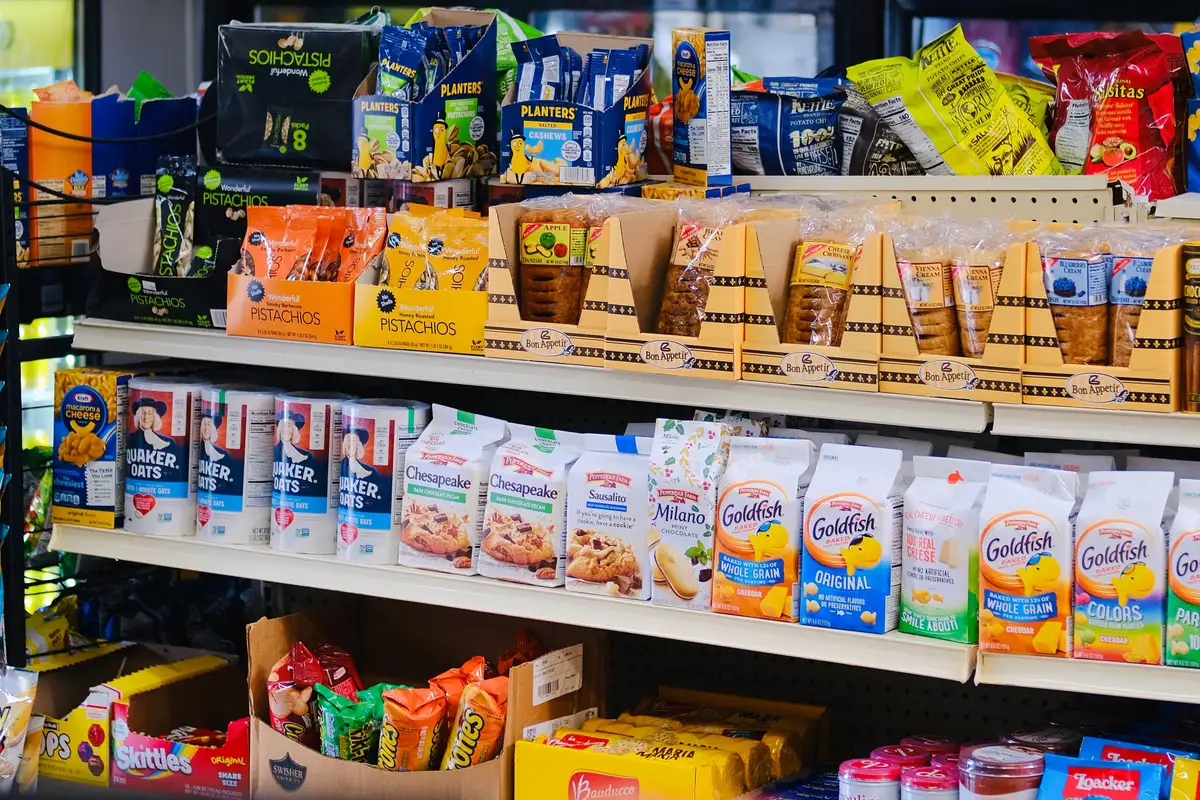
Inventory and business personal property, liquor liability on beer and wine, coastal and inland storm exposure, refrigeration and spoilage, crime, and workers compensation at four employees with family counted.
Nate is a Chartered Property Casualty Underwriter and the founder of Wexford Insurance, LLC. He places convenience store programs across 48 states — inventory and business personal property, the liquor liability the GL form excludes, crime and cash-handling, and the workers compensation that store staffing triggers. Reach him via the Gas Station Guard Insurance quote form or call 317-942-0549.
Last updated · Reviewed by Nate Jones, CPCU
South Carolina regulates its spirits retailers with a clock and a product list. A retail liquor store may sell only Monday through Saturday, from nine in the morning until seven at night — all sales must be made before 7 p.m. and the business must close. Under no circumstances may it open on Sunday. And it may not sell any items other than liquor or wine, including any food or merchandise.
Read that from behind a convenience store counter and it describes an opportunity rather than a restriction. Your store is open in the evenings when the liquor store is dark, open on Sundays when it is closed by law, and able to sell every category it is forbidden to carry. The relationship between the two formats here is defined by hours and by product, not by who is allowed a license.
Carriers do not underwrite convenience stores as generic retail. The class carries robbery and burglary frequency above strip retail, premises claims that behave more like restaurant claims, refrigeration failures landing on stocked perishables, and the regulatory exposure of age-restricted sales. South Carolina adds hurricane exposure on the coast, a fast-growing corridor economy inland, and evening trade that a competitor cannot serve.
This page covers the South Carolina store: what moves premium here, how a neighboring format’s operating limits shape your own traffic, the coverage lines in a typical program, the compensation threshold and who counts toward it, the claims we see, and the underwriting realities that decide appetite. Fuel-dispensing sites layer the petroleum lines on top.
48
States licensed (all except Hawaii and Alaska)
20+
Specialty markets in our c-store panel
1–2 hr
Quote turnaround during business hours
C-store
Class-focused agency, not generic retail
What South Carolina convenience store insurance costs
We do not publish premium ranges, because a c-store premium is built from the operation rather than a state average. These are the drivers that move the number on a South Carolina store.
Evening and Sunday trade: A meaningful share of South Carolina convenience revenue arrives in hours when the spirits format is closed by law. Later hours and Sunday operation raise both the premises and the crime exposure that go with the traffic.
Coastal position: The Lowcountry and Grand Strand carry named-storm terms and separate wind deductibles that an Upstate store does not.
Tourism seasonality: Coastal stores swing hard between season and off-season, which affects staffing patterns, cash on hand and how a business income limit should be reasoned.
Beer and wine volume: What the store actually moves matters more than the permit itself, because the permit does not distinguish a high-volume site from a low-volume one.
Prepared food depth: Hot food is a large part of the offer in this market and brings product liability, cooking equipment and a wider injury pattern with it.
Headcount including family and part-timers: The compensation threshold counts part-time workers and family members, so a store that thinks of itself as family-run may already be over the line.
Protective safeguards: Drop safes, camera coverage and lit forecourts feed the crime rating, and carry extra weight on stores doing significant late-evening business.
Open when the spirits store is shut
South Carolina’s Retail Liquor Store license authorizes the sale of sealed liquor and wine to go for consumption off the licensed premises, Monday through Saturday only, from 9:00 a.m. until 7:00 p.m. The Department of Revenue is explicit that all sales must be made prior to 7:00 p.m. and the business must close, and that under no circumstances may a retail liquor store operate on Sunday.
The same license does not authorize the sale of any items other than liquor or wine, including any food or merchandise. The exceptions are narrow: nonalcoholic items such as glassware may be sold where the wholesaler or producer packaged them together with the liquor, and lottery tickets are permitted. Any mixers sold in a retail liquor store must themselves contain some percentage of alcohol.
There is also a ceiling on how many such stores one holder may operate — six as of June 2022, with the first three unrestricted and the remaining three confined to counties of 250,000 or more population and no more than two in the same county. That constrains how the spirits format can scale, though it is a rule about that format rather than about your own permit.
For a convenience store the useful reading is about traffic and assortment rather than compliance. Every evening after seven, all day Sunday, and for every snack, mixer or grocery item a customer wants alongside a bottle, the nearby spirits store is unavailable by law. That is a structural feature of South Carolina trade patterns, and it shows up in when your store is busy and who is in it.
Coverage lines for a South Carolina convenience store
Property and business personal property: Building if owned, plus inventory, coolers, shelving, POS hardware, signage and canopy. Coastal counties carry named-storm deductibles applied separately from all-other-perils.
General liability: Third-party injury and property damage on the sales floor, at the entrance and across the lot, with evening traffic a larger share of the exposure than in most states.
Liquor liability: The general liability form excludes alcohol-related bodily injury and property damage. A South Carolina c-store sells beer and wine, and the limit should follow actual volume and hours rather than the permit class.
Crime and employee dishonesty: Money and securities, robbery, burglary and employee theft. Later hours and seasonal cash swings on the coast are the two things that push these limits.
Spoilage and equipment breakdown: Separate agreements for the failed unit and for the stock lost behind it — the pairing that decides what a coastal power outage actually costs.
Cyber liability: Card compromise at the register and the pump, ransomware, and the interruption that follows an outage.
Workers compensation: Statutory coverage at four or more regularly employed, counting part-time staff and family members, with a Form 38 governing entry to and withdrawal from the Act.
Workers compensation for South Carolina store employees
South Carolina requires workers compensation coverage from businesses that regularly employ four or more employees within the state. Part-time workers count toward that number, and so do family members.
There is a second route out for very small operations: a business is also exempt if it has an annual payroll of less than $3,000, regardless of how many people that payroll covers. Casual employees, agricultural employees, railroads and railway express companies, state and county fair associations and federal employees sit outside the Act as well, along with certain owner-operator drivers and commission-paid real estate agents meeting defined thresholds.
The mechanics of coming in and going out are worth knowing. An employer that was previously exempt but voluntarily bought coverage is treated as subject to the Act until it files a Form 38 withdrawing that election, and an employer that was subject to the Act but no longer is must likewise file a Form 38 to record the change. Coverage status here is something a business declares and withdraws on the record, not something that simply lapses when the headcount falls.
South Carolina convenience store claims we see
Hurricane damage on a coastal site
Named-storm deductibles are typically a percentage of insured value, so the retained loss scales with the building. Evacuation orders add closure time that the wind damage alone does not explain.
Extended outage taking the perishable assortment
The building stands and the stock is gone. Spoilage and business income carry that loss, and a store without generator capacity carries the longest version of it.
Robbery during evening trade
A store doing significant business after seven, when the alternative formats are closed, presents a different exposure window than a daytime-weighted site.
Family member injured on shift
Family counts toward the four-employee threshold and family members get hurt like anyone else. Stores that reasoned only from their non-family payroll are the ones that find out afterward.
Slip on a wet floor during a summer storm
Frequent heavy rain moves water into the store repeatedly, and these claims are decided by mat placement, wet-floor routine and inspection records.
Seasonal cash accumulation on the coast
Peak-season takings outrun the deposit cycle and the money and securities limit set for an off-season week.
The South Carolina c-store risk profile
South Carolina splits into a coastal market and an inland one. The Lowcountry and Grand Strand carry hurricane exposure, evacuation closures and a violent seasonal swing in trade; the Upstate and the corridor between Columbia and Charlotte carry growth, traffic and a property profile driven by severe thunderstorms rather than named storms. A schedule spanning both needs two different property conversations.
The operating-hours structure is the state-specific layer, and its effect is on when your store is busy rather than on what it may sell. Evening and Sunday demand for anything a spirits store cannot supply concentrates in convenience retail by operation of law, which shifts customer counts into hours that carry more crime exposure and thinner staffing than daytime trade.
On the compensation side the threshold is four, and the counting rules are broader than most owners expect — part-time workers and family members are both included. For a family-run store with a couple of weekend staff, that combination arrives sooner than a look at the full-time roster would suggest.
Why South Carolina c-store owners work with Gas Station Guard Insurance
We place convenience store programs across 48 states and write coastal petroleum and c-store risks routinely, so a South Carolina submission carries coastal position and wind structure, generator capacity, the evening and Sunday business pattern, seasonal cash handling, and a headcount stated the way the Act actually counts it.
As an independent agency we place to carriers with appetite for the class rather than to a single company, which matters on the coast where appetite narrows quickly. Where a South Carolina store sits behind a forecourt, the petroleum and retail lines are written as one program.
South Carolina convenience store insurance FAQs
Why is my store busiest after seven in the evening?
Partly by operation of law. A South Carolina retail liquor store may sell only from 9:00 a.m. until 7:00 p.m., Monday through Saturday — all sales must be made before 7:00 p.m. and the business must close — and under no circumstances may it open on Sunday. Demand outside those hours has to go somewhere else.
Can the liquor store near us sell snacks and mixers?
No. The license does not authorize the sale of any items other than liquor or wine, including any food or merchandise. Narrow exceptions exist for nonalcoholic items the wholesaler or producer packaged together with the liquor, and for lottery tickets, and any mixers sold there must themselves contain some alcohol.
Does that affect how we should think about insurance?
It affects when the exposure sits. A larger share of your customer count arrives in the evening and on Sundays than it would in a state without those limits, and evening trade carries a different crime and premises profile than daytime trade — usually on thinner staffing. Hours and staffing belong on the submission for that reason.
We have four people including my daughter. Do we need coverage?
Almost certainly yes. South Carolina requires coverage from businesses regularly employing four or more employees, and both part-time workers and family members are counted. A family-run store with weekend help commonly reaches four sooner than the full-time roster suggests.
Is there any exemption for a very small operation?
There is a payroll route as well as a headcount one: a business with an annual payroll of less than $3,000 is exempt regardless of how many people that covers. Casual employees, agricultural employees, railroads and federal employees are also outside the Act.
What is a Form 38?
It is how coverage status is recorded in either direction. An employer that was exempt but voluntarily bought coverage stays subject to the Act until it files a Form 38 withdrawing that election, and an employer that was subject but no longer is must file one to record that. Status here is declared, not simply allowed to lapse.
How should a coastal store set its business income limit?
Against evacuation and outage, not just repair. A named storm can close a coastal store for far longer than the physical damage would suggest, because access, power and staff availability all recover on their own timetable. Peak-season timing makes the same closure much more expensive.
Does a standalone South Carolina c-store need pollution coverage?
Not usually, where there is no fuel dispensing and no storage tank on site. Pollution and storage tank liability are petroleum lines. A standalone store carries the retail stack described here without them, which is part of why standalone and fuel-attached stores go to different carrier panels.
Authoritative South Carolina and federal references