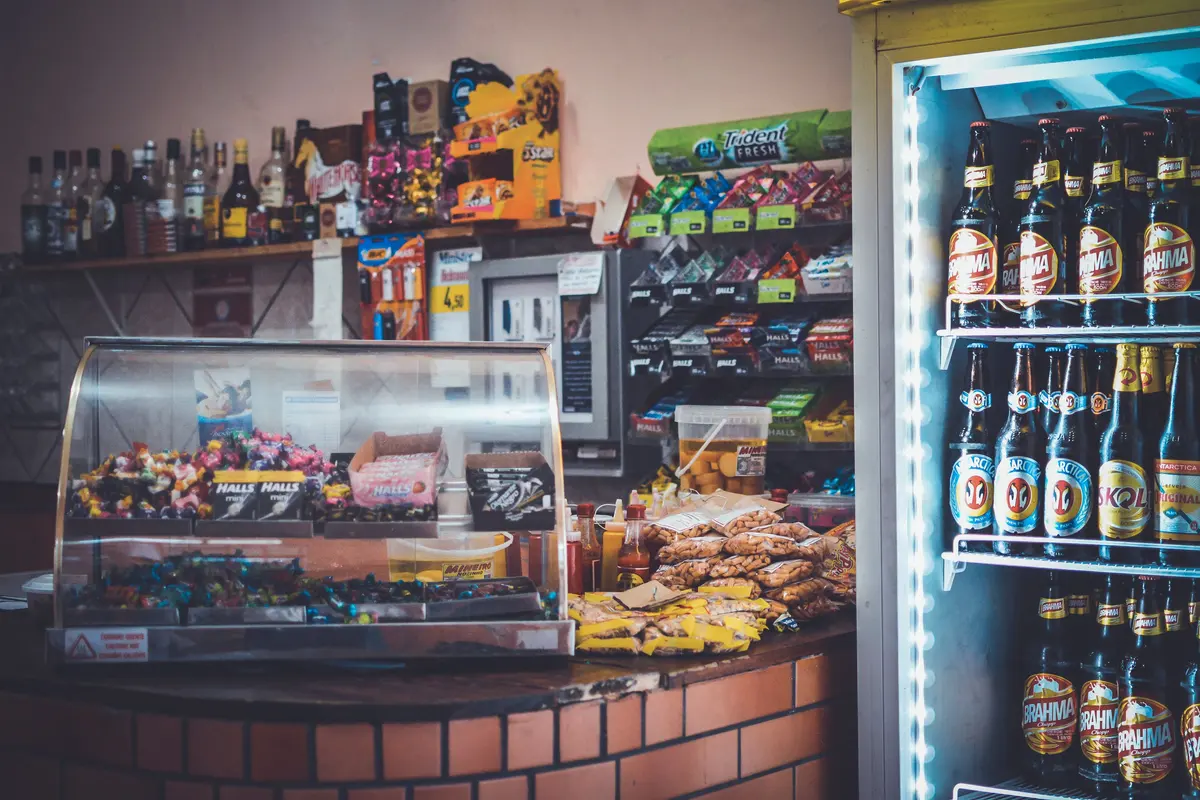
Inventory and business personal property, liquor liability behind a locally issued off-sale license, severe-storm property exposure, refrigeration and spoilage, crime and cash handling across long rural distances, and an employee-injury exposure that no statute converts into a compensation claim.
Nate is a Chartered Property Casualty Underwriter and the founder of Wexford Insurance, LLC. He places convenience store programs across 48 states — inventory and business personal property, the liquor liability the GL form excludes, crime and cash-handling, and the workers compensation that store staffing triggers. Reach him via the Gas Station Guard Insurance quote form or call 317-942-0549.
Last updated · Reviewed by Nate Jones, CPCU
The South Dakota Department of Labor and Regulation states the position without qualification: there is no law in South Dakota requiring any employer to carry workers compensation insurance. Not a threshold that most stores fall under, not an exemption available on application — no requirement in the first place.
What the Department does state is the consequence. An employer without coverage may be sued in civil court by an injured worker. That is the whole mechanism: there is no statutory scheme to enter, no benefit schedule to fall back on, no exclusive remedy limiting what a claim can become, and no agency the employer has to notify about any of it. An injury simply becomes a dispute between an employee and their employer, resolved the way disputes are.
Carriers do not underwrite convenience stores as generic retail. The class carries robbery and burglary frequency above strip retail, premises claims that behave more like restaurant claims, refrigeration failures landing on stocked perishables, and the regulatory exposure of age-restricted sales. South Dakota adds severe hail and wind across open country, winters that make every entrance a liability question, and the longest distances between towns of any state east of the Rockies.
This page covers the South Dakota store: what moves premium here, what it means to face an employee-injury exposure with no statutory framework around it, the coverage lines in a typical program, how off-sale alcohol licensing actually works, the claims we see, and the underwriting realities that decide appetite. Fuel-dispensing sites layer the petroleum lines on top.
48
States licensed (all except Hawaii and Alaska)
20+
Specialty markets in our c-store panel
1–2 hr
Quote turnaround during business hours
C-store
Class-focused agency, not generic retail
What South Dakota convenience store insurance costs
We do not publish premium ranges, because a c-store premium is built from the operation rather than from a state average. These are the drivers that move a South Dakota number.
Hail and wind exposure: The dominant property driver across the state. Roof age, roof covering and canopy construction decide the deductible structure and often decide appetite outright.
Whether employee injury has anywhere to go: With no statutory scheme, an uninsured injury lands in civil court against the business. Voluntary coverage is the mechanism that changes that, and whether you carry it is a live decision rather than a compliance question.
Distance to a fire response: Across much of the state a staffed response is a long way off, and protection class carries more weight than building value in deciding terms.
Banking distance and cash on hand: Rural stores bank infrequently across long drives, and the crime limit should reflect the real interval rather than a default.
Seasonal and event traffic: The Black Hills season and large annual events move volume, staffing and cash sharply for short periods, which changes both crime and business income exposure.
Overnight hours and single-clerk coverage: The crime-rating question underwriters ask first, and one that is sharper where the nearest help is far away.
Prepared food operations: A hot case or deli adds product liability, cooking equipment and a heavier reliance on refrigeration than packaged goods alone.
Off-sale alcohol licensing runs through your local government
South Dakota issues package off-sale licenses for use in an incorporated municipality — a city, a town, a community improvement district — or in a county, and the license is tied to that place. Which authority you deal with depends on where the store sits, and the practical answer for most operators is the one nearest to them.
Fees for malt beverage and farm wine licenses are payable to the local governing body rather than to the state, which tells you where the decision actually sits. For questions about availability, cost and the application process, the Department directs applicants to the local finance officer in a municipality or the county auditor outside one. Those are the offices that hold the answer for a specific address.
None of this is unusual by national standards and we are not going to present it as though it were. Plenty of states route retail alcohol permissions through local government, and South Dakota’s arrangement is a workable version of a common one. What it means for a store is straightforward: the permissions you hold, and the hours and categories they allow, come from a local authority and vary with it, so the liquor liability conversation starts with what your particular license actually permits.
The reason the alcohol layer is not the center of gravity on this page is simply that something else here matters more to an owner. A South Dakota store’s licensing position is ordinary; its employee-injury position is not, and it is the one that will change what an owner decides to do after reading this. Where your license permits alcohol sales, we write the liquor liability around those permissions as a matter of course.
Coverage lines for a South Dakota convenience store
Property and business personal property: Building if owned, plus stock, coolers, shelving, POS hardware, signage and canopy. Hail defines this market and roof age is the first question asked.
General liability: Third-party injury and property damage inside the store, at the entrance and across the lot, with a long winter making the entrance the highest-frequency location on the site.
Liquor liability: The general liability form excludes alcohol-related bodily injury and property damage. What your locally issued off-sale license permits is where this conversation starts.
Crime and employee dishonesty: Money and securities, robbery, burglary and employee theft, with rural banking intervals leaving more on the premises than a limit set from a metropolitan store would assume.
Spoilage and equipment breakdown: The failed unit and the stock behind it, as separate agreements, with restoration times running long in the remote counties.
Cyber liability: Card compromise at the register and the pump, ransomware, and the income lost while systems are down.
Workers compensation: Voluntary here, and worth taking on the merits: it converts an open-ended civil exposure into a defined one, with medical and indemnity benefits attached.
Workers compensation in South Dakota is voluntary in the fullest sense
The Department of Labor and Regulation puts it plainly: there is no law in South Dakota requiring any employer to carry workers compensation insurance. The Department recommends coverage and administers a system for employers who choose it, but there is no obligation to enter that system and nothing an employer must file, declare or notify in order to stay outside it.
The consequence the Department names is the one that decides the question. An employer without coverage may be sued in civil court by an injured worker. That is a materially different exposure from a compensation claim. A statutory scheme pays a defined schedule of benefits and, in exchange, limits the employer’s liability. A civil suit has no schedule and no ceiling — it is decided on the ordinary rules, and it reaches heads of damage a benefit schedule does not include.
For a convenience store that is a real exposure rather than a theoretical one. The injuries in this class are ordinary and frequent — lifting stock, ladders and stepstools, wet and icy entrances, cuts in a deli, and the injuries that come out of a robbery. Any of them can produce a claim, and without coverage the business is the defendant, funding both the defense and whatever outcome follows, out of the same margin it runs the store on.
So the decision an owner actually faces is an insurance decision, made on the merits, with no compliance deadline forcing it and nothing external to prompt a review. Voluntary coverage converts an open-ended civil exposure into a defined one and brings the medical and indemnity machinery with it. Stores that carry it generally do so because they looked at the alternative and did not like the shape of it, and that is the right way to arrive at the answer.
South Dakota convenience store claims we see
An uninsured injury that became a civil suit
With no statutory scheme, an injured worker’s route is the courts. There is no benefit schedule capping the outcome and the business funds the defense as well as the result.
Hail damage to roof, canopy and rooftop units
The most frequent large property claim in the state. Percentage deductibles scale the retained loss to insured value, and a cosmetic damage exclusion decides how much of a dented roof pays.
Straight-line wind across an exposed site
Canopies and signage go first on an open lot, and the resulting water entry rarely stays confined to what the wind actually took.
Ice at the entrance through a long winter
The most reliable liability claim of a South Dakota season, and the one where a treatment log does the most good — provided it exists before the claim rather than after it.
Robbery at a remote store between banking runs
Distance decides the interval and the interval decides what is in the safe. Limits set from a metropolitan pattern do not reach it.
Extended outage taking the perishable assortment
Restoration runs long where the store is far from everything. Spoilage and business income carry a loss the property schedule barely shows.
The South Dakota c-store risk profile
South Dakota is a severe-weather property market and a distance market at the same time. Hail frequency runs high, straight-line wind crosses open country with nothing to slow it, and percentage wind-and-hail deductibles are standard rather than negotiated. Roof age and covering decide more about price and appetite than building value does, and protection class does the rest — across much of the state a staffed fire response is a long way from the site, and that time is the difference between a contained loss and a total one.
The commercial map runs on Sioux Falls and Rapid City, the I-90 corridor between them, and a wide rural remainder of county seats and small towns. Corridor stores live on through-traffic and see the crime profile that comes with transient customers. Rural stores serve wide catchments with infrequent banking, long restoration times and a business income exposure that outruns the property schedule, because a store that is dark for a month in a town with no alternative is losing more than its stock.
The Black Hills season and the large annual events that come with it are their own risk period. Volume, staffing and cash all rise sharply for a short window, and a store that carries limits sized for its ordinary weeks is underinsured for exactly the weeks when the most is at stake. It is worth setting crime and business income against the peak rather than the average.
The employee-injury layer is the state-specific one and it is unlike anywhere else in the corpus. Elsewhere an owner reads a rule and complies with it. Here there is no rule to read — no threshold, no filing, no agency to satisfy — and the absence is easy to mistake for the absence of exposure. It is not. What is missing is the statutory scheme that would have contained the claim, and what remains is an ordinary civil liability with no schedule and no ceiling, arising out of the ordinary injuries this class produces every year. An owner deciding not to carry coverage should at least be deciding it, rather than arriving at it by default.
Why South Dakota c-store owners work with Gas Station Guard Insurance
We place convenience store programs across 48 states and write plains-state petroleum and c-store risks routinely, so a South Dakota submission carries roof age and covering, hail history with the context it needs to be read fairly, protection class and response distance stated honestly, banking intervals reflected in the crime limit, and seasonal peaks set against the weeks that actually matter rather than the annual average.
As an independent agency we place to carriers with appetite for the class rather than to a single company, which matters in a market where hail history alone narrows the field. Where a South Dakota store sits behind a forecourt, the petroleum and retail lines are written as one program rather than two policies with a seam between them.
South Dakota convenience store insurance FAQs
Do we have to carry workers compensation?
No. The Department of Labor and Regulation states that there is no law in South Dakota requiring any employer to carry workers compensation insurance. There is no threshold to cross and nothing to file in order to be without it.
Then what happens if a clerk is hurt?
The Department names the consequence directly: an employer without coverage may be sued in civil court by an injured worker. The claim is decided on the ordinary rules rather than by a benefit schedule.
How is that different from a compensation claim?
A statutory scheme pays defined benefits and limits the employer’s liability in exchange. A civil suit has neither the schedule nor the ceiling, and it reaches heads of damage a benefit schedule does not include. The business also funds its own defense.
Should we carry it anyway?
Most stores in this class should at least decide it deliberately. The injuries here are ordinary and frequent — lifting, ladders, wet and icy entrances, deli cuts, and robbery injuries — and coverage converts an open-ended exposure into a defined one with medical and indemnity benefits attached.
Who issues our off-sale alcohol license?
A package off-sale license is issued for use in an incorporated municipality — a city, town or community improvement district — or in a county. Fees for malt beverage and farm wine licenses are payable to the local governing body.
Who do we ask about getting one?
The local finance officer if you are in a municipality, or the county auditor if you are not. Those offices hold the answer on availability, cost and process for your specific address.
What is the biggest property driver here?
Hail, then distance. Roof age and covering come first, and protection class decides how much time a response has to reach you — which across much of the state is the factor that separates a contained loss from a total one.
Does a standalone South Dakota c-store need pollution coverage?
Not usually, where there is no fuel dispensing and no storage tank on site. Pollution and storage tank liability are petroleum lines. A standalone store carries the retail stack described here without them, which is part of why standalone and fuel-attached stores go to different carrier panels.