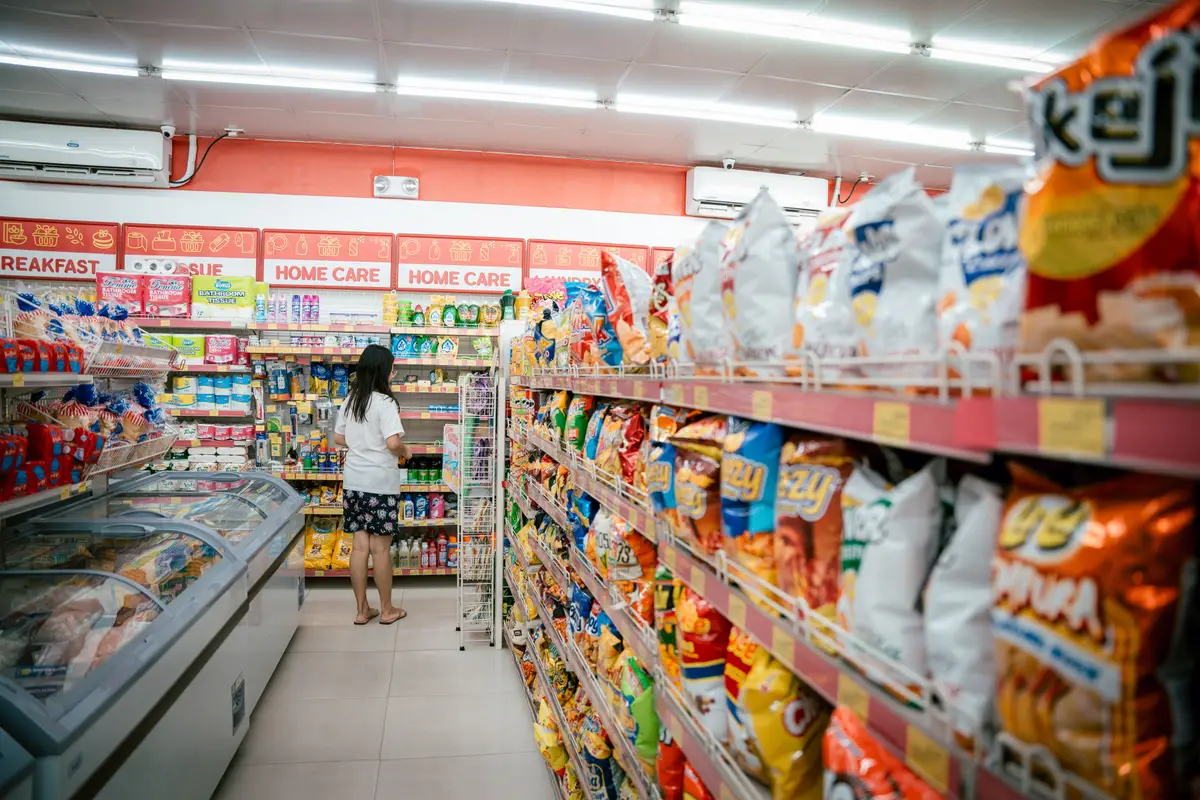
Inventory and business personal property, liquor liability across two licensing authorities, refrigeration and spoilage, crime and cash handling, and workers compensation for your clerks — placed with carriers that quote Tennessee c-store risks daily.
Nate is a Chartered Property Casualty Underwriter and the founder of Wexford Insurance, LLC. He places convenience store programs across 48 states — inventory and business personal property, the liquor liability the GL form excludes, crime and cash-handling, and the workers compensation that store staffing triggers. Reach him via the Gas Station Guard Insurance quote form or call 317-942-0549.
Last updated · Reviewed by Nate Jones, CPCU
Tennessee is the state where a convenience store can be licensed by two different authorities for two different products, and where the smaller store may not qualify for one of them at all. Wine comes from the state; beer comes from the city or county. That split is the first thing to establish on a Tennessee store, because the answer decides what the liquor liability line is actually covering.
Everything else behaves like high-velocity retail with a compliance overlay. Your Tennessee store moves tobacco, alcohol, lottery, prepared food, packaged grocery, and the impulse categories that turn over weekly. That inventory needs property coverage, the aisles need general liability, the safe and register need crime coverage, the card reader needs cyber, and the clerks need workers compensation — though in Tennessee that last one has a threshold worth reading carefully.
Carriers do not underwrite convenience stores as generic retail. The class carries robbery and burglary frequency above strip retail, slip-and-fall claims that behave more like restaurant claims, refrigeration breakdowns landing on stocked perishables, and the regulatory exposure of selling age-restricted products across a busy counter. The carriers that write the class actively are a narrower subset of the market.
This page covers the Tennessee store: what moves premium here, how the two-authority licensing structure shapes the alcohol exposure, the coverage lines in a typical program, the five-employee compensation trigger, the claims we see, and the underwriting realities that decide appetite. If your Tennessee site also dispenses fuel, the petroleum lines sit on top of all of it.
48
States licensed (all except Hawaii and Alaska)
20+
Specialty markets in our c-store panel
1–2 hr
Quote turnaround during business hours
C-store
Class-focused agency, not generic retail
What Tennessee convenience store insurance costs
We do not publish premium ranges, because a c-store premium is built from the operation rather than from a state average. What follows is what actually moves the number on a Tennessee store.
Which alcohol permissions the store holds: A store selling beer under a municipal permit and wine under a state license presents differently from one selling beer alone. The product mix drives the severity underwriters expect from a liquor liability claim.
Interstate and highway position: Tennessee carries heavy interstate traffic. A store at an exit operates differently from a neighborhood store — higher transient volume, more fuel-adjacent traffic, and a different crime profile.
Prepared food operations: The state wine license effectively requires meaningful food sales, which pushes qualifying stores toward prepared food. Food handling brings product liability and a deeper dependence on refrigeration.
Hours and overnight staffing: Overnight operation on a single clerk is rated on both the crime line and the compensation line, and protective safeguards materially affect terms.
Severe convective storm exposure: Tennessee property underwriting reflects wind and hail, and roof age and condition carry more weight than operators generally expect.
Loss history shape: On this class, a pattern of small theft or premises claims moves appetite faster than a single large loss does.
Two licensing authorities, and a floor-space test that excludes smaller stores
Wine and beer do not come from the same place in Tennessee. The Alcoholic Beverage Commission issues the retail food store wine license that lets a grocery or convenience store sell wine for off-premises consumption. Beer is not the Commission’s to give — the TABC does not issue beer permits other than for high-gravity brewing, and an operator applies to the local beer board instead.
The wine license also carries a size test that many fueling-site stores fail. A retail food store must derive at least twenty percent of its taxable sales from food and food ingredients for human consumption, and must have retail floor space of at least 1,200 square feet. Applicants must also participate in the Responsible Vendor Program.
The practical result is that two Tennessee stores a mile apart can carry different alcohol exposure entirely — one selling beer under a municipal permit and wine under a state license, the other selling beer only because it cannot meet the floor-space threshold. The liquor liability conversation has to start with which permissions the specific store holds, because the state-level answer alone does not settle it.
The split matters after a loss as well. A permit issued by a local beer board is governed by that board, and a suspension or lapse at the municipal level does not resolve because the state license is in good standing. Operators running several Tennessee stores under one company usually find the retail permissions are the least uniform thing about the portfolio.
Coverage lines for a Tennessee convenience store
Property and business personal property: Building if owned, plus inventory, coolers, shelving, POS hardware, and signage. Tennessee property underwriting reflects severe convective storm exposure, and roof age and condition drive terms more than most operators expect.
General liability: Customer bodily injury and third-party property damage in the aisles, at the entrance, and across the lot. Interstate-exit stores see higher transient foot traffic and a correspondingly higher premises claim count.
Liquor liability: The general liability form excludes alcohol-related bodily injury and property damage. Wherever a Tennessee store sells beer under a municipal permit or wine under the state license, this is the separate line that responds.
Crime and employee dishonesty: Money and securities, robbery, burglary, and employee theft. Cash-heavy operation with part-time staffing is where employee dishonesty concentrates, and discovery usually lags the loss by months.
Cyber liability: Card compromise at the register and the pump, ransomware against back-office systems, and the interruption that follows an outage.
Workers compensation: Statutory coverage for clerks and deli staff, required in Tennessee at five or more employees outside construction — with part-time staff counted toward the threshold.
Umbrella and excess: Higher limits over general liability, liquor liability, and auto. Multi-store operators and any store with meaningful alcohol volume are the usual candidates.
Workers compensation for Tennessee store employees
Tennessee requires workers compensation coverage from employers with five or more employees outside construction and coal mining, and the count includes part-time employees, minors, and working family members. Construction and coal operations are covered at one employee.
That five-employee line produces a genuine decision point for small Tennessee stores. An operator running four people is not required to carry the coverage, and an employer whose workforce drops below five may elect to withdraw by filing the state’s notice of withdrawal form. Electing out is legal; it is not free. Without coverage, an injured clerk’s medical costs and lost wages are the employer’s to pay directly, and the statutory protections that come with the system do not apply.
Clerk injuries on this class are frequent and low-glamour: lifting cases, slips behind the counter and in the walk-in, cuts in the deli area, and injuries arising during a robbery. On a four-employee Tennessee store, the question is not whether the exposure exists but whether the operator is carrying it personally.
Tennessee convenience store claims we see
Robbery at an interstate-exit store
Transient trade areas raise both frequency and the difficulty of investigation. The compensation claim and the closure normally exceed the money taken, and protective safeguards move terms noticeably on these accounts.
Wind or hail damage to roof and canopy
Tennessee convective storms produce roof claims that surface as interior water damage weeks later. Roof age is the single biggest driver of how that claim settles.
Refrigeration failure with a stocked walk-in
Equipment breakdown responds to the unit, spoilage to the stock, business income to the closure. A store carrying only the first is insured for the cheapest part of the event.
Beer sale to a minor during a compliance check
The consequence lands on the municipal permit, which is governed by the local beer board rather than the state. Liquor liability responds to third-party injury, not to the administrative penalty.
Uninsured clerk injury at a four-employee store
Where an operator has legitimately elected out below the five-employee threshold, the medical and wage costs fall on the business directly. This is the most avoidable large loss on small Tennessee accounts.
Employee theft discovered at inventory reconciliation
Small amounts over a long period rather than one event, and typically found when stock is counted rather than when it is taken. Crime coverage responds subject to the discovery terms, and the employee dishonesty sub-limit is often set below what a sustained shortage reaches on a store with high tobacco turnover.
The Tennessee c-store risk profile
Tennessee convenience retail splits between the metropolitan trade areas around Nashville, Memphis, Knoxville, and Chattanooga and the interstate corridors that connect them. The metropolitan store is underwritten on foot traffic, crime, and premises liability; the corridor store is underwritten on transient volume, fuel-adjacent traffic, and a crime profile shaped by through-traffic rather than by neighborhood.
Weather is the common property factor. Severe convective storms — wind and hail — drive the roof and canopy exposure statewide, and the interior water damage that follows a compromised roof is a frequent second-order claim.
The licensing split is the Tennessee-specific layer. Because beer and wine permissions come from different authorities and the wine license carries a floor-space and food-sales test, alcohol exposure varies store by store in a way that a state-level assumption will get wrong.
Why Tennessee c-store owners work with Gas Station Guard Insurance
We place convenience store programs across 48 states and write Tennessee petroleum and c-store risks routinely, so the submission carries what underwriters on this class ask for — hours, overnight staffing, alcohol permissions at both the state and municipal level, protective safeguards, prepared-food operations, and loss detail with enough context to be read properly.
As an independent agency we place to carriers with appetite for the class rather than to one company’s appetite. Where a Tennessee store sits behind a forecourt, we write the petroleum and retail lines as one program rather than leaving a seam between two policies.
Tennessee convenience store insurance FAQs
My Tennessee store is under 1,200 square feet. What changes?
It affects what you can sell rather than whether you can be insured. A store below the retail food store threshold will not hold the state wine license, so the alcohol exposure is limited to whatever the local beer board has permitted. Liquor liability is still worth carrying wherever beer is sold, because the general liability form excludes alcohol-related claims regardless of the product.
Do I need separate coverage for beer and wine sales?
No. Liquor liability responds to alcohol-related bodily injury and property damage without splitting by product. What changes with the product mix is the severity underwriters expect, and therefore the limit they want to see. The two-authority structure in Tennessee affects your permissions, not the architecture of the coverage.
We have four employees. Do we need workers compensation in Tennessee?
Outside construction and coal mining, the requirement begins at five or more employees, and part-time staff, minors, and working family members count toward that number. At four you may legally operate without it — but an injured clerk’s medical costs and lost wages then fall on the business directly, which is why many four-employee stores carry it voluntarily.
Can several Tennessee stores go on one program?
Usually yes, scheduled by location. The complication in Tennessee is that permissions are not uniform across a portfolio, because beer permits come from each local board. The schedule needs to record what each site actually sells rather than assuming the portfolio is homogeneous.
Does spoilage coverage come with my property policy?
No. Spoilage and equipment breakdown are separate agreements. Equipment breakdown responds to the failed refrigeration unit; spoilage responds to the stock lost because it failed. A Tennessee store with a significant perishable assortment needs both, and carrying only one is a common gap.
How does roof age affect a Tennessee c-store quote?
Substantially. Severe convective storm exposure means wind and hail drive a large share of property losses in Tennessee, and roof age and condition are the clearest signal a carrier has about how a storm claim will settle. An older roof can move deductible structure, the wind and hail terms, and sometimes appetite itself.
Does a standalone Tennessee c-store need pollution coverage?
Not usually, where there is no fuel dispensing and no storage tank on site. Pollution and storage tank liability are petroleum lines. A standalone store carries the retail stack described here without them, which is part of why standalone and fuel-attached stores go to different carrier panels.
What does the Responsible Vendor Program mean for my coverage?
Participation is a licensing requirement for the state wine license rather than an insurance requirement, but it works in your favor at underwriting. A documented training and ID-check program is exactly the control underwriters look for on the liquor liability line, and being able to evidence it helps at both quoting and claim time.