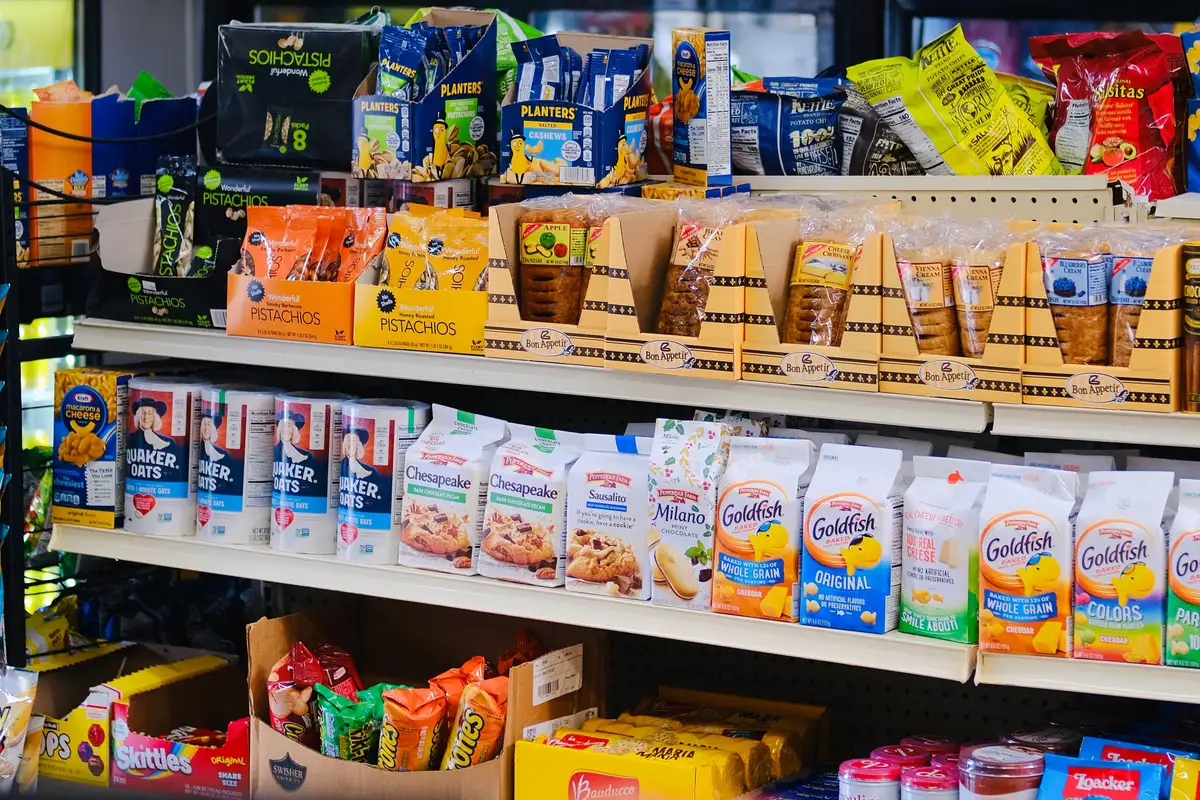
Inventory and business personal property, liquor liability bounded by an alcohol percentage rather than a license class, high-desert and mountain property exposure, refrigeration and spoilage, crime, and workers compensation with a waiver system attached.
Nate is a Chartered Property Casualty Underwriter and the founder of Wexford Insurance, LLC. He places convenience store programs across 48 states — inventory and business personal property, the liquor liability the GL form excludes, crime and cash-handling, and the workers compensation that store staffing triggers. Reach him via the Gas Station Guard Insurance quote form or call 317-942-0549.
Last updated · Reviewed by Nate Jones, CPCU
In most states a convenience store’s alcohol exposure is set by what kind of license it holds. In Utah it is set by a number. Beer at or below 5% alcohol by volume sells in grocery and convenience stores seven days a week, including Sundays. Anything above that line — stronger beer, wine, spirits — moves to the state’s own stores. The cooler wall is defined by a percentage, and so is the liability that comes with it.
That single line does more work than a license class. It caps the severity of what your store can sell without capping the volume, it keeps the highest-risk products out of the building entirely, and it draws a bright administrative boundary that staff can be trained against. A Utah c-store’s alcohol risk is genuinely narrower than an equivalent store in a full-privilege state.
Carriers do not underwrite convenience stores as generic retail. The class carries robbery and burglary frequency above strip retail, premises claims that behave more like restaurant claims, refrigeration failures landing on stocked perishables, and the regulatory exposure of age-restricted sales. Utah adds a property environment split between the dense Wasatch Front and long rural distances beyond it.
This page covers the Utah store: what moves premium here, how an ABV threshold and dual licensing shape the alcohol exposure, the coverage lines in a typical program, a compensation system with a formal waiver mechanism, the claims we see, and the underwriting realities that decide appetite. Fuel-dispensing sites layer the petroleum lines on top.
48
States licensed (all except Hawaii and Alaska)
20+
Specialty markets in our c-store panel
1–2 hr
Quote turnaround during business hours
C-store
Class-focused agency, not generic retail
What Utah convenience store insurance costs
We do not publish premium ranges, because a c-store premium is built from the operation rather than a state average. These are the drivers that move the number on a Utah store.
Where the store sits against the ABV line: A store selling only beer at or below the statutory threshold carries a narrower alcohol severity profile than a store in a full-privilege state, and that is worth stating on a submission rather than leaving a carrier to assume.
Dual licensing status: Grocery and convenience stores need a state off-premise license in addition to local licensing, so a store can be compliant in one dimension and not the other.
Wasatch Front position versus rural distance: Front stores are underwritten on customer count, hours and crime; rural southern and eastern stores on distance from responding service and revenue concentration.
Hours and overnight staffing: Single-clerk late shifts show up twice in the rating — once against crime, once against compensation.
Prepared food and refrigeration depth: Preparing food adds product liability, and a deeper cold chain means a failed unit takes more stock down with it.
Seismic exposure along the Wasatch: Earthquake is excluded from the property form and arranged separately, and the Wasatch Front is where that decision actually matters.
Protective safeguards: What is actually installed — cameras, time-delay safes, alarm monitoring, entrance lighting — moves the crime terms further than the trade area does.
A percentage, not a license class, defines your cooler
Utah splits retail alcohol at 5% alcohol by volume. Beer at or below that threshold is sold by grocery and convenience stores across the state, seven days a week including Sundays. Beer above it, along with wine and spirits, is sold through the Department of Alcoholic Beverage Services state stores — of which there are more than fifty, open Monday through Saturday — and through a network of package agencies operated under contract in more rural areas.
For a convenience store that produces an unusually clean boundary. The question is not which of several license classes the store holds and what each permits; it is whether a product sits above or below a published number. Staff can be trained against it, stock decisions follow from it, and a compliance failure is a factual error rather than a judgment call about a license condition.
It also bounds the liquor liability conversation in a way most states do not. The store is not selling spirits, and it is not selling high-strength beer, so the severity a single alcohol-related claim can reach is lower than at an equivalent store in a state where the same license covers the full range. Volume, hours and trade area still drive the limit, but the ceiling on product strength is real and it is worth putting in front of an underwriter.
The administrative layer changed relatively recently. Since the middle of 2018, grocery and convenience stores have needed an off-premise state license in addition to local licensing. A store therefore holds permissions from two levels of government, and a lapse at either level is a lapse — which makes renewal tracking a genuine operational risk rather than paperwork.
Coverage lines for a Utah convenience store
Property and business personal property: Building if owned, plus inventory, coolers, shelving, POS hardware and signage. Earthquake is excluded from the property form and arranged separately, which matters most along the Wasatch Front.
General liability: Third-party injury and property damage arising anywhere a customer can walk, which at Utah elevations means the approach and the lot behave differently in February than the sales floor ever does.
Liquor liability: The general liability form excludes alcohol-related bodily injury and property damage. A Utah store selling only beer at or below the statutory threshold carries a narrower severity profile than a full-privilege store, but the exclusion still applies and the line is still needed.
Crime and employee dishonesty: Money and securities, robbery, burglary and employee theft — and on a long-running internal shortage, how far back the policy lets you discover it decides the recovery as much as the limit does.
Cyber liability: Card compromise at the register and the pump, ransomware, and the interruption that follows an outage.
Workers compensation: Statutory coverage for clerks and deli staff, with contracted arrangements checked against the Utah waiver system rather than assumed to sit outside the payroll.
Umbrella and excess: Higher limits over general liability, liquor liability and auto, worth considering wherever trade-area traffic or alcohol volume is meaningful.
Workers compensation for Utah store employees
Utah requires employers to provide workers compensation coverage for their employees, and the Labor Commission actively monitors compliance across the state rather than waiting for a claim to surface a gap.
What distinguishes Utah is the formal waiver mechanism sitting alongside the requirement. Individuals with no employees who hire out their services can be treated as statutory employees of the business engaging them, and may waive their rights to coverage by obtaining a workers compensation coverage waiver. Sole proprietorships with no employee other than the owner are among the categories eligible for one.
The waiver is not self-certifying. The Labor Commission may investigate whether a business validly elected not to cover an owner, partner, corporate officer or director, and may deny an application or revoke a waiver if the election turns out to be invalid or the business becomes ineligible during the term. For a convenience store that uses contracted cleaners, maintenance help or delivery services, the practical question is whether each of those arrangements is backed by a valid waiver — because if it is not, the person may be your statutory employee and the injury may be your claim.
Utah convenience store claims we see
A licensing lapse at one of two levels
Because a store needs both state and local permissions, a renewal missed at either level stops alcohol sales. The loss is revenue and disruption rather than a property claim, and it is entirely administrative in origin.
Compressor failure with stocked perishables
Equipment breakdown responds to the unit, spoilage to the stock, business income to the closure. On a rural Utah store where the perishable assortment is the reason customers come, all three matter.
Robbery at an isolated or late-operating store
Distance from responding service lengthens the incident, the closure and the investigation, and the compensation and business income elements typically exceed the money taken.
Injury to a contractor without a valid waiver
Utah can treat an uncovered individual as a statutory employee of the business engaging them. A cleaner or maintenance worker whose waiver was denied, revoked or never obtained can become your compensation claim.
Sale above the threshold by mistake
The bright line that makes Utah simple also makes an error unambiguous. The consequence lands on the license, and with two levels of licensing there are two permissions at risk.
A fall on refrozen melt at the door
Utah elevation cycles above and below freezing far outside the depth of winter, so the dangerous surface is often yesterday’s meltwater rather than fresh snow. Whether anyone can produce an inspection and gritting record usually decides these.
The Utah c-store risk profile
Utah concentrates most of its population and most of its convenience retail along the Wasatch Front, with the rest of the state spread across long distances. A Front store is underwritten on customer count, hours, crime and — distinctively — seismic exposure, since the fault system runs through the most densely built part of the state. A southern or eastern Utah store is underwritten on distance from responding service, winter access at elevation and revenue concentration.
The seismic question is worth separating from the rest of the property conversation. Earthquake is excluded from the property form, so a Wasatch Front store either has a separate arrangement or is carrying that exposure itself. It is a live decision rather than a formality, and it is the one property question where a Utah store differs most from its neighbors.
The alcohol layer is the narrowest in this wave and the most legible. A single published percentage decides what the store may sell, dual licensing decides whether it may sell it at all, and neither depends on interpretation. That makes Utah unusually easy to describe accurately on a submission — and unusually unforgiving of an administrative slip.
Why Utah c-store owners work with Gas Station Guard Insurance
We place convenience store programs across 48 states and write western petroleum and c-store risks routinely, so submissions carry what underwriters on this class ask for — Wasatch Front position and seismic arrangements, dual licensing status, hours and staffing, contracted arrangements and their waivers, protective safeguards, and loss history with enough context to be read properly.
As an independent agency we place to carriers with appetite for the class rather than to a single company. Where a Utah store sits behind a forecourt, the petroleum and retail lines are written as one program rather than as two policies with a seam between them.
Utah convenience store insurance FAQs
What can my Utah convenience store actually sell?
Beer at or below 5% alcohol by volume, seven days a week including Sundays. Anything above that line — stronger beer, wine and spirits — is sold through the state’s own stores and through package agencies in more rural areas, not through your cooler.
Does the ABV limit reduce my liquor liability exposure?
It narrows it rather than removing it. The general liability form still excludes alcohol-related bodily injury and property damage, so the separate line is still needed. What changes is the ceiling on severity: a store that cannot sell spirits or high-strength beer presents a lower-severity profile than an equivalent store in a full-privilege state, and that is worth stating on the submission.
Do I need both a state and a local license?
Yes. Since the middle of 2018 grocery and convenience stores have needed an off-premise state license in addition to local licensing. Both must be current — a lapse at either level stops alcohol sales, which makes renewal tracking an operational risk rather than paperwork.
Our cleaner has a coverage waiver. Are we covered?
Only if the waiver is valid and current. The Labor Commission may investigate whether an election not to cover an owner, partner or officer was valid, and may deny an application or revoke a waiver mid-term. If the waiver fails, the individual can be treated as a statutory employee of the business engaging them — which makes an injury your claim.
Does my property policy cover earthquake?
No — earthquake is excluded from the property form and arranged separately. Along the Wasatch Front that is a live decision rather than a formality, because the fault system runs through the most densely built part of the state.
How does spoilage coverage differ from equipment breakdown?
Equipment breakdown responds to the failed refrigeration unit itself. Spoilage responds to the stock lost because it failed. They are separate agreements, and carrying only one is the gap that shows up on Utah stores where perishable inventory is a large share of the floor.
Can several Utah stores go on one program?
Yes, scheduled by location. The schedule should record Wasatch Front position and any seismic arrangement per site, along with the state and local license status, because both vary within a Utah portfolio and both change the terms materially.
Does a standalone Utah c-store need pollution coverage?
Not usually, where there is no fuel dispensing and no storage tank on site. Pollution and storage tank liability are petroleum lines. A standalone store carries the retail stack described here without them, which is part of why standalone and fuel-attached stores go to different carrier panels.