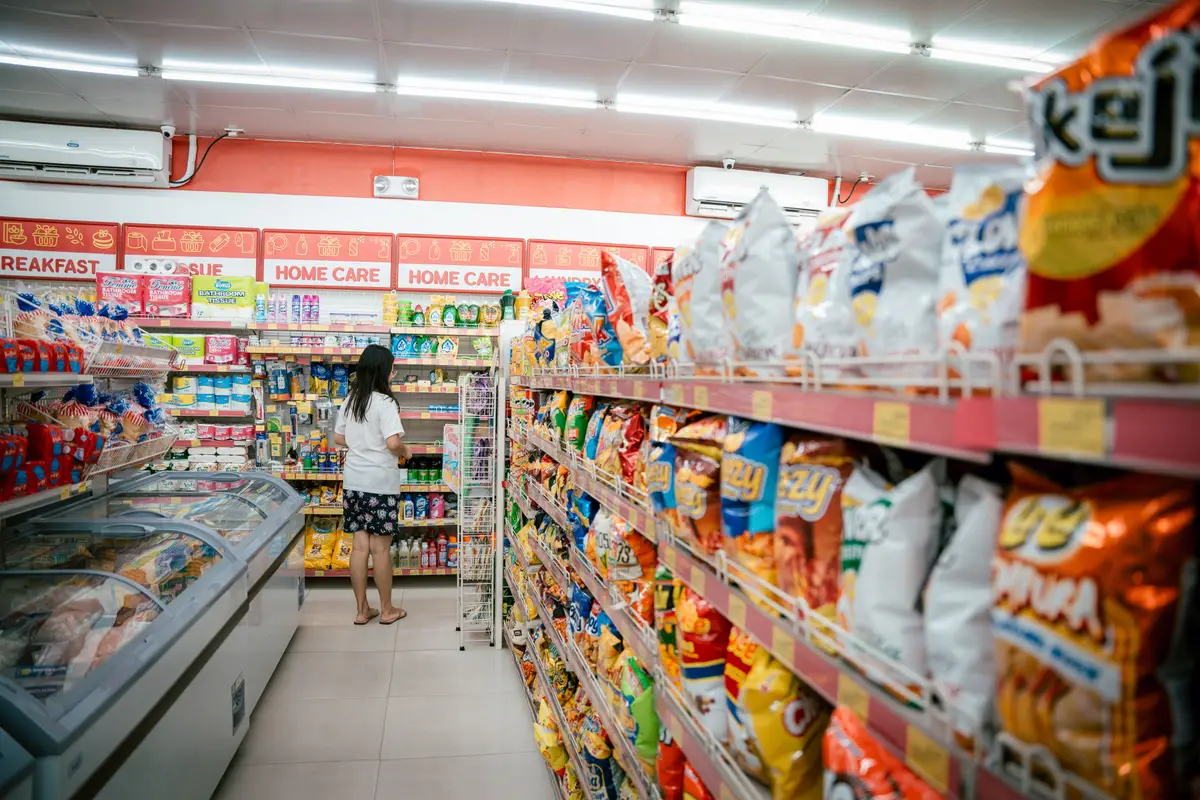
Inventory and business personal property, liquor liability under a license class written for stores, a shelf that now includes ready-to-drink spirits, refrigeration and spoilage, crime, and workers compensation that reaches your contractors.
Nate is a Chartered Property Casualty Underwriter and the founder of Wexford Insurance, LLC. He places convenience store programs across 48 states — inventory and business personal property, the liquor liability the GL form excludes, crime and cash-handling, and the workers compensation that store staffing triggers. Reach him via the Gas Station Guard Insurance quote form or call 317-942-0549.
Last updated · Reviewed by Nate Jones, CPCU
Vermont’s alcohol system was settled at the end of Prohibition and it still shows. Beer and wine were privatized when the ban lifted; spirits were not. The state’s import and distribution role is limited to spirituous beverages to this day, which means a Vermont convenience store operates in a private market for most of what it sells and alongside a state system for the rest. The split is close to a century old and it is built into the license classes themselves.
The class a store holds is called a second class license, and it permits the sale of beer, cider, ready-to-drink spirit beverages and wine to the public for consumption off the premises. That fourth category is the recent change and the one that matters most for risk: ready-to-drink spirits sit on a c-store shelf in Vermont in a way they do not in states where spirits of any form stay behind a state counter.
Carriers do not underwrite convenience stores as generic retail. The class carries robbery and burglary frequency above strip retail, premises claims that behave more like restaurant claims, refrigeration failures landing on stocked perishables, and the regulatory exposure of age-restricted sales. Vermont adds a compensation system with unusually long reach into contracted arrangements.
This page covers the Vermont store: what moves premium here, how a license class written for stores and a product category added to it shape the alcohol exposure, the coverage lines in a typical program, a compensation requirement that extends to independent contractors and subcontractors, the claims we see, and the underwriting realities that decide appetite. Fuel-dispensing sites layer the petroleum lines on top.
48
States licensed (all except Hawaii and Alaska)
20+
Specialty markets in our c-store panel
1–2 hr
Quote turnaround during business hours
C-store
Class-focused agency, not generic retail
What Vermont convenience store insurance costs
We do not publish premium ranges, because a c-store premium is built from the operation rather than a state average. These are the drivers that move the number on a Vermont store.
Whether ready-to-drink spirits are stocked: The second class license now reaches this category, and a store carrying it holds a spirit-based product on an open shelf. That changes the severity profile from a beer-and-wine store even though the license class is the same.
Product mix within the license: Because one class covers four categories, two Vermont stores holding identical licenses can carry very different alcohol exposure. The submission should describe the shelf, not the license.
Contracted arrangements: Vermont compensation liability reaches independent contractors and subcontractors, so cleaning, plowing and maintenance arrangements sit closer to the payroll here than in most states.
Winter property exposure: Roof loading, ice damming and freeze protection on water and sprinkler systems drive Vermont property terms.
Hours and staffing depth: Smaller-format stores run thin staffing, and single-clerk shifts are rated on both the crime line and the compensation line.
Prepared food and refrigeration depth: A deli or hot case brings product liability with it, and deepens what any refrigeration failure is capable of destroying.
Protective safeguards: Drop and time-delay safes, camera coverage, monitored alarm and lit entrances feed the crime rating and carry more weight on thinly staffed stores than the trade area does.
One license class, four categories, and a spirits product on the shelf
A Vermont second class license allows a store to sell beer, cider, ready-to-drink spirit beverages and wine to the public for consumption off the premises. It is a single class written for exactly this kind of business, which makes the permission easy to establish — and makes the actual shelf, rather than the paperwork, the thing that describes the risk.
The ready-to-drink category is the part worth attention. A spirit-based product now sits within the same off-premises class as beer and wine, so a Vermont convenience store can carry a spirits product on an open shelf. In most of the control states in this program, anything spirit-based stays behind a state counter, and the c-store’s exposure stops at beer and wine. Vermont’s does not.
Spirits in their conventional form remain with the state, through agencies that contract with the Department, and Vermont is a control state at the wholesale level for that category. But the boundary was drawn at repeal rather than recently: beer and wine were privatized at the end of Prohibition and the Division’s import and distribution role has been limited to spirituous beverages ever since, with the Division still licensing and training every establishment that sells or serves alcohol of any kind.
For underwriting, the practical instruction is to describe the four categories the store actually stocks. A second class license tells a carrier the store may sell ready-to-drink spirits; only the operator can say whether it does, and the liquor liability limit should follow the answer.
Coverage lines for a Vermont convenience store
Property and business personal property: Building if owned, plus inventory, coolers, shelving, POS hardware and signage. Vermont property carries a severe-winter emphasis — roof loading, ice damming and freeze exposure on water and sprinkler systems.
General liability: Bodily injury to customers and damage to property that is not yours, across the sales floor, the entrance and the parking area.
Liquor liability: The general liability form excludes alcohol-related bodily injury and property damage. A Vermont store stocking ready-to-drink spirit beverages under its second class license carries a higher severity profile than a beer-and-wine store on the same class.
Crime and employee dishonesty: Money and securities, robbery, burglary and employee theft. Thin staffing combined with cash handling is the combination underwriters focus on.
Cyber liability: Card compromise at the register and the pump, ransomware, and the interruption that follows an outage.
Workers compensation: Statutory coverage for all employment, with liability reaching independent contractors and subcontractors, a posted notice of compliance required, and closure among the enforcement remedies.
Umbrella and excess: Higher limits over general liability, liquor liability and auto, worth considering wherever the store stocks spirit-based products or carries meaningful volume.
Workers compensation for Vermont store employees
Vermont requires workers compensation coverage for all employment, and the reach of that requirement is wider than most states. An employer is liable for anyone it employs — and the state states plainly that this includes independent contractors and subcontractors.
That is a meaningful difference for a convenience store. In many states a properly documented contractor sits outside the payroll and outside the policy; in Vermont the arrangement does not automatically remove the exposure. The cleaner after close, the plow contractor, the person servicing the coolers — those relationships need to be looked at with the assumption that liability may follow them back to the store rather than the assumption that it will not.
Employers must also post a notice of compliance in a conspicuous place, advising employees that coverage has been secured. Enforcement has teeth: the Department investigates supported allegations, and a business may be ordered to obtain and maintain coverage, may be closed until it does, and may face administrative penalties. Continuity of coverage is therefore an operating requirement, not simply a policy detail.
Vermont convenience store claims we see
An alcohol claim involving a ready-to-drink spirits product
A category that used to stay behind a state counter now sits on an open shelf. Stores that added it without revisiting the liquor liability limit are carrying a spirits severity profile on a beer-and-wine limit.
Injury to a contractor the store treated as outside the payroll
Vermont liability reaches independent contractors and subcontractors, so an arrangement that would sit outside the policy in a neighboring state can produce a claim here.
Ice damming and consequent interior water damage
The property claim is often modest; the inventory and business income consequences of a closed store are not.
Frozen and burst water line during a cold snap
A closed or thinly staffed store can run for hours before a burst line is found, and the damage lands on stock and fit-out rather than plumbing.
Robbery on a single-clerk shift
What the incident costs is rarely the cash — it is the injured clerk and the days the store stays shut afterwards. Safes, cameras and a lit entrance are what change the terms.
Enforcement action following a coverage gap
Because the Department can order a business closed until coverage is obtained, a lapse becomes an operating shutdown rather than only a financial exposure.
The Vermont c-store risk profile
Vermont convenience retail is built around small-format stores serving small communities, which concentrates two exposures that larger-format retail spreads out. Staffing is thin, so single-clerk shifts are common and the crime and compensation lines both feel it. And the store is frequently the only retail option in its immediate community, which raises the business income consequence of any closure well above what the property schedule suggests.
The alcohol layer is where Vermont has moved most recently. One license class covers beer, cider, wine and ready-to-drink spirit beverages, so the permission is broad and uniform while the actual shelf varies store to store. That makes the license a poor description of the risk on its own, and makes the stocked categories the thing that belongs on a submission.
The compensation layer is where Vermont differs most from its neighbors. Liability reaching independent contractors and subcontractors, a posted-notice requirement and closure as an enforcement remedy together make coverage continuity an operating matter. A store that lets a policy lapse between renewals is exposed to more than an uninsured claim.
Why Vermont c-store owners work with Gas Station Guard Insurance
We place convenience store programs across 48 states and write New England petroleum and c-store risks routinely, so submissions carry what underwriters on this class ask for — the categories actually stocked rather than the license class alone, contracted arrangements and how they are documented, hours and staffing depth, roof and freeze protection detail, protective safeguards, and loss history with enough context to be read properly.
As an independent agency we place to carriers with appetite for the class rather than to a single company. Where a Vermont store sits behind a forecourt, the petroleum and retail lines are written as one program rather than as two policies with a seam between them.
Vermont convenience store insurance FAQs
What does a second class license let my store sell?
Beer, cider, ready-to-drink spirit beverages and wine, to the public, for consumption off the premises. It is one class covering four categories, which is why the license alone does not describe your risk — what you actually stock does.
We stock ready-to-drink spirits. Does that change our limit?
It should be looked at. A spirit-based product on an open shelf carries a higher severity profile than beer and wine, even though the license class is identical. Stores that added the category without revisiting liquor liability are carrying a spirits exposure on a limit sized for something narrower.
Why does Vermont control spirits but not beer and wine?
Because the boundary was drawn at the end of Prohibition. Beer and wine were privatized when the ban lifted and the Division’s import and distribution role has been limited to spirituous beverages ever since — though it still licenses and trains every establishment that sells or serves alcohol of any kind.
Does our workers compensation reach the contractor who plows the lot?
It may. Vermont states that an employer is liable for anyone it employs, including independent contractors and subcontractors, which is wider reach than most states. Contracted arrangements should be reviewed on the assumption that liability may follow them back to the store rather than the assumption that it will not.
What happens if our coverage lapses?
More than an uninsured claim. The Department investigates supported allegations, and a business may be ordered to obtain and maintain coverage, may be closed until it does, and may face administrative penalties. Continuity is an operating requirement here.
Do we have to post anything in the store?
Yes. Employers must post a notice of compliance in a conspicuous place advising employees that workers compensation protection has been secured. It is a small requirement that is easy to overlook when a policy changes carriers mid-term.
Does spoilage coverage come with my property policy?
No. Spoilage and equipment breakdown are separate agreements. Equipment breakdown responds to the failed refrigeration unit; spoilage responds to the stock lost because it failed. Carrying only one leaves a real gap on any store with a meaningful perishable assortment.
Does a standalone Vermont c-store need pollution coverage?
Not usually, where there is no fuel dispensing and no storage tank on site. Pollution and storage tank liability are petroleum lines. A standalone store carries the retail stack described here without them, which is part of why standalone and fuel-attached stores go to different carrier panels.