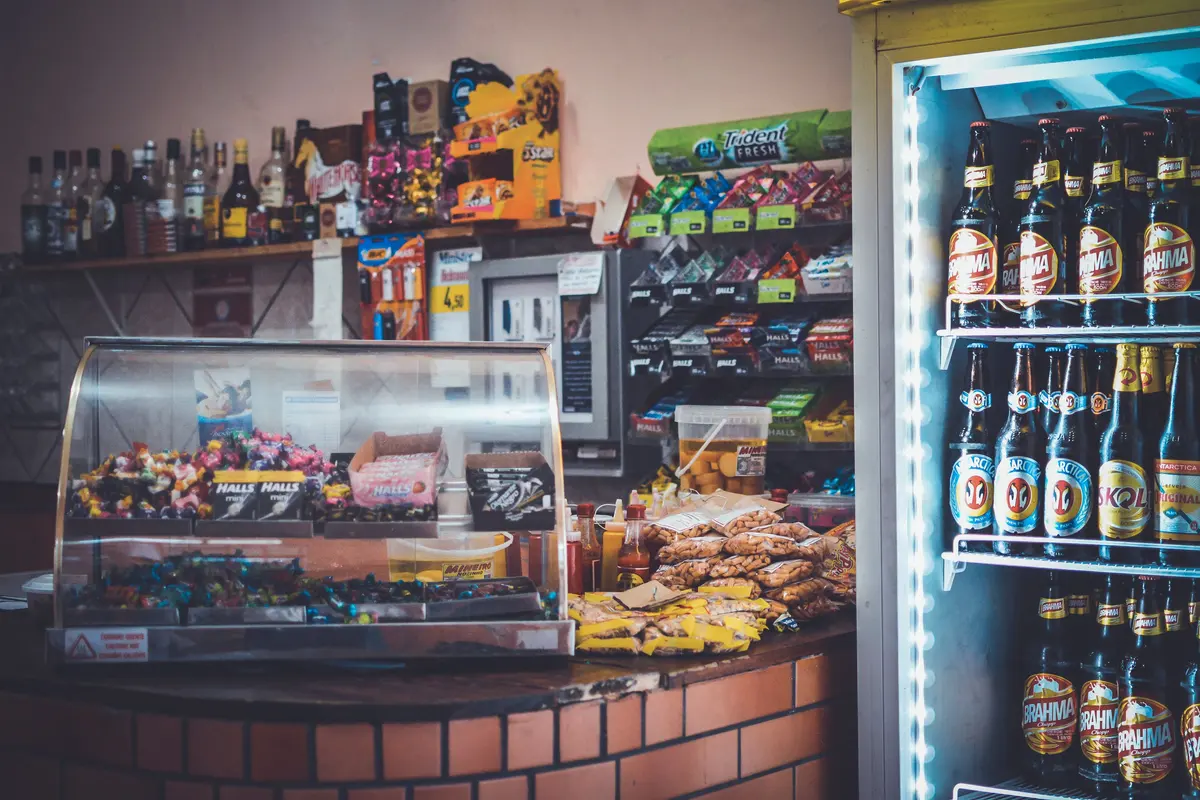
Inventory and business personal property, liquor liability under a license class named for this business, premises exposure across dense corridors, refrigeration and spoilage, crime, and workers compensation above two employees.
Nate is a Chartered Property Casualty Underwriter and the founder of Wexford Insurance, LLC. He places convenience store programs across 48 states — inventory and business personal property, the liquor liability the GL form excludes, crime and cash-handling, and the workers compensation that store staffing triggers. Reach him via the Gas Station Guard Insurance quote form or call 317-942-0549.
Last updated · Reviewed by Nate Jones, CPCU
Virginia is one of the few states with a retail alcohol license class named for exactly this business. The convenience grocery store license authorizes the holder to sell wine and beer in closed containers for off-premises consumption, which means a Virginia store does not have to argue about which category it belongs in — the Commonwealth has already written the category down.
Spirits are a separate matter and sit with Virginia ABC’s own state stores. The store sells wine and beer under its license while the Commonwealth retails the spirits, which bounds the alcohol exposure in a way a full-privilege state does not, and shapes what the liquor liability limit is actually covering.
Carriers do not underwrite convenience stores as generic retail. The class carries robbery and burglary frequency above strip retail, premises claims that behave more like restaurant claims, refrigeration failures landing on stocked perishables, and the regulatory exposure of age-restricted sales across a busy counter. Virginia concentrates a large share of that into the Northern Virginia and Hampton Roads corridors.
This page covers the Virginia store: what moves premium here, how the license class shapes the alcohol exposure, the coverage lines in a typical program, the compensation requirement that begins above two employees, the claims we see, and the underwriting realities that decide appetite. Fuel-dispensing sites layer the petroleum lines on top.
48
States licensed (all except Hawaii and Alaska)
20+
Specialty markets in our c-store panel
1–2 hr
Quote turnaround during business hours
C-store
Class-focused agency, not generic retail
What Virginia convenience store insurance costs
We do not publish premium ranges, because a c-store premium is built from the operation rather than a state average — and Virginia spans trade areas that price very differently. These are the drivers that move the number.
Corridor position: A Northern Virginia or Hampton Roads store is underwritten on customer count and hours; a Shenandoah or southside store is underwritten more on property and distance. The same company can hold both.
Whether the store holds the convenience grocery store license: The license decides whether wine and beer are on the shelf, and therefore whether liquor liability is on the program at all.
Hours and overnight staffing: Overnight operation on a single clerk is rated on both the crime line and the compensation line, and protective safeguards move terms.
Prepared food and refrigeration depth: A deli or hot case brings product liability and raises what a compressor failure costs.
Coastal and storm exposure: Hampton Roads and the eastern shore carry tropical exposure that is underwritten and deductibled separately from all-other-perils.
Headcount relative to the comp threshold: Virginia’s threshold sits at more than two employees and counts almost everyone, so small stores cross it earlier than operators expect.
Protective safeguards: Camera coverage, drop and time-delay safes, monitored alarm and lighting at the entrance feed the crime rating directly.
A license class written for the convenience store
Virginia ABC issues retail licenses covering the sale of wine, beer and mixed beverages at restaurants, hotels, convenience stores, grocery stores and other establishments. Among those, the convenience grocery store license is a defined class that authorizes the licensee to sell wine and beer in closed containers for off-premises consumption — the exact privilege set a c-store operates on.
That specificity is useful at underwriting. In most states a carrier infers what a convenience store may sell from a general license description; in Virginia the license class names the business type and the privilege together, so the alcohol exposure can be established from the license rather than reconstructed from the storefront. Application processing averages up to sixty days, which matters when a store changes hands and the new owner assumes the privilege transfers instantly.
Spirits remain outside the license. Virginia ABC operates state stores for distilled spirits, so a convenience store’s alcohol inventory is wine and beer, and its liquor liability profile is bounded accordingly. That is a narrower severity picture than a store selling the full range, and it is a fair point to make when a carrier is pricing the line.
For a multi-store operator the practical question is whether every location actually holds the license. A store that has not obtained it, or whose application is still in the sixty-day window, sells no alcohol at all — and its program should not be carrying a liquor liability limit sized for one that does.
Coverage lines for a Virginia convenience store
Property and business personal property: Building if owned, plus inventory, coolers, shelving, POS hardware and signage. Coastal Virginia carries tropical exposure with named-storm deductibles applied separately.
General liability: Customer bodily injury and third-party property damage. On dense-corridor stores this is the line that does the most work, driven by foot traffic and premises condition rather than building value.
Liquor liability: The general liability form excludes alcohol-related bodily injury and property damage. Where a Virginia store holds the convenience grocery store license, this is the separate line that responds; where it does not, the line is absent.
Crime and employee dishonesty: Money and securities, robbery, burglary and employee theft. High tobacco and lottery volume raises the value behind the counter well above the cash in the drawer.
Cyber liability: Card compromise at the register and the pump, ransomware, and the interruption that follows an outage.
Workers compensation: Statutory coverage for clerks and deli staff, required in Virginia above two employees, with part-time, seasonal, minors and working family all counted — and no waivers available.
Umbrella and excess: Higher limits over general liability, liquor liability and auto. Corridor stores are frequent candidates because the liability exposure outruns the property schedule.
Workers compensation for Virginia store employees
Virginia requires workers compensation coverage from an employer who regularly employs more than two part-time or full-time employees. The definition of employee is deliberately broad: part-time, seasonal and temporary workers, minors, trainees, immigrants and working family members all count toward the number.
Where a business hires subcontractors to perform the same trade or to fulfil its contracts, the subcontractor’s employees are included in determining the total. For a convenience store that matters less than for a contractor, but it is worth knowing if the store outsources cleaning, maintenance or food service to a firm working under its own arrangements.
For employers who meet the threshold the coverage is mandatory, with no waivers and no exceptions. A three-person Virginia store — an owner working the counter and two part-time clerks — is over the line, and there is no election available to opt out of it. The injury pattern is the usual one for the class: lifting cases, slips behind the counter and in the walk-in, cuts in the deli area, and injuries arising during a robbery.
Virginia convenience store claims we see
Slip at the entrance in winter conditions
Virginia winters are inconsistent, which is part of the problem — a store that treats surfaces reliably in January can be caught by an unusual event in March. These claims turn on documented inspection and treatment procedure.
Robbery or theft targeting tobacco stock
The register is often not the target. Tobacco inventory behind the counter carries substantial value and moves easily, and crime limits set against cash alone understate the exposure.
Named-storm damage on a coastal store
Hampton Roads and eastern shore locations carry a separate wind deductible, and the retained loss scales with the insured value rather than sitting at a flat figure.
Compressor failure with stocked perishables
Equipment breakdown responds to the unit, spoilage to the stock, business income to the closure. Carrying only one insures the cheapest part of the event.
Alcohol sale to a minor during a compliance check
The consequence lands on the ABC license, which for a convenience grocery store is the privilege the whole alcohol category depends on. Liquor liability responds to third-party injury rather than the administrative penalty.
Clerk injury at a three-person store
Virginia has no election below the threshold once it is crossed, so a three-person store is squarely inside the system. The claims that surprise operators are the ordinary ones — a lifting injury or a fall behind the counter, not a dramatic event.
The Virginia c-store risk profile
Virginia convenience retail divides between the dense Northern Virginia and Hampton Roads corridors, the I-81 and I-95 through-routes, and rural southside and mountain trade areas. The corridor store is underwritten on customer count, hours and premises condition; the through-route store is underwritten on transient traffic and a crime profile shaped by movement rather than neighborhood; the rural store is underwritten on property and distance.
Coastal exposure separates Virginia from its neighbors on the property side. A Hampton Roads store carries tropical wind exposure with its own deductible structure, while a Shenandoah store of the same size and revenue does not — the same schedule can therefore carry two very different property conversations, and an operator who has only ever renewed inland stores can be caught out by the coastal terms.
The alcohol layer is comparatively bounded and comparatively legible. The license class names the business, spirits sit with the Commonwealth’s own stores, and the exposure follows from whether the store holds the license — a cleaner question than in states where privileges vary by product, by municipality, or by agency.
Why Virginia c-store owners work with Gas Station Guard Insurance
We place convenience store programs across 48 states and write Virginia petroleum and c-store risks routinely, so submissions carry what underwriters on this class ask for — corridor position and customer count, hours and overnight staffing, whether the store holds the convenience grocery store license, coastal exposure where it applies, protective safeguards, and loss detail with enough context to be read properly.
As an independent agency we place to carriers with appetite for the class rather than to a single company. Where a Virginia store sits behind a forecourt, the petroleum and retail lines are written as one program rather than as two policies with a seam between them.
Virginia convenience store insurance FAQs
What does the convenience grocery store license actually allow?
It authorizes the licensee to sell wine and beer in closed containers for off-premises consumption. Spirits are not included — Virginia ABC operates its own state stores for those — so a licensed Virginia convenience store’s alcohol inventory is wine and beer, and its liquor liability profile is bounded accordingly.
We have three employees. Do we need workers compensation in Virginia?
Yes. Virginia requires coverage from an employer who regularly employs more than two part-time or full-time employees, and the definition counts part-time, seasonal and temporary workers, minors, trainees and working family members. For employers who meet the threshold it is mandatory — no waivers and no exceptions.
We just bought a store. Does the alcohol license come with it?
Do not assume so. Virginia ABC application processing averages up to sixty days, and a store without the license in force sells no alcohol at all during that window. Tell your broker where the application stands, because a liquor liability limit sized for a licensed store is the wrong limit for one waiting on approval.
Why is my coastal Virginia store’s deductible structured differently?
Because tropical wind exposure is underwritten separately from all-other-perils. Named-storm deductibles are frequently written as a percentage of insured value rather than a flat amount, so the retained loss scales with the building. Inland Virginia stores generally do not carry that structure.
How should I set crime limits on a Virginia store?
Against what is actually at risk rather than against the cash in the drawer. Tobacco and lottery stock behind the counter frequently carries more value than the register and is portable. Money and securities, robbery and employee dishonesty are separate agreements with separate limits.
Does spoilage coverage come with my property policy?
No. Spoilage and equipment breakdown are separate agreements. Equipment breakdown responds to the failed refrigeration unit; spoilage responds to the stock lost because it failed. Carrying only one leaves a real gap on any store with a meaningful perishable assortment.
Can several Virginia stores go on one program?
Yes, scheduled by location. The schedule should record which sites hold the convenience grocery store license and which sit in coastal wind territory, because both vary within a single Virginia portfolio and both change the terms materially.
Does a standalone Virginia c-store need pollution coverage?
Not usually, where there is no fuel dispensing and no storage tank on site. Pollution and storage tank liability are petroleum lines. A standalone store carries the retail stack described here without them, which is part of why standalone and fuel-attached stores go to different carrier panels.