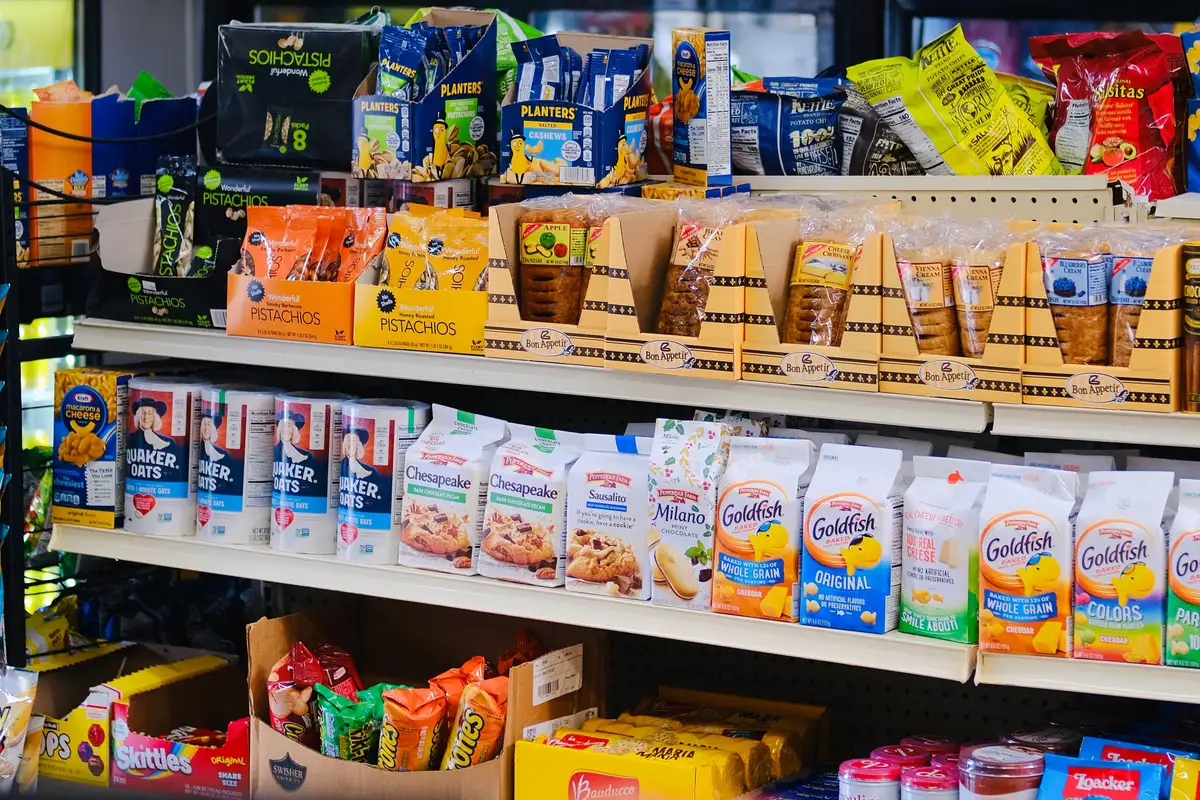
Inventory and business personal property, liquor liability where the license fee rises with every bottle you sell, seismic and wildfire property exposure, refrigeration and spoilage, crime, and a workers compensation line no private carrier can write.
Nate is a Chartered Property Casualty Underwriter and the founder of Wexford Insurance, LLC. He places convenience store programs across 48 states — inventory and business personal property, the liquor liability the GL form excludes, crime and cash-handling, and the workers compensation that store staffing triggers. Reach him via the Gas Station Guard Insurance quote form or call 317-942-0549.
Last updated · Reviewed by Nate Jones, CPCU
Most states charge for a liquor license the way they charge for any other permit: a figure, once a year, the same whether you sell one case or a thousand. Washington charges a share. A spirits retail licensee here pays the Liquor and Cannabis Board a license issuance fee equivalent to seventeen percent of all spirits sales revenues under the license, remitted quarterly in arrears.
That turns a fixed cost into a variable one, and it changes how the business behaves after a loss. A store rebuilding volume is paying on what it sells while it sells it, which is a different recovery curve from a competitor in a flat-fee state — and it belongs in the business income conversation rather than being treated as an accounting detail.
Carriers do not underwrite convenience stores as generic retail. The class carries robbery and burglary frequency above strip retail, premises claims that behave more like restaurant claims, refrigeration failures landing on stocked perishables, and the regulatory exposure of age-restricted sales. Washington adds a seismic zone under its most populous corridor, wildfire east of the Cascades, and a workers compensation market with only one seller in it.
This page covers the Washington store: what moves premium here, what a revenue-linked license fee does to a program, the coverage lines you actually need, the compensation line we cannot place for you and why, the claims we see, and the underwriting realities that decide appetite. Fuel-dispensing sites layer the petroleum lines on top.
48
States licensed (all except Hawaii and Alaska)
20+
Specialty markets in our c-store panel
1–2 hr
Quote turnaround during business hours
C-store
Class-focused agency, not generic retail
What Washington convenience store insurance costs
We do not publish premium ranges, because a c-store premium is built from the operation rather than a state average. These are the drivers that move the number on a Washington store.
Spirits volume, because the fee follows it: A revenue-linked license fee means alcohol volume changes the cost base as well as the liability profile, and the two move together rather than independently.
Seismic position along the Puget Sound corridor: Earthquake is excluded from the property form and arranged separately. In the part of the state where most stores are, that is a live decision rather than a formality.
Wildfire exposure east of the Cascades: Interface position drives appetite before it drives price, and smoke and evacuation can close a store the fire never reaches.
Refrigeration depth and outage history: Winter storms take power down across large rural areas, and the perishable assortment is what the outage costs.
Hours and overnight staffing: Late operation on a single clerk is priced against crime frequency and against the injury exposure at the same time.
Prepared food operations: A hot case or deli brings product liability and cooking equipment onto a program that would otherwise be packaged goods.
Payroll size, for the state-fund side: The compensation line is rated by the state rather than by a carrier, but payroll and classification still drive what the operation pays and still belong on the submission.
The license fee is a share of the sale
Under RCW 66.24.630, each spirits retail licensee in Washington must pay the board a license issuance fee equivalent to seventeen percent of all spirits sales revenues under the license, exclusive of taxes collected by the licensee and of sales on which a fee has otherwise been incurred. The board sets the timing and the sales reporting, and payments are made quarterly in arrears.
The provision arrived with Initiative 1183, approved by voters on 8 November 2011, which moved spirits retailing out of state stores and into private hands. The fee is the mechanism that kept the revenue with the state after the shops changed ownership — private stores took over the selling and the state kept a share of the sale.
For an operator the practical consequence is that the cost of the license is never settled in advance. It is a percentage of a number you do not know until the quarter closes, which means a strong quarter raises the obligation and a weak one lowers it. That symmetry is worth understanding after a loss: a store operating at reduced volume during a repair is paying proportionately less, but a store that has fully reopened and is rebuilding its customer base is paying in full on every bottle while the rest of the business is still recovering.
It also makes the reporting itself an operational duty rather than a filing. Sales dollar volume has to be tracked in a form the board accepts and remitted on schedule, so the point-of-sale system and the record-keeping behind it are doing compliance work as well as commercial work. A cyber event that takes the POS down for a week is not only a sales problem in Washington; it is a reporting problem too.
Coverage lines for a Washington convenience store
Property and business personal property: Building if owned, plus inventory, coolers, shelving, POS hardware and signage. Earthquake is excluded from the form and arranged separately, which matters most along the Puget Sound corridor.
General liability: Third-party injury and property damage across the sales floor, the entrance and the lot, including surface conditions through a long wet season.
Liquor liability: The general liability form excludes alcohol-related bodily injury and property damage. A Washington store holding a spirits retail license carries a full-strength exposure and should size the limit against volume and hours, not against the license class.
Crime and employee dishonesty: Money and securities, robbery, burglary and employee theft. Spirits inventory is high-value and portable, so the stock at risk exceeds what the register holds by a wide margin.
Spoilage and equipment breakdown: The failed unit and the stock behind it, as separate agreements. Winter storm outages across rural Washington make the pairing routine rather than optional.
Cyber liability: Card compromise at the register and the pump, ransomware, and the interruption that follows — which in this state also disrupts the sales reporting the license fee depends on.
Umbrella and excess: Higher limits over general liability, liquor liability and auto. Worth carrying wherever spirits volume is meaningful, which the fee structure makes easy to quantify.
Workers compensation in Washington comes from the state fund
Workers compensation comes from the state fund; private placement is not available for that line. Washington is one of a small number of states where the coverage cannot be bought from a private carrier at all, so this is not a market we can shop for you — coverage comes from the state system or, for employers large enough to qualify, through self-insurance.
We say this plainly because the alternative is worse. An agency that quietly presents a program without the compensation line, or that lets an owner assume it is bundled in with everything else, leaves the largest employee exposure in the business unaddressed and unexplained. What we can place in Washington is the property, liability, crime, cyber and auto side, and we will say so directly rather than implying a fuller program than exists.
What still matters on our side is the interaction. Classification, payroll reporting and return-to-work practice affect what the state operation costs, and an injury that arises out of a robbery or a slip is simultaneously a compensation matter and a liability matter with an insured component. Keeping the two conversations connected is the useful work, even though the coverage itself is not ours to write.
Washington convenience store claims we see
Earthquake damage with no earthquake coverage
The peril is excluded from the standard property form. On the Puget Sound corridor this is the single most consequential coverage decision an operator makes, and it is made by omission more often than by choice.
Wildfire smoke and evacuation east of the Cascades
A store can lose weeks of trade and an entire perishable assortment without the fire arriving. Business income and spoilage carry that loss, not the property claim.
Theft of spirits inventory
High unit value, easy to carry, easy to resell. Crime limits reasoned from cash on hand do not reach what actually leaves the building.
Extended winter outage in a rural county
Power loss across a wide area takes the coolers with it, and restoration priority in thinly populated areas is not quick.
A POS outage that disrupts fee reporting
The sales interruption is the obvious loss. The reporting obligation behind the license fee does not pause because the system is down, which is a compliance problem sitting behind a cyber claim.
Robbery injury to a clerk
A compensation matter that must go through the state fund, running alongside a liability and crime claim that we do place. The two need to be handled together even though they sit in different systems.
The Washington c-store risk profile
Washington divides sharply at the Cascades. West of them the population, the traffic and most of the stores sit on a seismic corridor with a wet, mild climate — property terms are driven by earthquake arrangements, foot traffic and premises condition. East of them the picture is dry, hot in summer, cold in winter, and shaped by wildfire interface and long distances between towns.
The alcohol layer is where Washington is genuinely unusual. Spirits sit in private stores, at full strength, with the state taking a percentage of every sale rather than a fixed license charge. That gives the alcohol side of a Washington store an unusually direct relationship between volume, cost and liability — all three move together, which makes the exposure easier to reason about than in most states and larger than operators expect.
The compensation line is the other structural feature, and it changes what an agency can do rather than what the store faces. The exposure is ordinary — lifting, slips, robbery injuries — but the coverage is not ours to place. What we can do is make sure the rest of the program is built knowing that, and that nobody is left assuming a line exists on their policy that legally cannot.
Why Washington c-store owners work with Gas Station Guard Insurance
We place convenience store programs across 48 states, and in Washington we are direct about the boundary: the compensation line comes from the state fund and we do not pretend otherwise. What we place is the property, liability, liquor, crime, cyber and auto program, built around seismic position, wildfire interface, spirits volume and the hours the store actually keeps.
As an independent agency we place to carriers with appetite for the class rather than to a single company. Where a Washington store sits behind a forecourt, the petroleum and retail lines are written as one program rather than two policies with a seam between them.
Washington convenience store insurance FAQs
What does a Washington spirits retail license actually cost?
It depends on what you sell. Under RCW 66.24.630 the license issuance fee is equivalent to seventeen percent of all spirits sales revenues under the license, exclusive of taxes you collect, and it is paid quarterly in arrears. There is no fixed annual figure to budget — the obligation follows the sales.
Where did that come from?
Initiative 1183, approved by voters on 8 November 2011, which moved spirits retailing from state stores into private hands. The percentage fee is how the revenue stayed with the state after the shops changed ownership.
Does the fee affect how we should set business income?
It is worth factoring in. During a closure at reduced volume the obligation falls with the sales, but a store that has reopened and is rebuilding its customer base pays in full on every bottle while the rest of the business is still recovering. The period of restoration should reflect the whole recovery, not just the reopening.
Can you place our workers compensation?
No, and we will not imply otherwise. Workers compensation comes from the state fund; private placement is not available for that line in Washington. Coverage comes from the state system, or through self-insurance for employers who qualify. We place the property, liability, liquor, crime, cyber and auto program alongside it.
Is earthquake covered by our property policy?
No. Earthquake is excluded from the standard property form and has to be arranged separately. Given where most Washington stores sit, this is a decision worth making deliberately rather than discovering after the fact.
How should crime limits account for spirits stock?
By counting it. Spirits are high value per unit, easy to carry and easy to resell, so a store holding meaningful inventory has far more at risk than the register suggests. Money and securities, robbery and employee dishonesty are separate agreements with separate limits, and the stock question mostly lands on the last two.
Our POS went down for a week. Is that just lost sales?
Not in Washington. The sales interruption is the obvious part, but your license fee depends on reporting sales dollar volume to the board on schedule, and that obligation does not pause because the system did. A cyber event here carries a compliance tail that it would not carry elsewhere.
Does a standalone Washington c-store need pollution coverage?
Not usually, where there is no fuel dispensing and no storage tank on site. Pollution and storage tank liability are petroleum lines. A standalone store carries the retail stack described here without them, which is part of why standalone and fuel-attached stores go to different carrier panels.